

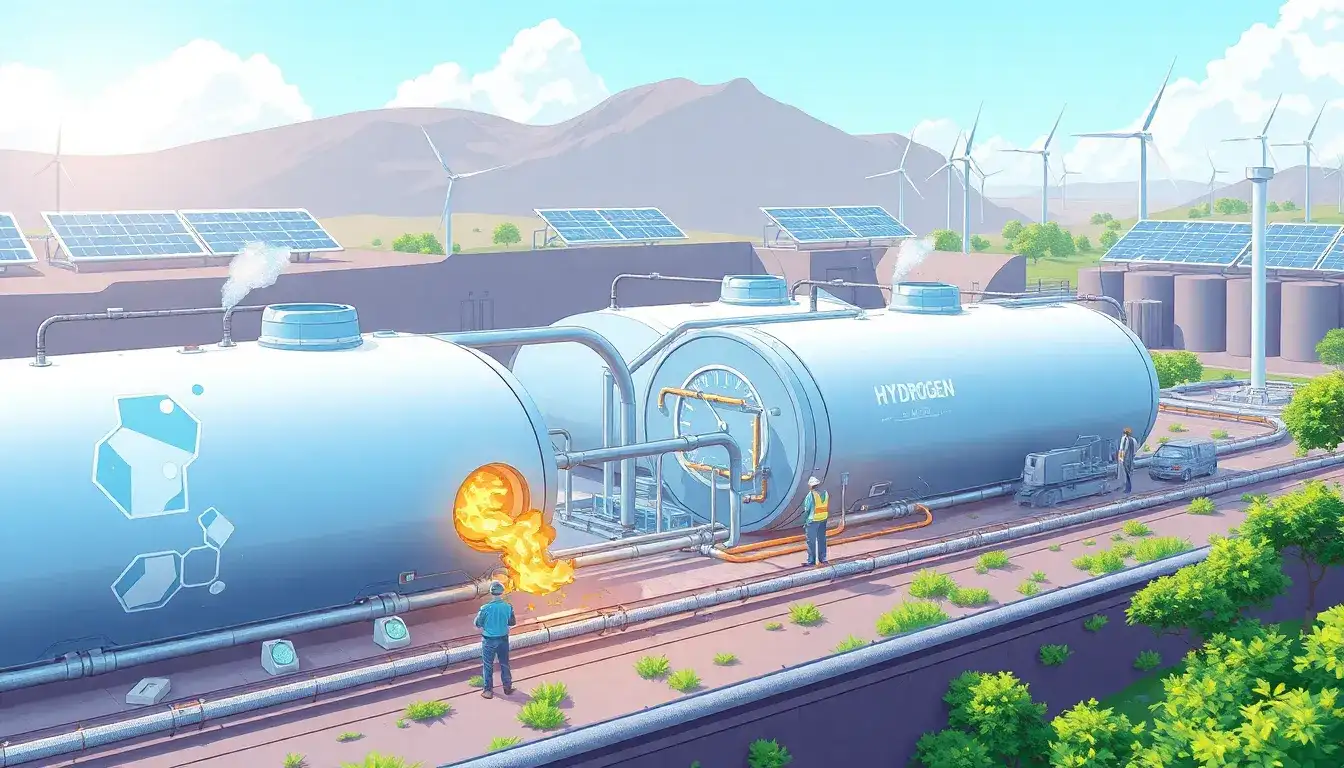
The main challenges in hydrogen storage infrastructure stem from its physical properties and engineering requirements:
- Low volumetric energy density
Hydrogen requires approximately four times the volume of gasoline to store equivalent energy, even in liquid form. This creates space constraints, especially for mobile applications like vehicles. - Infrastructure costs
Developing specialized storage systems—including cryogenic tanks for liquid hydrogen, high-pressure vessels (350-700 bar), and safety equipment—demands significant investment. Upfront costs for compressors, liquefaction plants, and monitoring systems remain prohibitive for widespread adoption. - Material compatibility
Hydrogen causes embrittlement in metals like steel, weakening storage tanks and pipelines over time. This necessitates corrosion-resistant materials, increasing complexity and costs. - Energy efficiency losses
Compressing or liquefying hydrogen consumes substantial energy—up to 30% of its energy content. Cryogenic storage also requires continuous refrigeration to maintain hydrogen at -253°C. - Distribution hurdles
Existing natural gas infrastructure cannot be directly repurposed due to hydrogen’s small molecule size, increasing leakage risks. Dedicated pipeline networks or transport via cryogenic tankers add logistical challenges. - Safety regulations
High flammability (4-75% concentration in air) demands strict protocols for leak detection, ventilation, and fire suppression, further escalating operational costs.
Original article by NenPower, If reposted, please credit the source: https://nenpower.com/blog/what-are-the-main-challenges-in-hydrogen-storage-infrastructure/

