

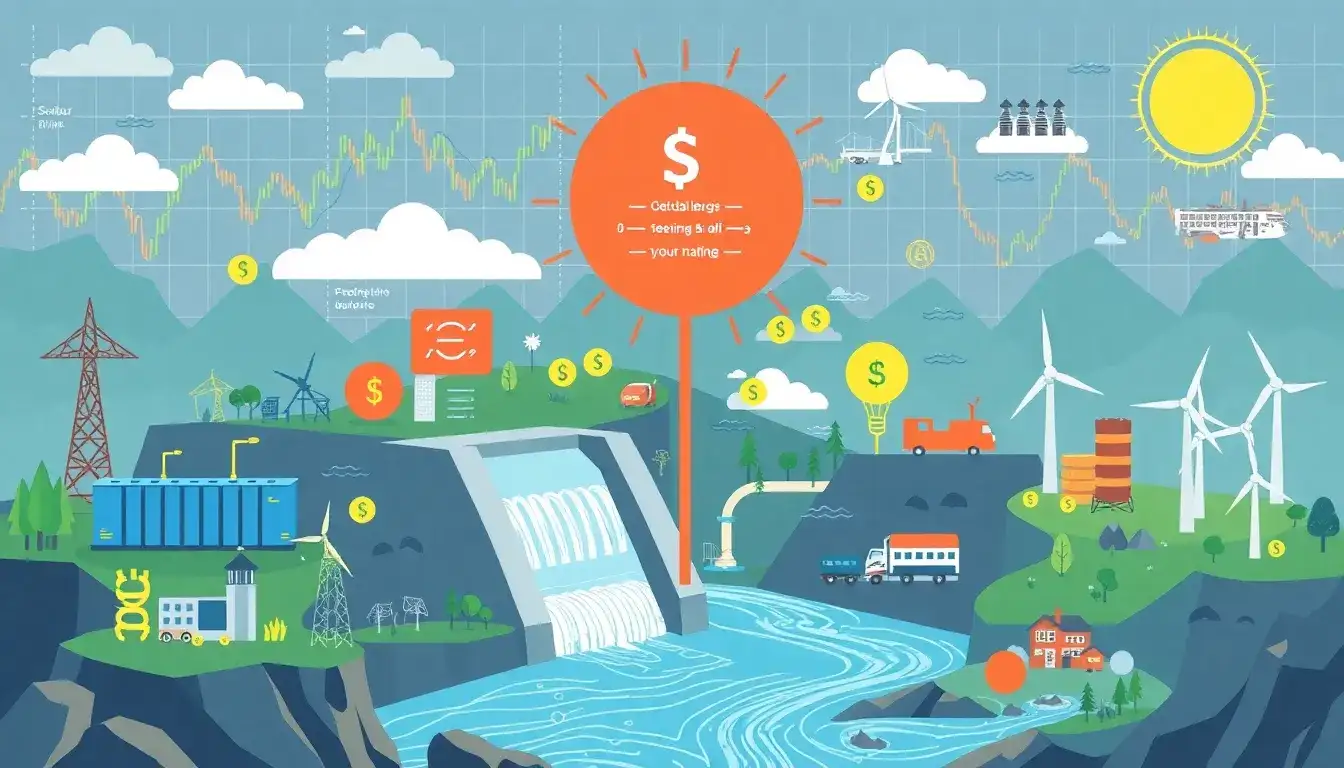
The main challenges in developing economic incentives for multi-day energy storage (storage lasting several days) revolve around market design, financial viability, and regulatory frameworks:
-
Lack of Current Economic Incentives and Revenue Streams:
Existing energy storage projects mainly earn revenue through short-term price arbitrage—shifting energy within a day to benefit from price differences—and short-duration ancillary services like frequency regulation and firm capacity. However, these revenue sources do not adequately compensate for long-duration storage, which needs to provide capacity over multiple days, especially during rare but critical multi-day renewable generation shortfalls. Current capacity markets generally incentivize storage for durations up to four hours, as fossil fuel plants cover unexpected gaps beyond that. -
Market Complexity and Low Utilization:
Multi-day storage is primarily valuable during infrequent and unpredictable multi-day renewable generation outages, making utilization low. Designing markets or incentives that remunerate assets used only during these rare emergency events is complex and potentially costly. The infrequent use means revenues are uncertain and less predictable, which deters investment. -
Need for New Market Mechanisms and Policy Innovation:
While short-duration storage benefits from tax credits and investment incentives (such as the US Inflation Reduction Act’s 30% investment tax credit), these mechanisms do not sufficiently address the unique financial risks and long-term value of multi-day storage. New market mechanisms that reward reliability and long-duration capacity are still in early development stages, often relying on government tenders rather than established, scalable economic incentives. -
Regulatory and Investment Uncertainty:
The energy storage market is influenced by evolving federal policies, tariffs, and regulatory changes that can affect the cost structure and investment climate. This uncertainty complicates long-term planning and financing of multi-day storage projects. -
Market Power and Investment Efficiency Concerns:
In some markets, the presence of market power in generation or storage can distort efficient investment incentives. For example, if generation firms restrict supply during high demand periods, it can inflate price volatility and lead to overinvestment or underinvestment in storage. Efficiently balancing these incentives for multi-day storage remains a challenge.
In summary, the main challenges are creating stable, sufficient economic incentives and market structures that reflect the long-term and infrequent value of multi-day storage, overcoming the complexity of remunerating assets with low utilization but high strategic importance, and navigating regulatory uncertainties and market power distortions. Addressing these is essential for scaling multi-day energy storage to support a renewable-dominated grid.
Original article by NenPower, If reposted, please credit the source: https://nenpower.com/blog/what-are-the-main-challenges-in-developing-economic-incentives-for-multi-day-energy-storage/

