

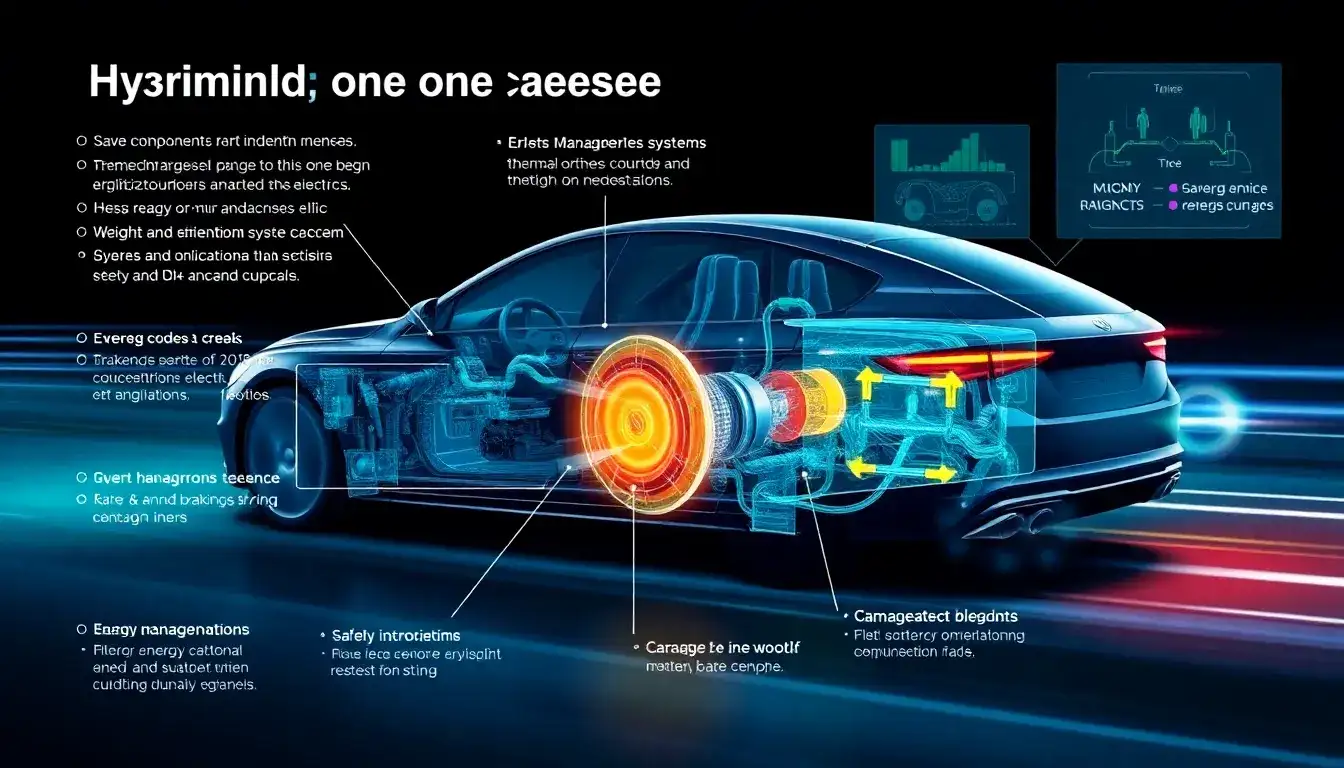
Designing braking systems for Hybrid Electric Vehicles (HEVs) and Plug-in Hybrid Electric Vehicles (PHEVs) involves several key challenges:
Main Challenges
- Brake Force Distribution: HEVs and PHEVs use both regenerative braking (capturing kinetic energy through the electric motor) and traditional friction brakes. Managing the distribution of braking forces between these systems is crucial to ensure stable vehicle behavior and maximize energy recovery. Incorrect distribution can lead to understeering or oversteering during braking, triggering unnecessary ABS or ESP actions.
- Energy Recovery Optimization: The regenerative braking system must be optimized to recover as much kinetic energy as possible without compromising the vehicle’s stability or the braking performance. However, the electric motor’s torque limits and the vehicle’s kinetic energy dissipation through friction brakes can reduce the efficiency of energy recovery.
- System Complexity: The integration of traditional and regenerative braking components complicates the control system design. Ensuring seamless operation and coordination between these systems is challenging and requires sophisticated control strategies.
- Component Wear and Maintenance: While regenerative braking reduces the wear on traditional brake components, it can also lead to less frequent use, potentially causing issues with corrosion and decreased braking performance over time.
- Weight and Cost Considerations: Adding both regenerative and traditional braking systems increases vehicle weight and cost. Balancing these factors with performance and efficiency requirements is a significant challenge.
Addressing these challenges requires advanced control systems, precise modeling of braking dynamics, and innovative solutions to optimize energy recovery and vehicle stability while minimizing costs and complexity.
Original article by NenPower, If reposted, please credit the source: https://nenpower.com/blog/what-are-the-main-challenges-in-designing-braking-systems-for-hevs-and-phevs/

