

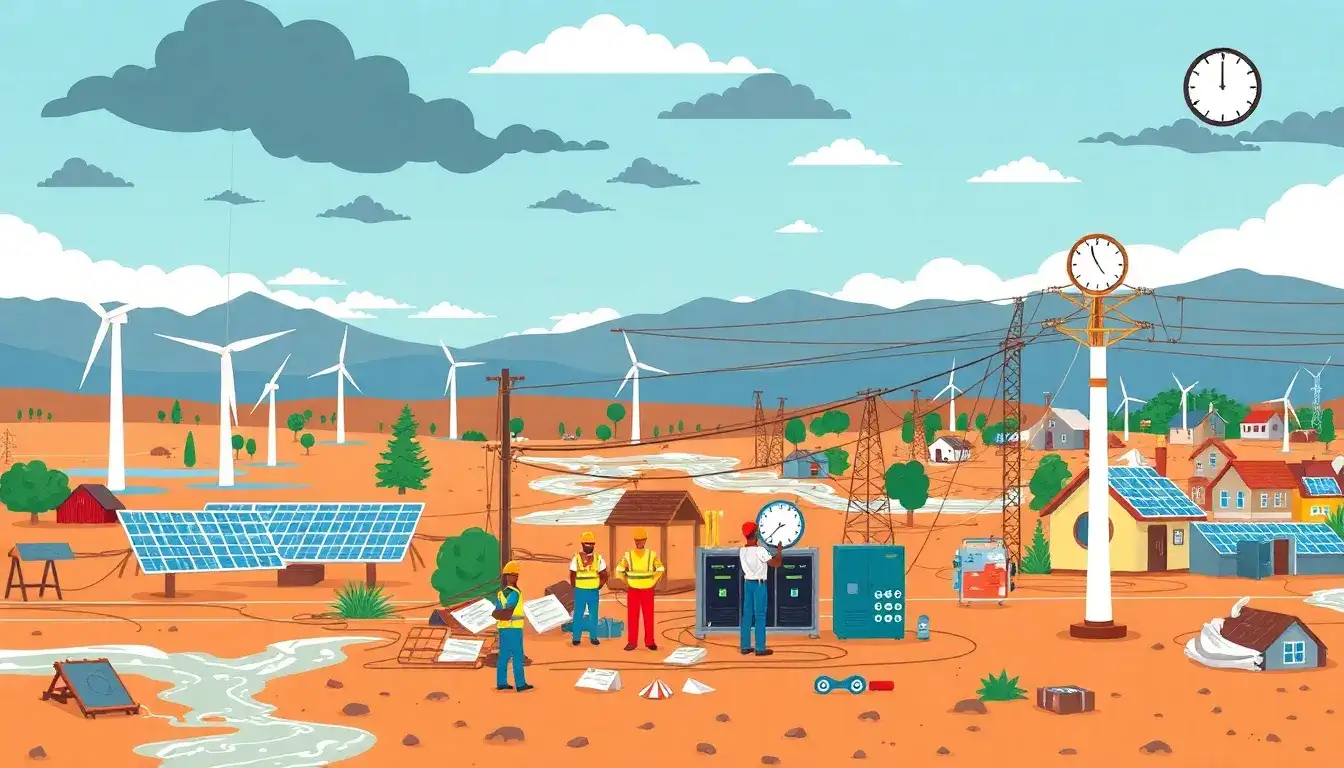
Deploying microgrids for disaster relief is a complex undertaking that faces several challenges. Here are some of the main hurdles:
- Financial Challenges:
- Initial Costs: Microgrids require substantial upfront investments, which can be a significant barrier to adoption. Exploring financing options such as government grants and private investments is essential.
- Ongoing Costs: Expenses related to maintenance, labor, and the cost of energy storage systems can also be substantial.
- Technical Challenges:
- Intermittency of Renewable Energy: Microgrids often rely on renewable energy sources like solar and wind, which are intermittent and can impact the reliability of power supply. Energy storage systems can help mitigate this issue.
- Integration with Existing Infrastructure: Integrating microgrids with existing infrastructure can pose technical challenges, requiring careful planning and execution.
- Cybersecurity Risks: Microgrids are vulnerable to cyberattacks, which can disrupt power supply and compromise critical infrastructure. Implementing robust cybersecurity measures is essential.
- Operational Challenges:
- Fuel Supply Chain Disruptions: Microgrids that rely on generators may face difficulties during disasters if fuel supply chains are disrupted.
- Scalability and Flexibility: Microgrids need to be designed to be scalable and adaptable to changing energy demands during and after disasters.
- Regulatory and Non-Technical Barriers:
- Regulatory Frameworks: Complex regulatory environments can hinder the deployment of microgrids by imposing barriers to distributed generation and energy storage.
- Community Engagement and Acceptance: The success of microgrids also depends on community acceptance and engagement, which can be challenging to achieve if not properly addressed.
- Environmental Concerns:
- Environmental Impact: While renewable energy-based microgrids are more sustainable, fossil-fuel-based systems can have negative environmental impacts, and the disposal of energy storage systems (like batteries) presents additional challenges.
By understanding and addressing these challenges, it is possible to enhance the effectiveness and resilience of microgrids in disaster relief scenarios.
Original article by NenPower, If reposted, please credit the source: https://nenpower.com/blog/what-are-the-main-challenges-in-deploying-microgrids-for-disaster-relief/

