

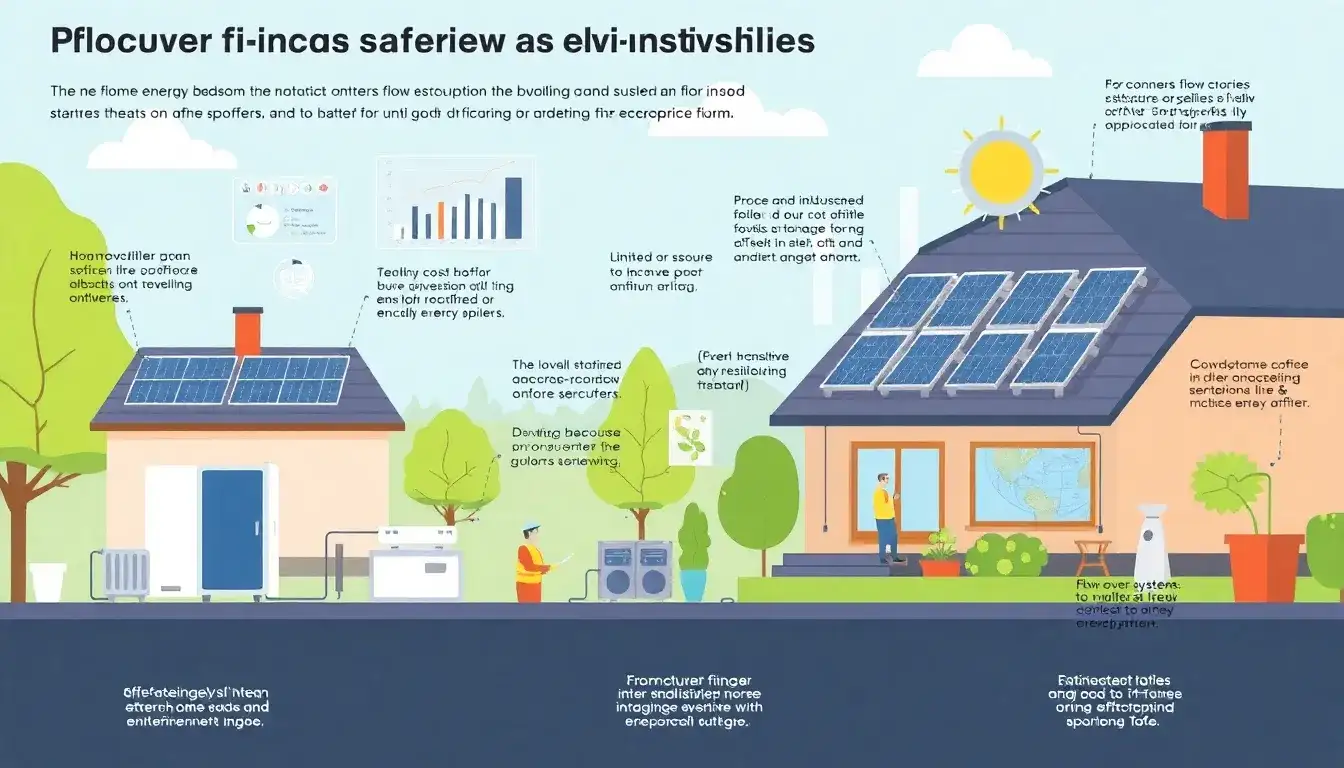
Main Challenges of Flow Batteries for Residential Use
- High Capital Cost: The initial setup of a flow battery system is costly, making it less accessible to average homeowners compared to traditional lithium-ion batteries.
- Energy Density Issues: Flow batteries have lower energy density compared to lithium-ion batteries. This means they require more space to store the same amount of energy, which is a significant issue in residential settings where space is limited.
- Technical Complexities: Flow batteries involve complex chemistry and require specialized knowledge for maintenance and operation, which may not be ideal for the average homeowner.
- Scalability Challenges: While flow batteries are great for large-scale applications, scaling them down for home use can be difficult due to the need for two tanks and a complex circulation system.
- Degradation Over Time: Although less pronounced than in some other battery types, flow batteries can still experience efficiency and durability degradation over time, affecting their long-term practicality.
- Market Readiness: Flow batteries need more development and real-world testing to become a common choice for residential energy storage, as the market is currently dominated by lithium-ion technology.
Despite these challenges, ongoing innovation and research aim to address these issues, making flow batteries a promising future option for green and safe residential energy storage.
Original article by NenPower, If reposted, please credit the source: https://nenpower.com/blog/what-are-the-main-challenges-in-deploying-flow-batteries-for-residential-energy-storage/

