

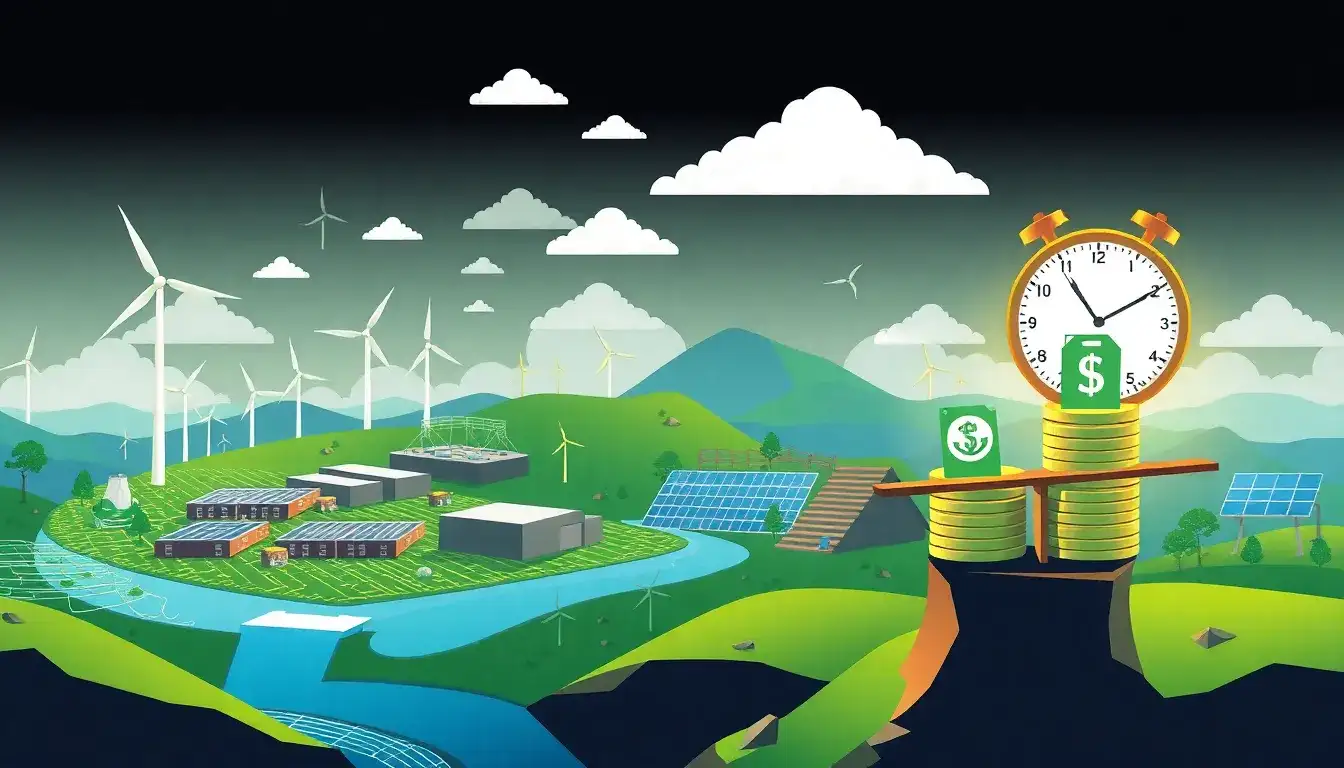
The main challenges in deploying energy storage systems include the following:
1. Regulatory and Approval Barriers
- Lengthy permitting processes and approval delays significantly slow down deployment. Obtaining permits requires meeting zoning, safety, and testing requirements from multiple local and federal authorities, which often extend timelines or halt projects entirely. Interconnection queues to connect storage systems to the grid can extend over 10 years in some markets.
- Many existing regulatory frameworks and electricity market structures do not adequately support or compensate energy storage investors and service providers, creating financial and operational hurdles.
2. Supply Chain and Material Constraints
- There are persistent supply chain issues for critical battery components such as lithium, semiconductors, and metals. High demand from electric vehicles and other industries causes shortages, delays, and price volatility, which hampers scaling energy storage capacity.
- Some manufacturers are trying to address these issues by integrating vertically to secure raw materials, but challenges remain.
3. High Costs and Financial Investment
- Despite cost reductions over the past decade, the initial capital cost for many energy storage technologies, including lithium-ion and flow batteries, is still high. This can deter investment and limit adoption, especially where government incentives are not strong or consistent.
- Long-duration energy storage (LDES) technologies such as pumped hydro, flow batteries, compressed air, and thermal storage often have cost or siting limitations that restrict wider deployment.
4. Technology and Standardization Challenges
- Lack of standardization among storage systems means that manufacturers produce varying designs, which complicates system scalability and evolution over time. This can cause integration issues for projects that need to expand or upgrade their storage capacity.
- Some LDES solutions face practical challenges related to geographic suitability, such as the need for water reservoirs or geological formations, limiting where they can be deployed.
5. Market and Policy Design Limitations
- Outdated market rules and policies do not fully value or recognize the multiple services energy storage can provide, such as grid balancing and resilience. This leads to insufficient revenue streams to justify rapid expansion.
In summary, the deployment of energy storage systems is mainly challenged by complex regulatory approval processes, supply chain constraints, high upfront costs, lack of system standardization, and outdated market designs. Addressing these barriers is crucial to accelerate the expansion of energy storage capabilities to support the energy transition.
Original article by NenPower, If reposted, please credit the source: https://nenpower.com/blog/what-are-the-main-challenges-in-deploying-energy-storage-systems-3/

