

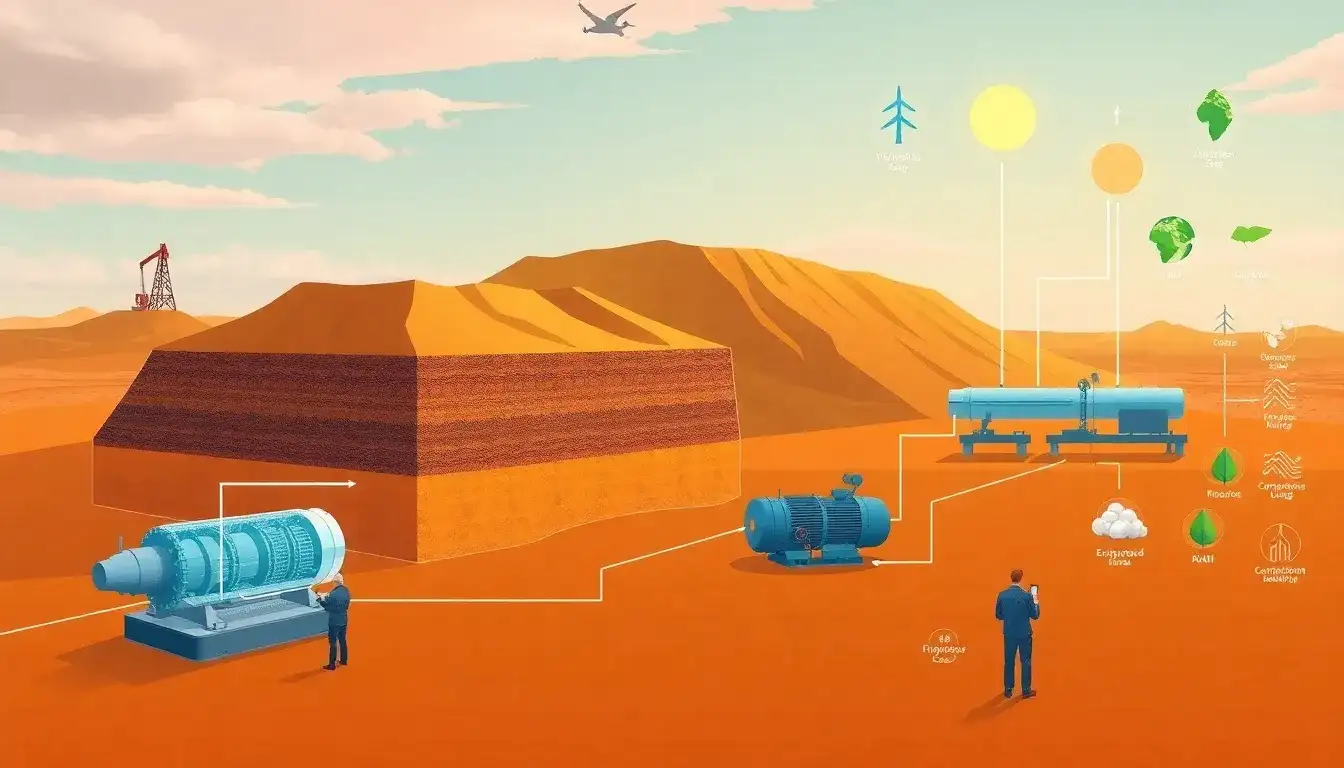
The main challenges in converting depleted gas reservoirs for Compressed Air Energy Storage (CAES) include:
- Ignition and Explosion Risks: Introducing compressed air into a depleted natural gas reservoir creates a potential hazard for ignition and explosion due to residual hydrocarbons and reactive conditions inside the reservoir. This risk requires careful assessment and mitigation strategies to ensure safe operation.
- Reservoir Integrity and Containment: Although depleted gas reservoirs have proven containment capability for hydrocarbons, they have not yet been fully demonstrated as operational storage media for compressed air. Ensuring the reservoir can maintain pressure and contain the compressed air without leakage is a technical challenge.
- Porosity and Permeability Uncertainties: The reservoir’s porosity and permeability must be adequate to store and cycle compressed air efficiently, which may vary significantly among depleted reservoirs.
- Well and Seal Condition: Existing wells and seals from the original gas production may degrade or present leakage paths unsuitable for CAES. Remediation or plugging of these wells is crucial to prevent air leakage and maintain storage integrity.
- Lack of Operational Demonstrations: Currently, salt caverns are the only proven underground storage used for CAES. Depleted gas reservoirs are considered promising but remain to be demonstrated operationally for this purpose, requiring further research and pilot projects.
In summary, the conversion of depleted gas reservoirs for CAES faces significant challenges related to safety (ignition/explosion potential), reservoir containment and integrity, suitable reservoir properties, and legacy well conditions that must be carefully managed and tested before widespread deployment.
Original article by NenPower, If reposted, please credit the source: https://nenpower.com/blog/what-are-the-main-challenges-in-converting-depleted-gas-reservoirs-for-caes/

