

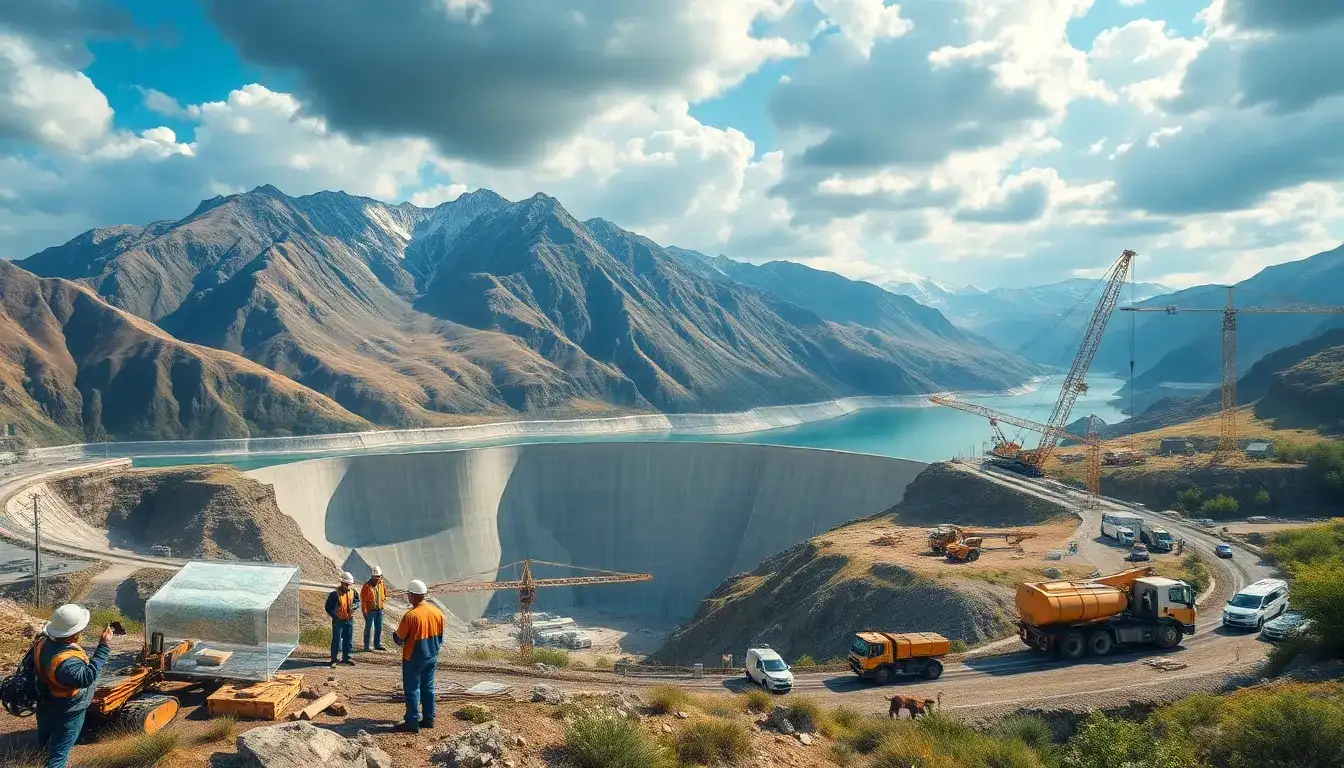
The main challenges in constructing Pumped Storage Hydropower (PSH) facilities include a combination of technical, financial, environmental, and regulatory factors:
1. Site Selection and Geological Constraints
- Finding an appropriate site is critical and difficult. The site must have favorable topography, geology, and hydrology to support the construction of two reservoirs at different elevations to enable efficient gravity-driven water flow.
- Closed-loop systems that use two man-made reservoirs are more likely to get approval than projects using natural water bodies, but suitable land and environmental conditions must be available.
- Geological conditions, land ownership, cultural sensitivity, and potential impacts on endangered species or ecological systems may limit site options or increase costs.
2. Environmental and Social Concerns
- Environmental impacts, including effects on local ecosystems, water availability, and endangered species, pose challenges and may raise opposition from stakeholders or indigenous groups.
- Social opposition and regulatory scrutiny can delay approvals and increase compliance costs.
3. Licensing and Regulatory Approval
- Obtaining project licenses can take several years due to extensive environmental reviews and permitting processes, often required by bodies such as the Federal Energy Regulatory Commission (FERC) in the U.S.
- Engaging with multiple agencies and stakeholders is needed to navigate complex regulatory environments, adding time and uncertainty to projects.
4. Construction Complexity and Duration
- Construction timelines for large PSH projects range from three to five years, sometimes longer when integrating renewable energy systems, making project execution lengthy and complex.
- Construction costs depend heavily on local geology and the remoteness of the site, affecting transport, grid connection, and access roads.
5. Financial Risks and Investment Challenges
- High capital costs and long lead times can deter investment, as financiers may hesitate to commit to projects with extended development periods and uncertain returns.
- Changing energy policies and market conditions add risk to the financial viability of PSH projects.
6. Technical Limitations and Capacity Constraints
- Scaling PSH facilities to meet growing energy storage demands requires significant infrastructure upgrades, including larger turbines, expanded reservoirs, and stronger grid connections.
- Technological constraints limit how much energy can efficiently be stored and generated, especially when balancing the intermittency of renewables like wind and solar.
Summary Table of Key Challenges
| Challenge Category | Description |
|---|---|
| Site Selection | Need for suitable topography, geology, land availability, and environmental sensitivity |
| Environmental & Social | Potential ecological impacts, endangered species, indigenous rights, and social opposition |
| Licensing & Regulatory | Lengthy permitting and licensing processes, stakeholder engagement |
| Construction Complexity | Multi-year construction timelines, costs influenced by geology and infrastructure needs |
| Financial & Investment Risk | High upfront costs, long development periods, uncertain policy and market dynamics |
| Technical & Capacity | Limitations in scaling and integrating with renewable intermittency, technology constraints |
These challenges mean that while PSH is crucial for large-scale, long-duration energy storage and grid stability, its development requires careful planning, substantial investment, and rigorous environmental and regulatory management.
Original article by NenPower, If reposted, please credit the source: https://nenpower.com/blog/what-are-the-main-challenges-in-constructing-psh-facilities/

