

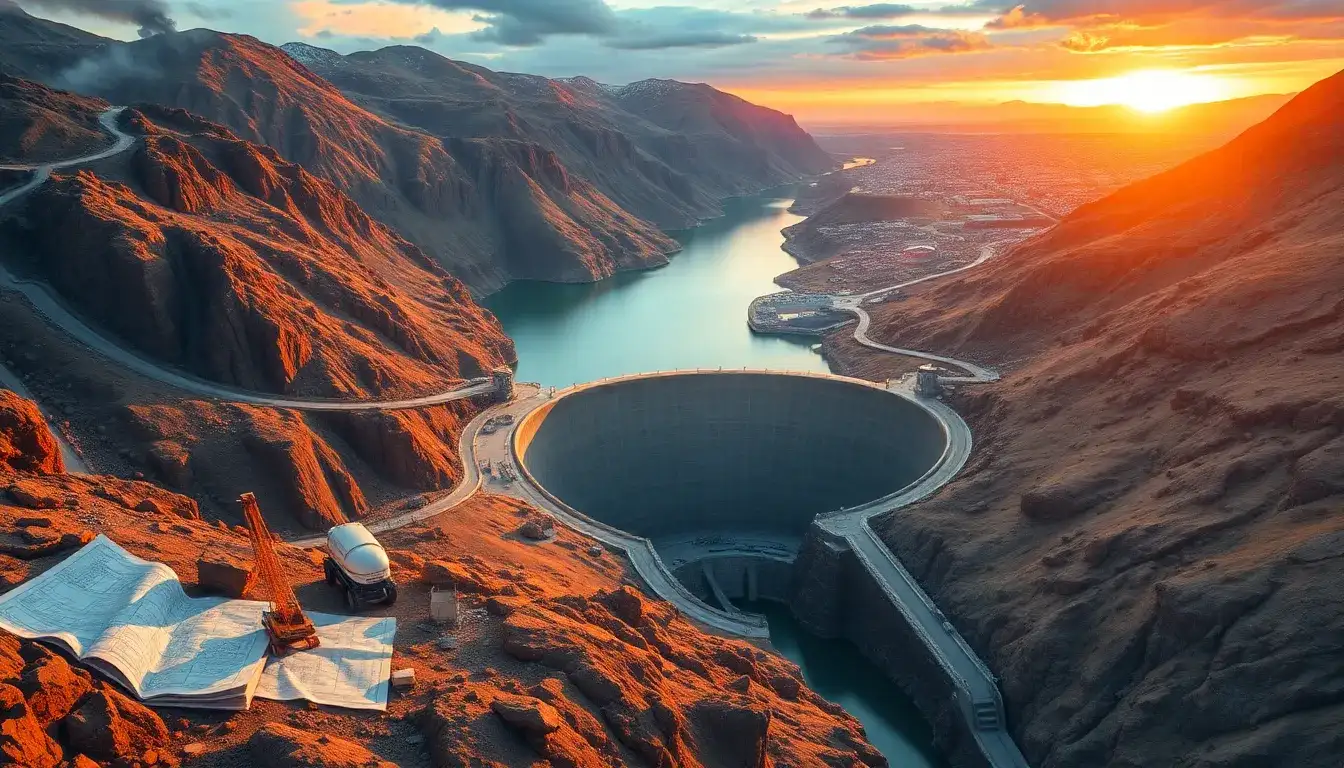
Building new pumped-storage hydroelectricity facilities encounters several main challenges:
Key Challenges
- Environmental Concerns:
- The construction of dams and reservoirs can significantly alter ecosystems, affecting water flow and wildlife habitats.
- Minimizing environmental impacts is a major concern, leading developers to focus on sites with minimal ecological disruption.
- High Initial Costs:
- Establishing a pumped-storage system requires substantial investment in infrastructure such as reservoirs, dams, turbines, and generators.
- Financial uncertainties and the high cost of construction can deter investors, especially with long development timelines.
- Geographical Limitations:
- Suitable sites with adequate elevation differences are necessary, which can limit where these plants can be built.
- Geographical constraints often require significant landscape alterations.
- Regulatory and Licensing Challenges:
- The licensing process for new projects, particularly under the U.S. Federal Power Act, can be lengthy and complex, taking three to five years or longer.
- Streamlining the licensing process is crucial for facilitating new developments.
- Energy Loss and Operational Efficiency:
- The pumping process consumes more energy than is generated during water release, leading to net energy loss.
- Efficient operation requires regular maintenance, adding to operational costs.
- Dependency on Electricity Grid:
- Pumped-storage systems rely on the grid for operation, making them vulnerable during power outages.
- Continuous grid access is essential for the pumping cycle.
- Scalability and Technological Limitations:
- Scaling up these systems to meet increasing renewable energy demands can be technologically and financially challenging.
- The integration with variable sources like solar and wind poses operational complexities.
Original article by NenPower, If reposted, please credit the source: https://nenpower.com/blog/what-are-the-main-challenges-in-building-new-pumped-storage-hydroelectricity-facilities/

