

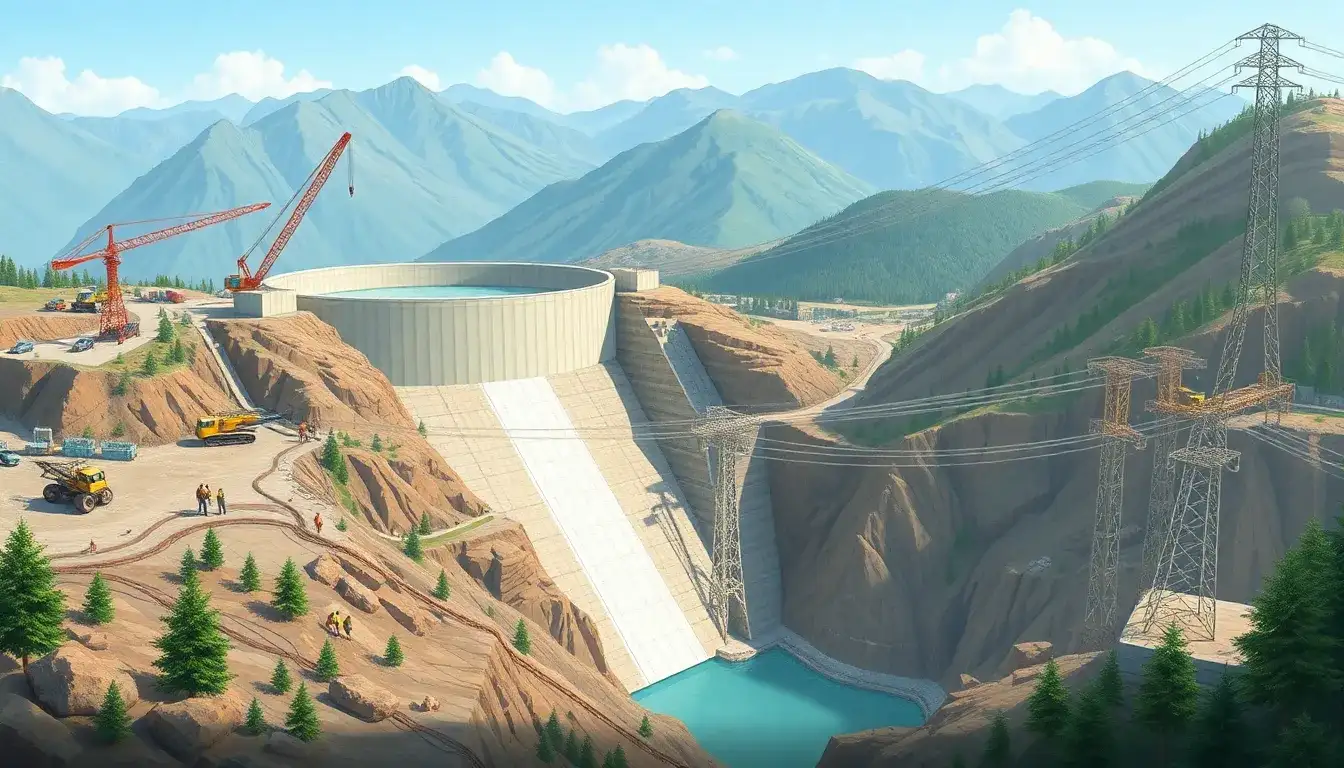
The main challenges in building new pumped hydro storage plants include the following key aspects:
Site and Environmental Challenges
- Site selection is a critical and complex issue because pumped hydro storage requires geographically suitable locations where elevation differences allow efficient gravity-based energy storage and generation. Such sites are limited and must also have adequate water availability.
- Environmental concerns present significant hurdles. The construction and operation of pumped storage can impact local ecosystems, water resources, and communities, leading to regulatory and social challenges during planning and permitting phases.
- Social and environmental risks need to be carefully managed to obtain approvals and community acceptance, which can be time-consuming and costly.
Financial and Market Challenges
- High upfront capital costs represent a major barrier. Building pumped storage plants demands significant investment in infrastructure, including reservoirs, tunnels, turbines, and generators. These costs are substantial and can deter investors.
- Long development timelines, often eight years or more, increase exposure to inflation and cost escalation for materials and labor, which further raises financial risks.
- Revenue uncertainty is critical; current energy markets often do not fully compensate pumped storage plants for their flexibility and grid stability services, making it difficult to secure “bankable” revenue streams and financing.
- Need for supportive mechanisms such as government incentives, streamlined regulations, and appropriate market rules is essential to de-risk investments and promote financing.
Technical and Capacity Challenges
- Technological limitations constrain how much energy can be efficiently stored and dispatched, especially when integrating with variable renewable sources like wind and solar.
- Scalability is challenging. As renewable energy demand grows, scaling up pumped storage requires larger and more technically complex systems, including bigger turbines and expanded reservoirs, which increase complexity and cost.
- Ensuring grid compatibility and flexibility with the variable nature of renewable energy inputs demands advanced technical solutions and integration strategies.
Regulatory and Planning Challenges
- Regulatory timelines and processes can be long and complicated, particularly under laws such as Section 10(a) in the U.S., which adds delays and administrative burdens for project developers.
- In emerging markets such as India, where pumped storage is relatively new, there is a lack of sufficient specialized expertise and experience, complicating successful project planning and commissioning.
These challenges collectively mean that developing new pumped hydro storage plants involves addressing complex environmental, financial, technical, and regulatory factors. Coordination across government, industry, and communities, as well as innovations in technology and market design, are crucial to overcome these barriers and unlock the potential of pumped storage in supporting renewable energy integration and grid reliability.
Original article by NenPower, If reposted, please credit the source: https://nenpower.com/blog/what-are-the-main-challenges-in-building-new-pumped-hydro-storage-plants/

