Main challenges in achieving the WEEE Directive’s recycling targets for PV panels
<h3><strong>1. Technical limitations in material recovery</strong></h3>
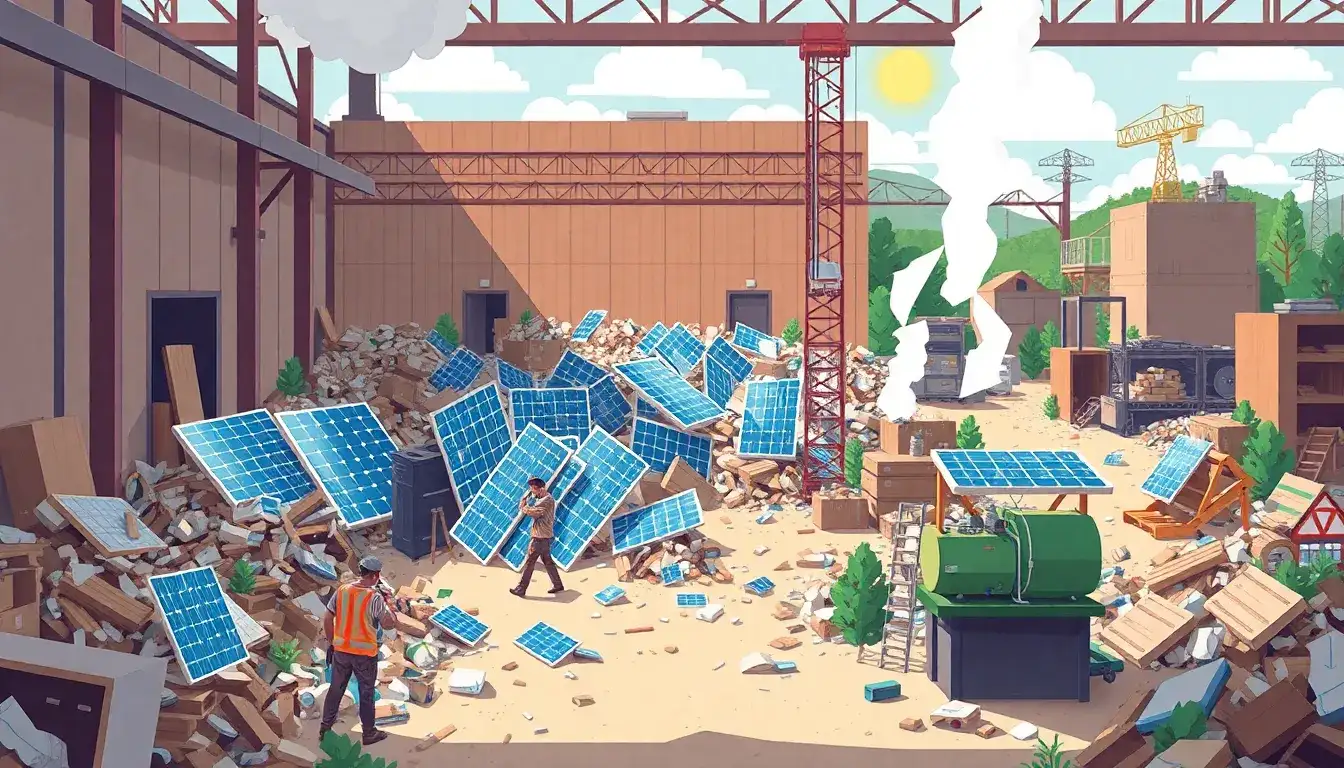
Current recycling methods face difficulties in efficiently separating composite materials like glass, polymers, and metals (e.g., silver, copper) from PV modules. While thermal treatment (incineration) contributes to recovery rates, it limits full material reuse and risks losing critical raw materials. Projects like ReProSolar and Photorama aim to improve recovery methods but highlight existing technological gaps in industrial-scale processes.

<h3><strong>2. Regulatory and industry alignment issues</strong></h3>
PV Cycle argues that PV panels are fundamentally different from typical WEEE products due to their long lifespan (25-30 years) and decentralized waste generation patterns, complicating collection logistics. The <strong>85% recovery rate</strong> (including incineration) and <strong>80% reuse/recycling target</strong> under WEEE Annex V may not adequately prioritize true circularity for PV-specific waste streams.

<h3><strong>3. Recycling infrastructure gaps</strong></h3>
Despite initiatives like France’s ROSI plant (targeting 10,000 tonnes/year capacity by 2025), the EU still lacks sufficient dedicated PV recycling facilities. Many member states rely on general WEEE processing, which may not optimize material recovery from solar panels.

<h3><strong>4. Collection rate complexities</strong></h3>
The <strong>65% collection rate target</strong> (relative to historical market volumes) becomes challenging for PV due to delayed waste generation timelines and difficulties in tracking end-of-life panels. Decentralized rooftop installations further complicate collection logistics.

<h3><strong>5. Conflicting priorities in recovery methods</strong></h3>
The inclusion of energy recovery (e.g., incineration) in recycling targets risks prioritizing disposal over high-value material recovery, particularly for components like silicon and rare metals. Projects like Icarus aim to address silicon recycling inefficiencies but remain in developmental stages.

These challenges are compounded by the rapid growth of PV waste volumes, projected to reach millions of tonnes annually by 2030, necessitating urgent scalability in recycling solutions.
Original article by NenPower, If reposted, please credit the source: https://nenpower.com/blog/what-are-the-main-challenges-in-achieving-the-weee-directives-recycling-targets-for-pv-panels/