

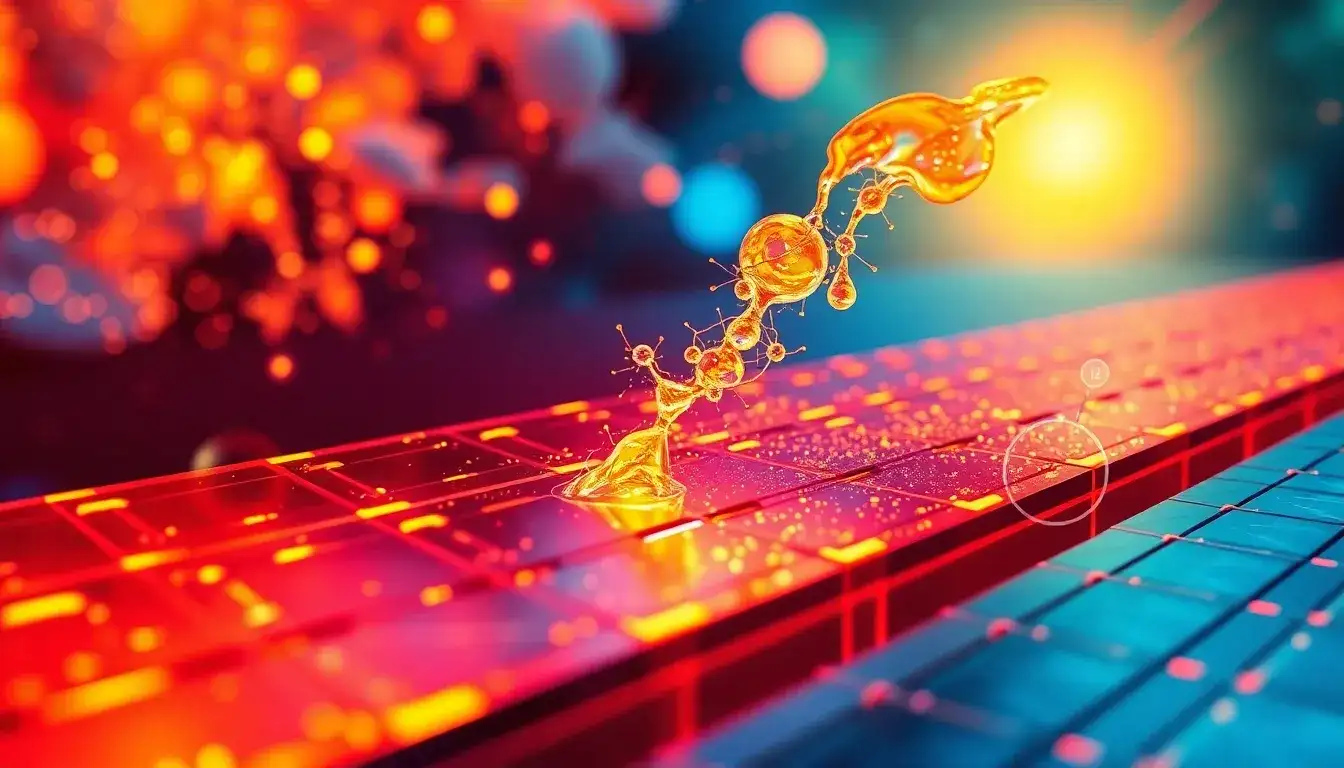
Perovskite solar cells (PSCs) face critical challenges in achieving high-temperature stability, primarily due to material degradation and interfacial weaknesses under thermal stress. Key issues include:
1. Material Decomposition at Elevated Temperatures
Perovskites like methylammonium lead iodide (MAPbI₃) undergo phase transitions and component decomposition (e.g., methylamine ions) at high temperatures, accelerating device degradation (~0.12%/°C). Exposure to temperatures approaching 100°C—common during solar cell operation—causes chemical breakdown, even in controlled environments. This instability stems from weak interactions (e.g., van der Waals forces, hydrogen bonds) within perovskite crystals.
2. Interface Degradation
The interfaces between perovskite layers and charge-transport materials (e.g., hole-transport layers) are prone to thermal-induced defects. These defects lead to energy loss, charge recombination, and reduced efficiency. Conventional interfacial materials, such as ammonium-based passivation layers, often degrade under thermal stress.
3. Ligand Instability
Thermal stress triggers the breakdown of organic ligands (e.g., ammonium) used to passivate perovskite surfaces. This results in progressive ligand intercalation, where molecules penetrate the perovskite lattice, destabilizing the crystal structure.
4. Environmental Sensitivity
Even without external moisture or oxygen, high temperatures alone disrupt perovskite integrity. Studies show that heating MAPbI₃ in ultrahigh vacuum still causes iodine and methylammonium loss, degrading performance.
Recent Advances to Address These Challenges
- Fluorinated Aniliniums: Used in interfacial passivation to minimize ligand intercalation, enabling PSCs to retain 24% efficiency for 65 days at 85°C.
- Amidinium Coatings: Replace unstable ammonium ligands, achieving a T₉₀ lifetime of 1,100 hours while maintaining 26.3% efficiency.
- Mixed Cations/Halides: Incorporation of formamidinium and cesium improves thermal resilience by stabilizing the perovskite lattice.
Despite progress, scalability and long-term stability under real-world conditions remain hurdles for commercialization.
Original article by NenPower, If reposted, please credit the source: https://nenpower.com/blog/what-are-the-main-challenges-in-achieving-high-temperature-stability-for-perovskite-solar-cells/

