

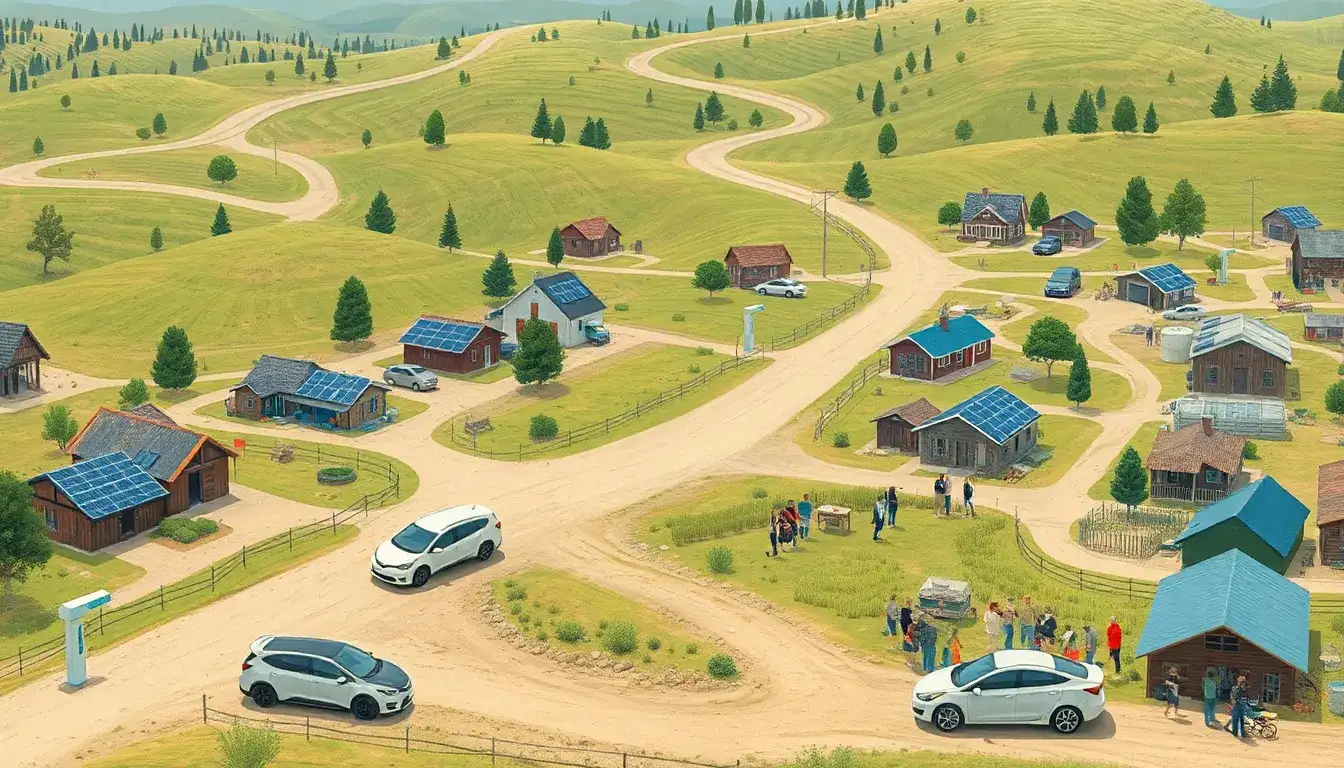
Main Challenges
-
Lack of Charging Infrastructure
- Rural areas are often referred to as “charging deserts” due to the scarcity of charging stations compared to urban regions. This scarcity makes long-distance travel challenging and discourages potential EV buyers.
-
Range Anxiety
- The absence of frequent charging points exacerbates range anxiety, a common concern for EV owners, particularly in areas where distances between charging stations are long.
-
Higher Initial Costs
- Electric vehicles are generally more expensive to purchase upfront, which can be a significant barrier for many rural households. Although EVs offer long-term cost savings on maintenance and fuel, the initial cost remains a significant hurdle.
-
Infrastructure Signage and Information
- Poor signage and a lack of information about charging station availability make navigation and planning difficult, further complicating EV adoption.
-
Grid Limitations
- Some rural areas have grid limitations that can impact the ability to support widespread charging infrastructure.
Additional Considerations
-
Economic Viability
- The lower population density in rural areas makes it less economically viable for companies to install charging stations, creating a feedback loop where fewer stations discourage EV adoption.
-
Social and Environmental Equity
- Inadequate infrastructure can exacerbate inequality, particularly in Indigenous communities, by limiting access to sustainable transportation options. Addressing these gaps can help reduce carbon emissions and improve social equity.
Original article by NenPower, If reposted, please credit the source: https://nenpower.com/blog/what-are-the-main-challenges-for-ev-adoption-in-rural-areas/

