

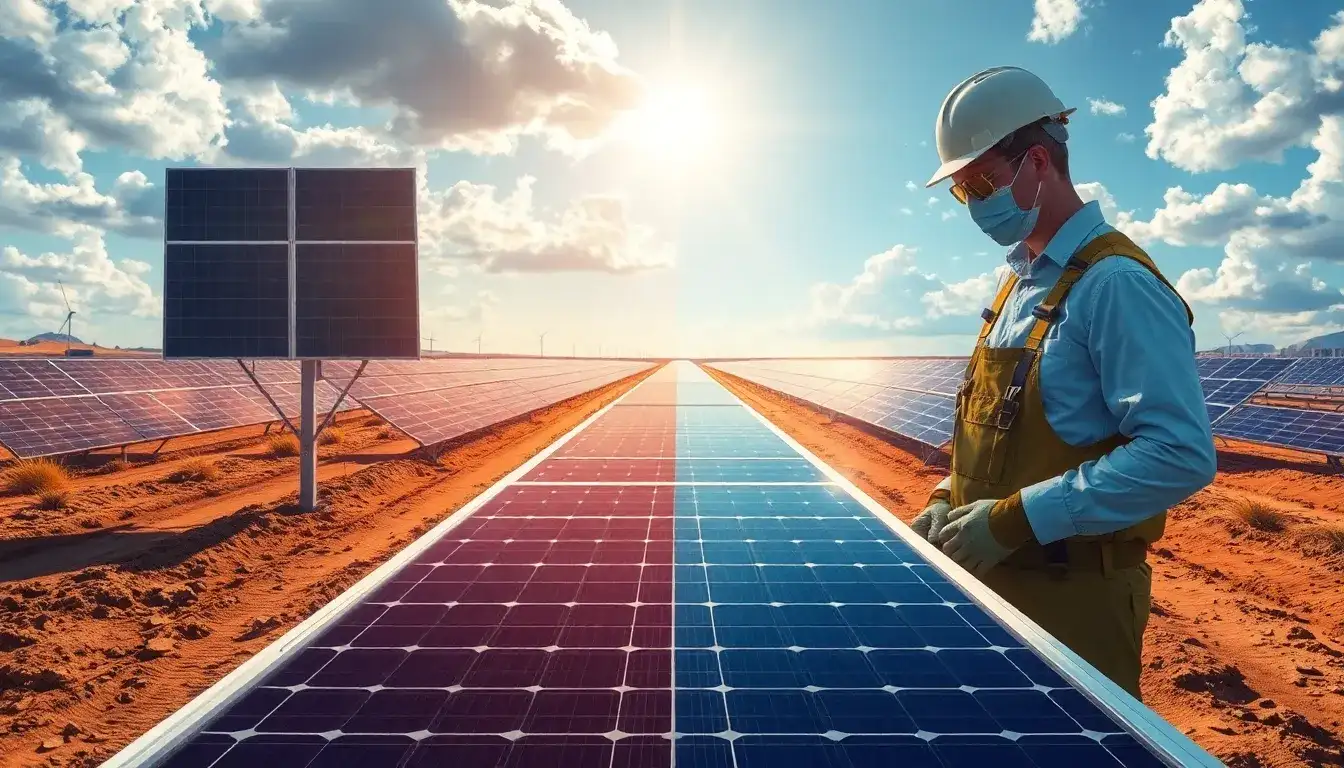
Main Challenges
1. Higher Initial and Installation Costs
– Bifacial panels have higher upfront equipment and installation costs compared to traditional monofacial modules. Although the cost gap has narrowed over the years, the unique design and the need to optimize both front and rear side exposure lead to increased overall installation expenses.
– The DC design, site layout, and module placement for bifacial systems are more complex and costly to execute properly.
2. Complex Design and Site Optimization Requirements
– Optimal performance depends heavily on site-specific factors such as ground reflectivity (albedo), module height, row spacing, and orientation. This requires careful planning and efficient installation to maximize the energy gains from the rear side of the panels.
– Lands with high albedo and at higher latitudes are more suitable, but site selection is critical and can limit applicability.
3. Difficulty in Accurate Power Production Prediction
– The energy gain from the rear side depends on many variables—ground conditions, weather, time of year, and even soiling differences between the front and rear surfaces. This complicates accurate simulation and forecasting of output.
– Without reliable performance data and predictive models, it is challenging to justify the investment or optimize system design.
4. Challenging Performance Monitoring and Soiling Measurement
– Bifacial modules have only a single power output, making it difficult to isolate losses due to soiling or irradiance differences on the front versus rear sides.
– There is no clear consensus or standardized method to measure soiling losses accurately on bifacial panels, and existing sensor technologies have limitations.
5. Financing and Investor Hesitancy
– Due to uncertainties in predicted yields and insufficient reliable long-term data, investors and lenders tend to value the bifacial energy gains conservatively. For example, a predicted 10% gain in output might only lead to 5% more financing, increasing the cost of capital and overall levelized cost of energy (LCOE).
– This financial conservatism can slow adoption despite the technology’s long-term benefits.
6. Impact of Weather and Environmental Variability
– Bifacial panel performance can fluctuate more strongly with changing weather conditions, introducing additional variability in energy production.
– Ground cover changes, soiling rates, and spectral mismatch between direct and reflected sunlight add to the complexity of maintaining predictable output.
Summary Table of Challenges
| Challenge | Description |
|---|---|
| Higher initial and installation costs | Increased complexity in design and installation elevates upfront capital expenditure |
| Complex site and design optimization | Optimum energy gain requires careful site selection and layout due to variability in reflected light |
| Difficulty in accurate output prediction | Multiple environmental and design variables make power forecasting uncertain |
| Monitoring and soiling measurement difficulties | Single output limits diagnostic insights; no standard measurement methods for soiling losses |
| Financing hesitancy and valuation uncertainty | Investors discount predicted gains due to lack of long-term reliable data |
| Variable weather and environmental impacts | Performance sensitive to changes in weather, ground cover, and spectral characteristics |
Conclusion
While bifacial solar panels offer clear advantages such as increased energy yields (up to ~30-35% more) and potential cost-effectiveness in the long term, these benefits are tempered by challenges in installation complexity, output prediction, performance monitoring, and financing. Continued improvements in modeling, testing, and data collection are essential to reduce uncertainties. As such challenges are addressed, bifacial solar technology is expected to gain greater market share, particularly in utility-scale projects where site conditions can be optimized. However, until then, these factors remain the main hurdles to widespread adoption.
Original article by NenPower, If reposted, please credit the source: https://nenpower.com/blog/what-are-the-main-challenges-facing-the-widespread-adoption-of-bifacial-solar-panels/

