

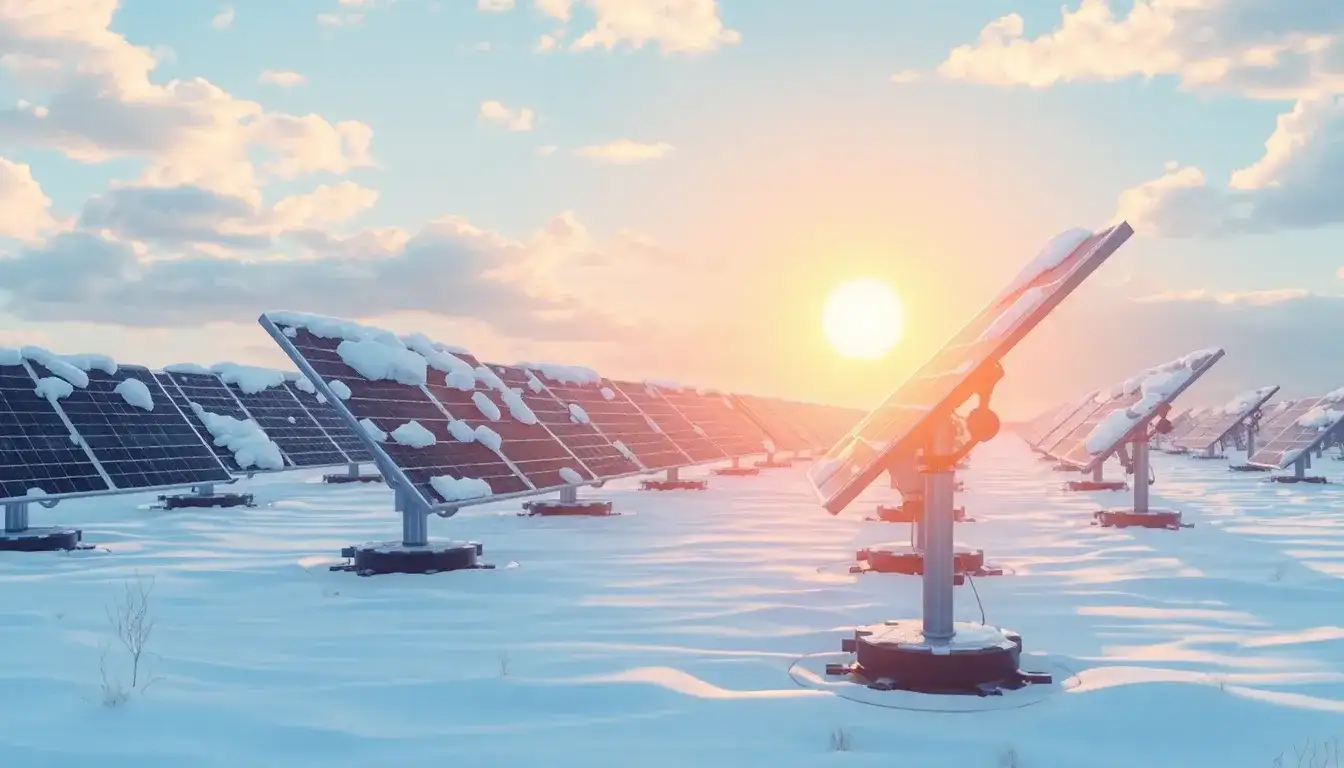
The main challenges faced by solar trackers in winter include:
1. Lower Sun Path and Reduced Solar Irradiation
During winter, the sun follows a much lower path in the sky, resulting in less direct sunlight on the panels. This leads to decreased solar energy production because the panels receive less intense sunlight and for fewer hours. Single-axis trackers, which pivot mostly east to west, often cannot fully adjust to these lower solar angles, reducing their efficiency during the short winter days.
2. Row-to-Row Shading
Because of the lower sun angle in winter, closely spaced rows of solar panels can cast shadows on adjacent rows, especially around midday when the sun is low. This shading decreases the effective sunlight on the panels and thus reduces energy output.
3. Snow Accumulation on Panels
Snow build-up can cover solar panels, blocking sunlight and significantly lowering power generation. This physical snow load also presents mechanical challenges for the tracker system. The weight of snow can stress the solar tracker structures, potentially causing damage or impeding their movement.
4. Snow Drift and Freeze-Thaw Effects
In windy and snowy conditions, snow can drift and accumulate unevenly under tracker rows. When the snow hardens due to freeze-thaw cycles, it can obstruct the tracker’s motion or reduce the clearance between the panels and the ground. This can lead to mechanical failures or damage if the tracker tries to move into an obstructed position.
5. Ice Formation and Harsh Winter Weather
Ice and freezing weather pose additional risks by potentially causing physical damage to the PV system and limiting its operational capacity. Ice can impair the movement of trackers and reduce power output.
6. Operational Challenges for Tracker Movement
Trackers need to intelligently manage their position to optimize energy capture while minimizing snow accumulation. Systems must sometimes hold panels in a stationary position during heavy snow to avoid unnecessary wear or mechanical failure. Advanced controls, such as snow sensors, help by adjusting tracker angles based on snow load to protect the structure and improve efficiency.
Summary Table of Winter Challenges for Solar Trackers
| Challenge | Impact on Solar Tracker Systems | Mitigation Strategies |
|---|---|---|
| Low sun angle | Reduced energy capture, row shading | Design adjustments, optimized tracker angles |
| Row-to-row shading | Shading lowers midday production | Increased row spacing, layout design |
| Snow accumulation | Blocks sunlight, mechanical load on panels | Tilt panels to shed snow, snow sensors |
| Snow drift and freeze-thaw | Obstructs movements, hardens snow under panels | Overcurrent protections, snow sensors |
| Ice and freezing weather | Physical damage, limited movement | System hardening, weather-resilient design |
| Operational control challenges | Need for dynamic position adjustments | Advanced sensors and control algorithms |
These combined factors make winter a particularly challenging season for solar trackers, requiring robust design, intelligent controls, and sometimes trade-offs in positioning strategies to maintain performance and protect equipment.
Original article by NenPower, If reposted, please credit the source: https://nenpower.com/blog/what-are-the-main-challenges-faced-by-solar-trackers-in-winter/

