

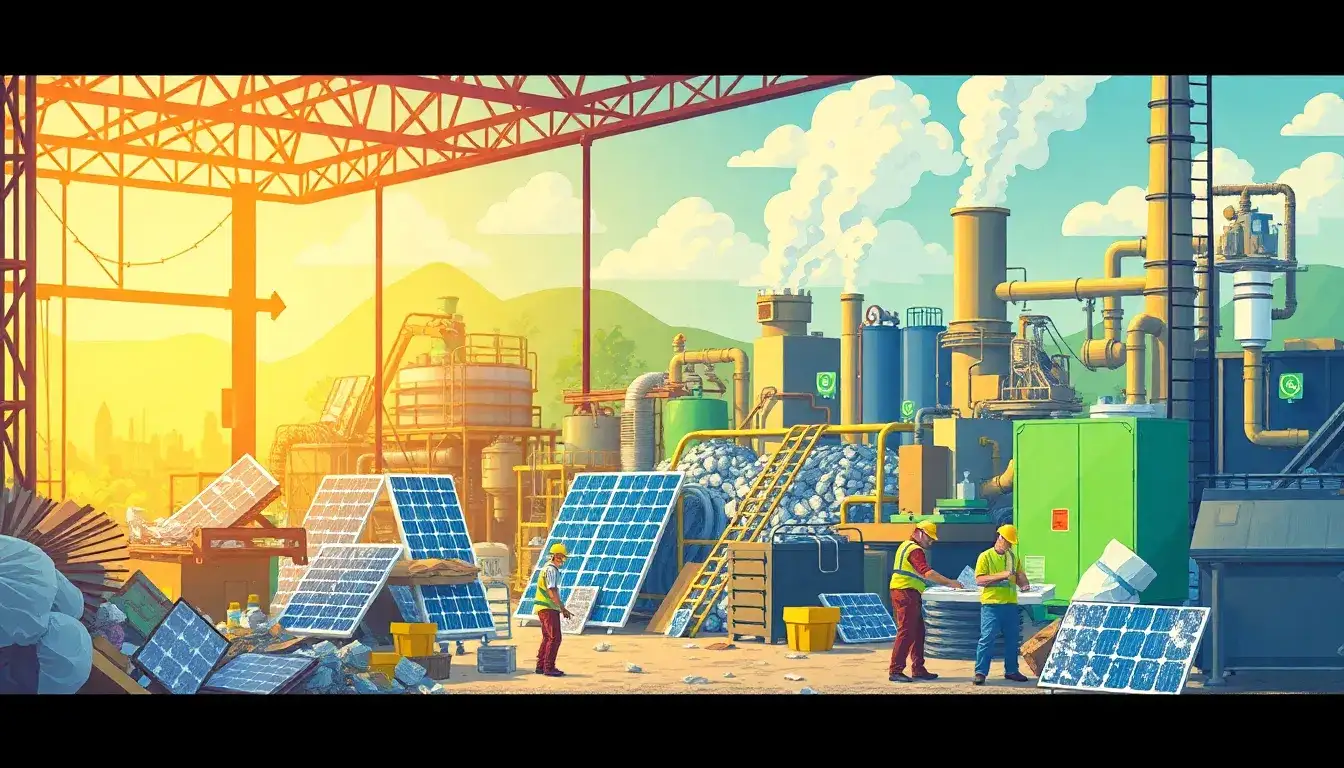
Solar panel recycling companies face multiple interconnected challenges:
Economic Viability
High processing costs and low material recovery value create a profitability gap. Current methods struggle to recover high-purity materials like silver and silicon efficiently, which would increase resale value. While raw materials recoverable from panels could exceed $15 billion globally by 2050, today’s shredding-based methods often yield low-grade materials, reducing financial incentives.
Technological Limitations
No commercial process recovers all critical materials (e.g., silicon, silver, copper) efficiently. Dismantling panels mechanically risks cross-contamination, especially when separating glass from solar cells, often forcing recyclers to shred contaminated materials. Advanced chemical recovery methods remain experimental and costly.
Regulatory and Data Gaps
- EU mandates require 80% mass recovery but lack standards for material purity or recycling efficiency.
- Hazardous waste classification uncertainty arises from flawed EPA leaching tests, leading to over-cautious disposal practices and inflated costs.
- Data scarcity on recycling rates complicates policy-making and investment decisions.
Design Constraints
Panels are not optimized for disassembly, with adhesives and laminated layers complicating material separation. Redesigns for recyclability would take decades to reach end-of-life.
These challenges collectively hinder the development of a sustainable, large-scale recycling industry.
Original article by NenPower, If reposted, please credit the source: https://nenpower.com/blog/what-are-the-main-challenges-faced-by-solar-panel-recycling-companies/

