

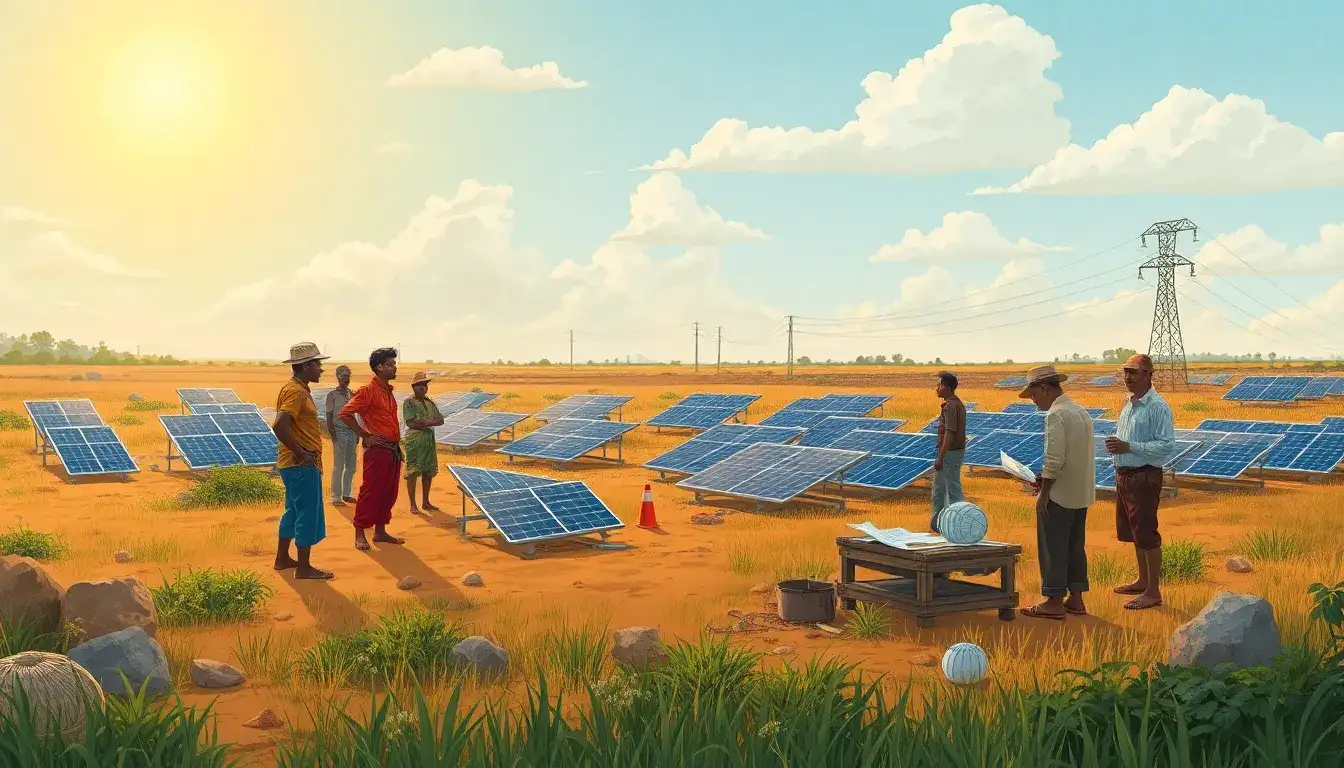
Rural communities face several main challenges when developing solar energy projects, which can be grouped into financial, infrastructural, social, technical, and sustainability categories.
Financial Challenges
- High Initial Capital Costs: Although the cost of solar technologies has decreased, the upfront investment for installations like mini-grids or large solar arrays remains a significant barrier for many rural communities and households that often have limited cash flow.
- Access to Financing: Rural areas often lack access to affordable financing options, making it difficult to cover initial costs. Availability of microloans, subsidies, or financial aid is crucial to overcoming this barrier.
Infrastructural Challenges
- Limited Existing Infrastructure: Poor road networks and inadequate communication systems complicate the transportation of solar equipment and materials, as well as ongoing maintenance efforts.
- Supply Chain Issues: Lack of local supply chains for solar system parts can hinder timely repairs and sustainability of the projects.
Technical and Capacity Barriers
- Insufficient Technical Expertise: Rural communities often lack trained personnel for installing, operating, and maintaining solar systems. Building local technical capacity through training programs and partnerships with renewable energy companies is essential.
- Maintenance Challenges: Ensuring long-term operation is difficult when technical support and spare parts are not readily available locally.
Social and Cultural Challenges
- Community Resistance and Distrust: Some rural residents may be skeptical or resistant to new solar technologies due to unfamiliarity or social and cultural concerns. Projects that do not engage communities or respect local needs and values often face opposition.
- Visual and Landscape Concerns: Utility-scale solar projects can be opposed because they alter the visual character and landscape of rural areas, which residents may value highly.
- Economic Identity and Legacy Industries: In some rural areas, particularly those with histories tied to fossil fuel industries like coal, there can be emotional or economic opposition to renewable projects perceived as competing with local traditions or livelihoods.
Long-term Sustainability Challenges
- Ensuring Durability and Operation Over Time: Many rural solar projects struggle to sustain themselves without ongoing maintenance support and a functioning ecosystem of local technicians and supply chains.
- Energy Independence and Reliability: Rural areas often face unreliable grid connections or frequent outages, which solar projects aim to resolve but must be designed to reliably support.
In summary, the main challenges are:
| Challenge Category | Specific Issues |
|---|---|
| Financial | High upfront costs, lack of affordable financing, limited household ability to pay upfront |
| Infrastructure | Poor roads and communication, weak supply chains for parts and maintenance |
| Technical Capacity | Lack of trained local technicians, limited maintenance capabilities |
| Social/Cultural | Distrust of new technology, resistance to landscape changes, legacy fossil fuel economic ties |
| Sustainability | Maintaining operations and supply chains long-term, ensuring consistent energy supply |
Addressing these challenges requires a multi-faceted strategy emphasizing community engagement, tailored project design, financial support mechanisms, skill development, and the creation of local supply and maintenance ecosystems. Successful rural solar projects incorporate local input, build local workforce capacity, offer financing options, and respect the social and environmental context of the community.
Original article by NenPower, If reposted, please credit the source: https://nenpower.com/blog/what-are-the-main-challenges-faced-by-rural-communities-in-developing-solar-energy-projects/

