

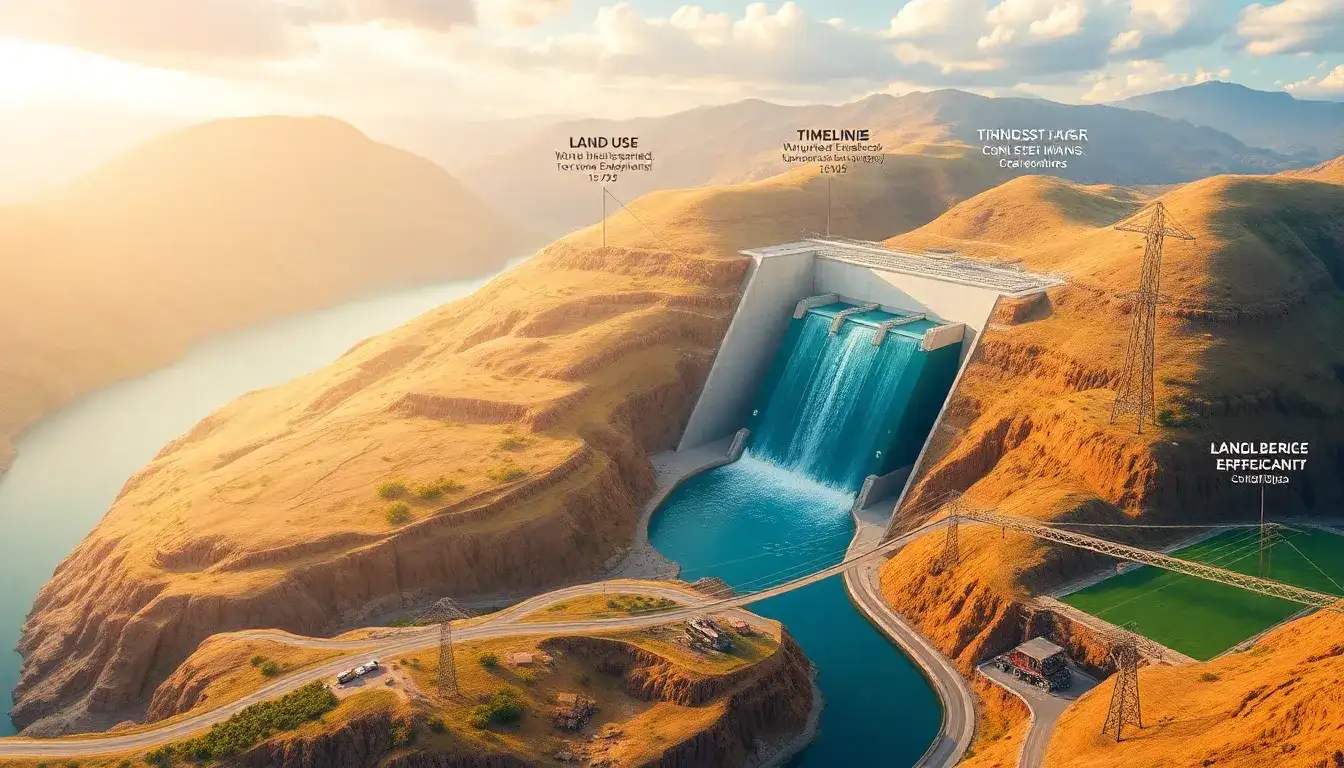
Pumped hydroelectric energy storage (PHES) systems face several significant challenges across environmental, technical, financial, and regulatory domains:
Environmental Challenges
- Ecological Impact: PHES projects often require altering natural river systems or landscapes, which can disrupt ecosystems. River diversion during construction and potential flooding risks pose environmental and social concerns.
- Site Sensitivity: Finding suitable sites that minimize environmental damage is difficult. Off-river or closed-loop systems reduce some impacts but still require careful environmental assessments.
Technical Challenges
- Site Selection Constraints: The effectiveness of PHES depends on specific geographical features—suitable elevation differences and water availability are needed to optimize gravity-driven energy conversion, narrowing potential locations.
- Scalability Issues: Scaling up pumped storage to meet increasing renewable energy demands involves large infrastructure investments and technological upgrades, including bigger turbines and reservoirs. This scaling is complex, particularly as the intermittent nature of renewables like wind and solar requires flexible and efficient storage solutions.
- Technological Limitations: While turbine and generator technologies have improved, there remain limits on efficiency and operational flexibility, especially in frequency regulation and fine grid balancing.
Financial and Economic Challenges
- High Upfront Capital Costs: Construction of PHES facilities demands significant investment, often running into hundreds of millions or billions of dollars. This large financial barrier discourages new projects or expansions without strong incentives.
- Long Development and Construction Times: Obtaining licenses and completing construction can take many years—sometimes 3 to 5 years or more—risking delays and cost overruns. This extended lead time complicates investment and financing decisions.
- Lack of Investment Incentives: Unlike some battery storage technologies, PHES often lacks tax credits or other financial incentives, reducing its competitiveness.
Regulatory and Social Challenges
- Complex Permitting and Licensing: Securing environmental and construction permits can be lengthy and complicated due to the environmental and social impacts, often involving indigenous rights and land ownership disputes.
- Changing Energy Policies: Uncertainty in energy policy can affect project viability and investor confidence, especially as grid needs and renewable penetration evolve.
- Social Opposition: Local communities may resist PHES development due to land use changes, ecological concerns, or cultural impacts.
In summary, the main challenges to pumped hydroelectric energy storage systems are:
| Challenge Category | Key Issues |
|---|---|
| Environmental | Ecosystem disruption, flooding risks, site sensitivity |
| Technical | Site selection constraints, scalability limits, operational inflexibility |
| Financial/Economic | High capital costs, long lead times, lack of tax incentives |
| Regulatory/Social | Lengthy permitting, policy uncertainty, social opposition |
These challenges collectively influence the pace and scale at which PHES can expand, despite being a mature and proven grid-scale storage technology crucial for integrating renewable energy.
Original article by NenPower, If reposted, please credit the source: https://nenpower.com/blog/what-are-the-main-challenges-faced-by-pumped-hydroelectric-energy-storage-systems/

