

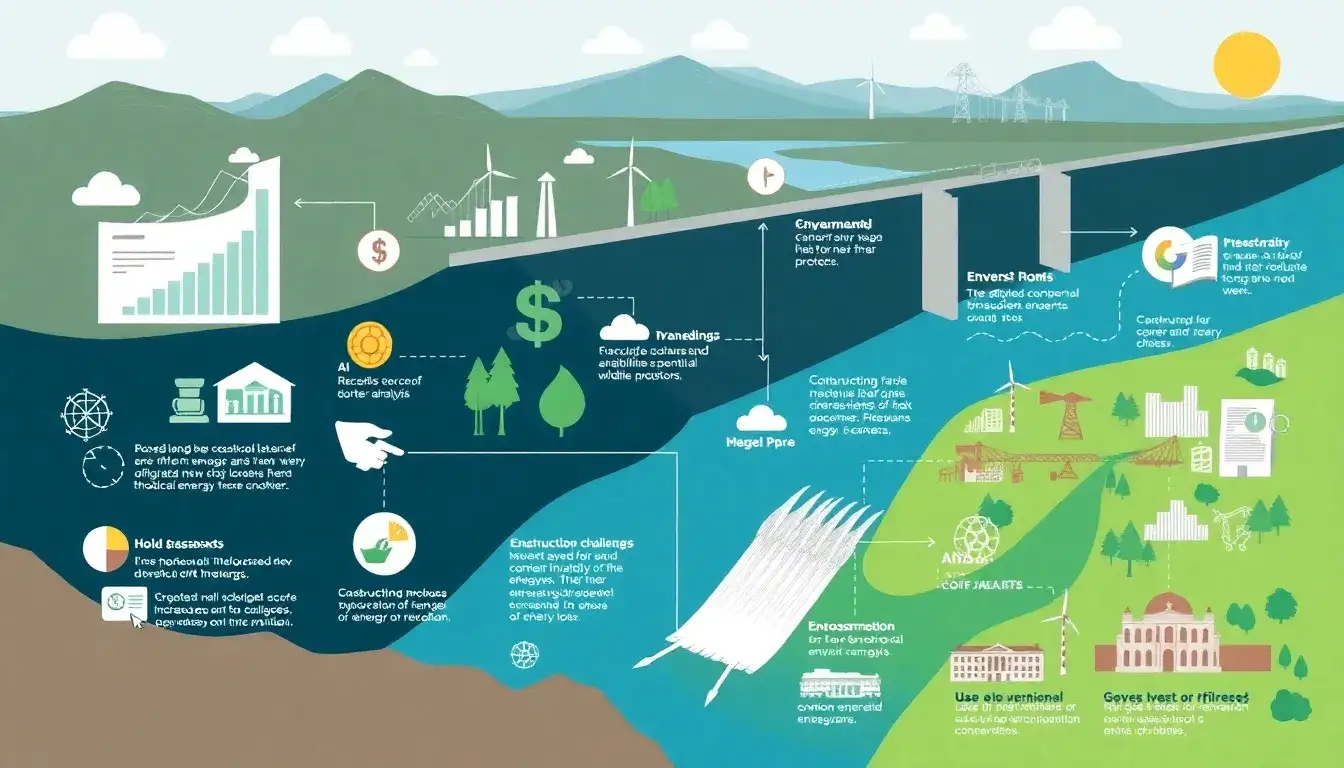
Investors looking to develop new pumped hydroelectric energy storage (PHES) facilities face several significant challenges:
Regulatory and Licensing Challenges
- Lengthy Licensing Process: Non-federal pumped storage projects in the U.S. must obtain a Federal Energy Regulatory Commission (FERC) license, which can take 3 to 5 years or more to secure. This precedes the construction phase, which itself often takes 3 to 5 years, sometimes extending up to 6 to 10 years for environmentally benign projects aimed at renewable integration. There are currently no streamlined or alternative licensing processes for low-impact or closed-loop sites, creating long lead times before projects can even begin construction.
- Multiple Permits and Regulatory Approvals: Beyond FERC, developers must navigate various state and federal permits, which adds layers of complexity and delay.
Financial and Investment Risks
- High Capital Costs: Developing PHES facilities requires very large upfront investments in infrastructure such as reservoirs, turbines, and generators. These high initial costs can deter investors, especially given the long timelines before return on investment.
- Financing Challenges: Due to the extended licensing and construction periods, many financial institutions are reluctant to fund these projects, increasing financial uncertainty for developers.
- Changing Energy Policies: Fluctuating government policies and incentives related to energy storage and renewables can create uncertainty about project viability and long-term profitability.
Environmental and Social Considerations
- Environmental Impact: Pumped storage projects are often challenged due to potential ecological disruptions, including river diversion during construction, changes to aquatic ecosystems, and risks of flooding. These impacts can provoke strong opposition from environmental groups and local communities.
- Site Selection Constraints: Finding suitable locations is difficult because sites must have the right geographic and hydrological conditions to efficiently use gravity and store energy. Additionally, water availability and environmental conservation laws limit potential sites.
- Land Ownership and Indigenous Rights: Issues related to land acquisition, indigenous land rights, and local social opposition can delay or halt projects.
Technical and Capacity Challenges
- Scalability Limits: While PHES effectively supports grid-scale energy storage, scaling up to meet growing renewable energy demands requires larger infrastructure and advanced technology. There are physical and technical constraints on how much energy can be stored and efficiently generated.
- Integration with Renewables: Synchronizing energy storage with intermittent renewables like wind and solar adds complexity to system design and operation.
Overall, investors must carefully navigate a complex web of regulatory delays, high capital requirements, environmental scrutiny, site limitations, and evolving policy landscapes. These factors collectively make pumped hydroelectric storage projects a long-term, capital-intensive, and risk-laden investment.
Original article by NenPower, If reposted, please credit the source: https://nenpower.com/blog/what-are-the-main-challenges-faced-by-investors-in-developing-new-pumped-hydroelectric-energy-storage-facilities/

