

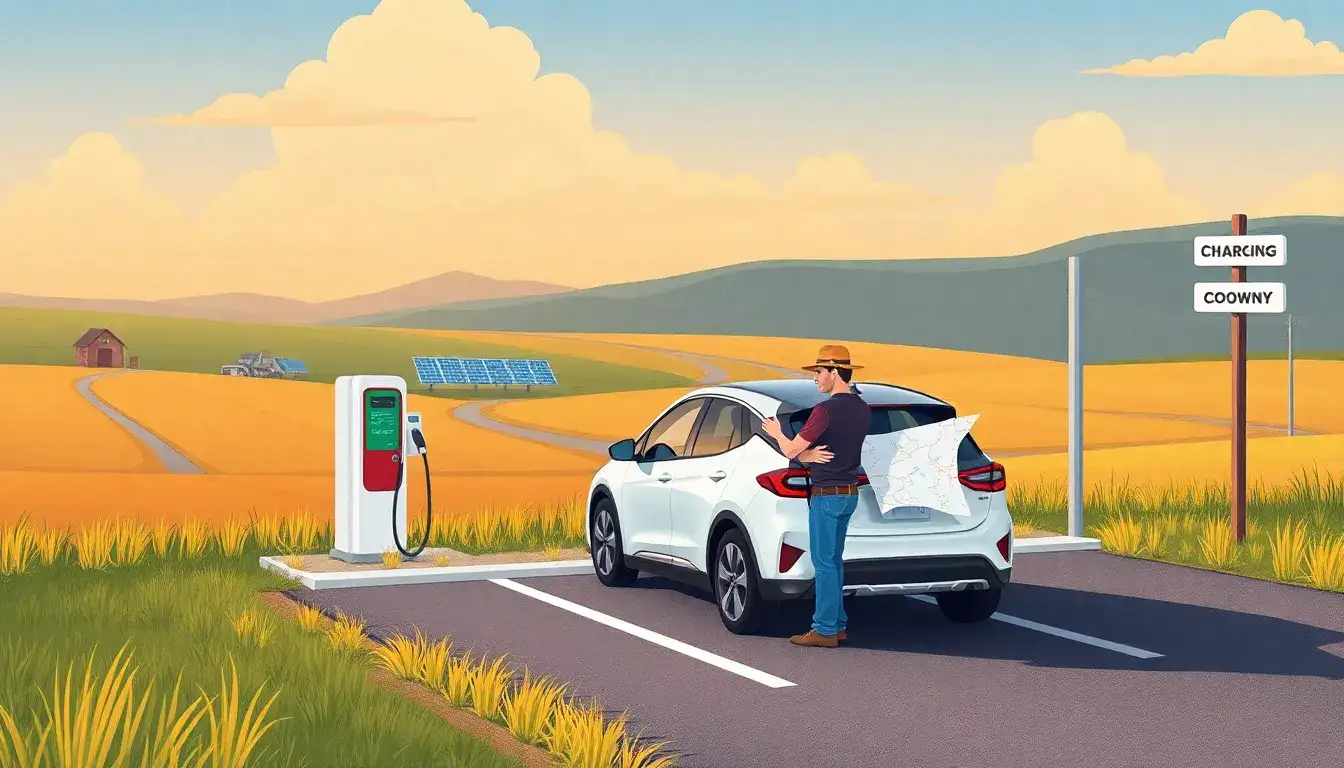
Main Challenges for EV Users in Rural Areas
- Lack of Charging Infrastructure (“Charging Deserts”): Rural areas often lack sufficient public charging stations, particularly DC Fast Chargers (DCFC) and Level 2 chargers, creating “charging deserts.” This sparse infrastructure discourages EV adoption due to concerns about accessibility and reliability.
- Range Anxiety: Longer distances between destinations and unreliable charger availability exacerbate fears of battery depletion. Cold climates further reduce battery efficiency, shrinking range and increasing risks during winter.
- Grid Limitations: Rural electrical grids are often outdated or undersized, struggling to support high-power charging stations. Unreliable electricity access in some regions compounds these issues.
- Economic Barriers: Lower population density makes installing chargers less profitable for private operators, creating a cycle of low EV adoption and minimal infrastructure investment.
- Charger Reliability: Functional chargers may be scarce, with reported cases of out-of-service equipment or technical failures, forcing drivers to detour or delay trips.
- Equity Concerns for Indigenous Communities: Remote Indigenous areas face compounded challenges, including poor road conditions and inadequate electricity access, limiting EV usability for essential services.
Solutions include targeted infrastructure investments, grid modernization, and incentives to deploy chargers along rural corridors.
Original article by NenPower, If reposted, please credit the source: https://nenpower.com/blog/what-are-the-main-challenges-faced-by-ev-users-in-rural-areas/

