

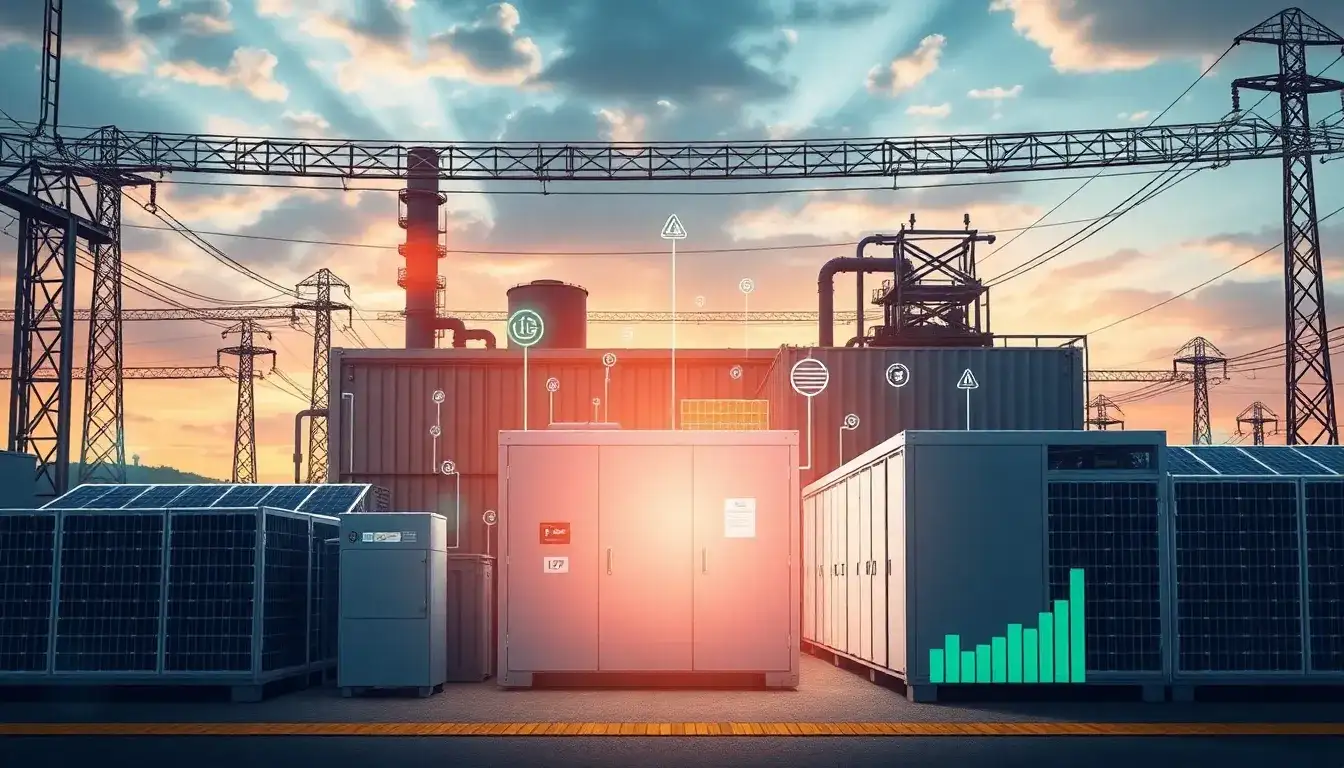
Businesses implementing battery energy storage systems (BESS) face several interconnected challenges spanning technical, financial, regulatory, and societal domains:
1. Financial and economic barriers
- High upfront costs: Despite declining prices, BESS requires significant capital investment, particularly for large-scale projects. Techno-economic optimization and accurate revenue forecasting are critical but complex due to market volatility.
- Revenue uncertainty: Profitability depends on shifting market dynamics, such as declining returns from frequency regulation (as seen in the UK and U.S.) and growing reliance on energy arbitrage or capacity markets. Revenue streams are vulnerable to policy changes and competition.
- Second-life battery risks: While reused EV batteries reduce costs, lenders remain cautious about unpredictable degradation rates and replacement costs, limiting financing flexibility.
2. Technical and operational hurdles
- Battery degradation: Charge-discharge cycles, thermal management, and C-rate constraints impact system health (SoH). Degradation complicates long-term revenue projections and financing.
- Safety concerns: Lithium-ion battery fires (e.g., in California and New York) have spurred stricter regulations and public opposition, increasing scrutiny of project siting and design.
- Material dependency: Reliance on critical metals like lithium raises supply chain risks. Alternatives like sodium-ion or solid-state batteries remain underdeveloped for large-scale use.
3. Regulatory and policy challenges
- Evolving compliance standards: Navigating grid codes (e.g., ENTSO-E in Europe), safety certifications, and recycling mandates requires continuous adaptation, particularly in cross-jurisdictional projects.
- Underdeveloped incentives: Capacity markets and tax credits (e.g., the U.S. IRA) often lack clarity for BESS-specific needs, such as long-duration storage eligibility.
- Policy lag: Regulations struggle to keep pace with technological advancements, creating uncertainty for investors.
4. Societal and market acceptance
- Public resistance: Local opposition to BESS projects (e.g., Staten Island, Duanesberg) arises from safety fears and insufficient community engagement during planning.
- Competition with established technologies: Lithium-ion dominance stifles market entry for emerging storage solutions like redox flow or thermal storage, despite their sustainability benefits.
- Awareness gaps: Stakeholders often undervalue BESS’s role in grid stabilization, necessitating targeted education campaigns to drive adoption.
Strategies for mitigation
- Risk-sharing models: Structured warranties, performance guarantees, and debt sculpting to align repayment with battery lifecycle.
- Partnerships: Collaboration with regulators, grid operators, and communities to align projects with technical and social requirements.
- Innovation focus: Prioritizing non-lithium technologies, modular designs, and AI-driven energy management to enhance safety and scalability.
These challenges underscore the need for multidisciplinary expertise, adaptive policy frameworks, and proactive stakeholder engagement to unlock BESS’s full potential in the energy transition.
Original article by NenPower, If reposted, please credit the source: https://nenpower.com/blog/what-are-the-main-challenges-businesses-face-when-implementing-battery-energy-storage-systems/

