

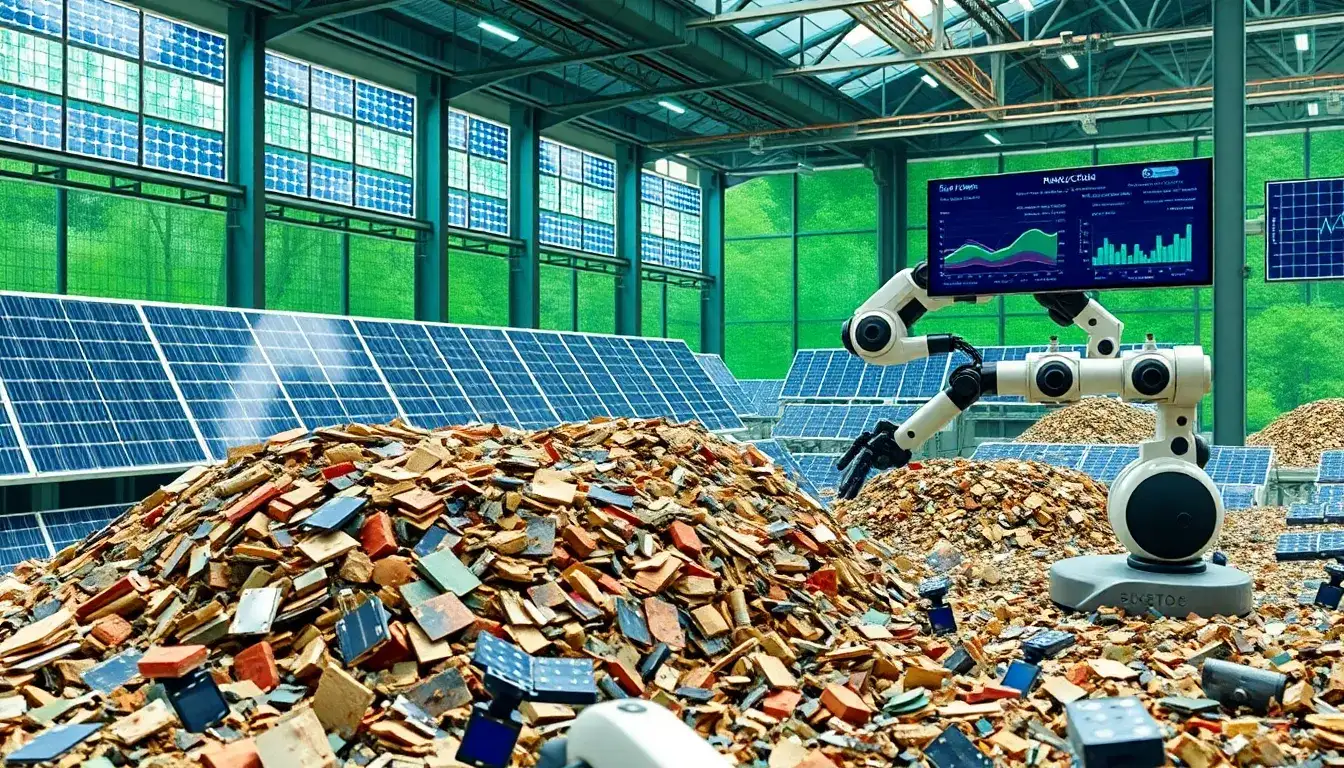
Main Challenges Addressed by AI Vision Technology in Solar Panel Recycling
1. Complex Material Identification and Sorting
Solar panels consist of multiple materials such as glass, aluminum, silicon, copper, plastics, and rare metals like silver. Traditional sorting methods struggle to accurately identify and separate these components. AI vision systems use advanced image recognition combined with sensor data (e.g., X-ray fluorescence, near-infrared spectroscopy) to precisely identify materials based on visual and chemical properties. This enables robotic systems to accurately dismantle panels and sort components for recycling, improving material recovery rates and reducing contamination.
2. Handling Mixed and Novel Panel Types
Recycling facilities often receive mixed batches of panels, including newer technologies like bifacial and heterojunction cells, which complicate sorting. AI and machine learning algorithms can adapt to recognize different panel types and materials with high accuracy. This flexibility enhances the ability to process diverse solar panel technologies efficiently, supporting sustainable end-of-life management for next-generation products.
3. Automation and Scalability
Manual dismantling and sorting are labor-intensive, slow, and prone to errors. AI-powered robotic sorting stations automate the disassembly and sorting process, significantly increasing speed and precision while lowering human labor requirements. This automation is crucial for scaling recycling operations to handle the growing volume of decommissioned solar panels worldwide, which is essential given the rapid expansion of solar installations.
4. Maximizing Resource Recovery and Reducing Waste
AI vision technology supports sensor-based sorting to recover valuable raw materials such as high-purity silicon, silver, and copper more effectively. By improving the precision of sorting and dismantling, AI reduces material loss and contamination, thereby increasing the yield and economic viability of recycling. This also leads to less waste incineration and landfill disposal, contributing to a more sustainable circular economy.
5. Enhancing Data Analysis for Continuous Improvement
AI systems analyze operational data to optimize recycling workflows and inform research on new recycling techniques. This ongoing improvement helps refine sorting algorithms and material recovery processes over time, leading to progressively more efficient and sustainable recycling practices.
In summary, AI vision technology tackles the critical challenges of complex multi-material identification, sorting diverse solar panel types, automating labor-intensive processes, maximizing resource recovery, and enabling continuous process optimization in solar panel recycling. These advances are key to managing the increasing volume of photovoltaic waste while supporting environmental sustainability and circular economy goals in the renewable energy sector.
Original article by NenPower, If reposted, please credit the source: https://nenpower.com/blog/what-are-the-main-challenges-ai-vision-technology-addresses-in-solar-panel-recycling/

