

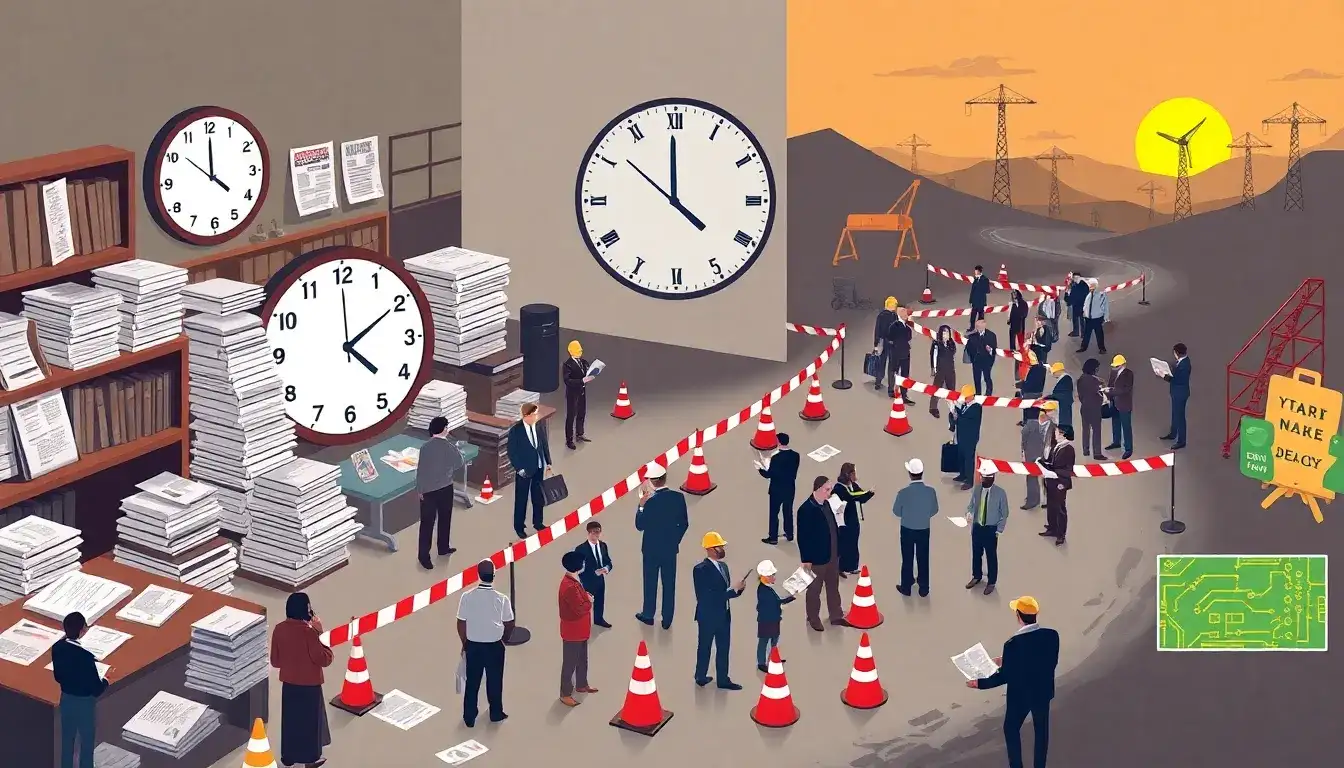
The main causes of permitting delays in energy storage projects are as follows:
- Complex and Inconsistent Local Permitting Processes: Energy storage projects must comply with state building requirements, but local authorities having jurisdiction (AHJs) such as city and county planning departments often have their own distinct permitting processes. This leads to overly complex, inconsistently applied regulations, codes, and fire standards for on-site energy storage system permits, causing significant delays.
- Multiple Authorities and Overlapping Regulations: Permitting involves multiple AHJs at local, state, and sometimes federal levels. These overlapping jurisdictions result in a prolonged approval timeline due to coordination difficulties and differing requirements.
- Technology Changes: Rapid changes and advancements in energy storage technology complicate permitting, as regulations and safety standards may lag behind evolving technologies, causing additional review and approval hurdles.
- Local Zoning and Ordinances: Local ordinances and zoning laws are among the top reasons for project cancellations and delays, as they require specific local permits that can be time-consuming to obtain.
- Grid Interconnection Approvals: Besides permitting, securing grid interconnection approvals is a parallel process that often involves site-specific feasibility studies, effectively acting as another form of permit that can delay project progress.
- Lengthy and Outdated Permitting Processes: In some regions, permitting processes have not been updated for decades, resulting in slow and inefficient approvals. For example, Minnesota’s permitting process, unchanged for over 50 years, causes average wait times from application to approval ranging from nearly a year for wind farms to almost two years for large transmission lines.
- Redundancies and Inefficiencies: Redundant procedural steps, inconsistent application of rules, and complex public comment processes further extend permitting timelines, increasing costs and delaying construction starts.
- Safety and Testing Requirements: Projects must satisfy various safety, testing, and environmental requirements imposed by AHJs, which can involve extensive reviews and inspections prior to approval.
In summary, permitting delays in energy storage projects are largely driven by multi-jurisdictional complexities, inconsistent and outdated regulatory frameworks, evolving technology standards, local zoning restrictions, and slow grid interconnection processes—all contributing to extended timelines and increased costs. Streamlining and standardizing permitting processes, updating regulations, and improving coordination between authorities are key to overcoming these delays.
Original article by NenPower, If reposted, please credit the source: https://nenpower.com/blog/what-are-the-main-causes-of-permitting-delays-in-energy-storage-projects/

