

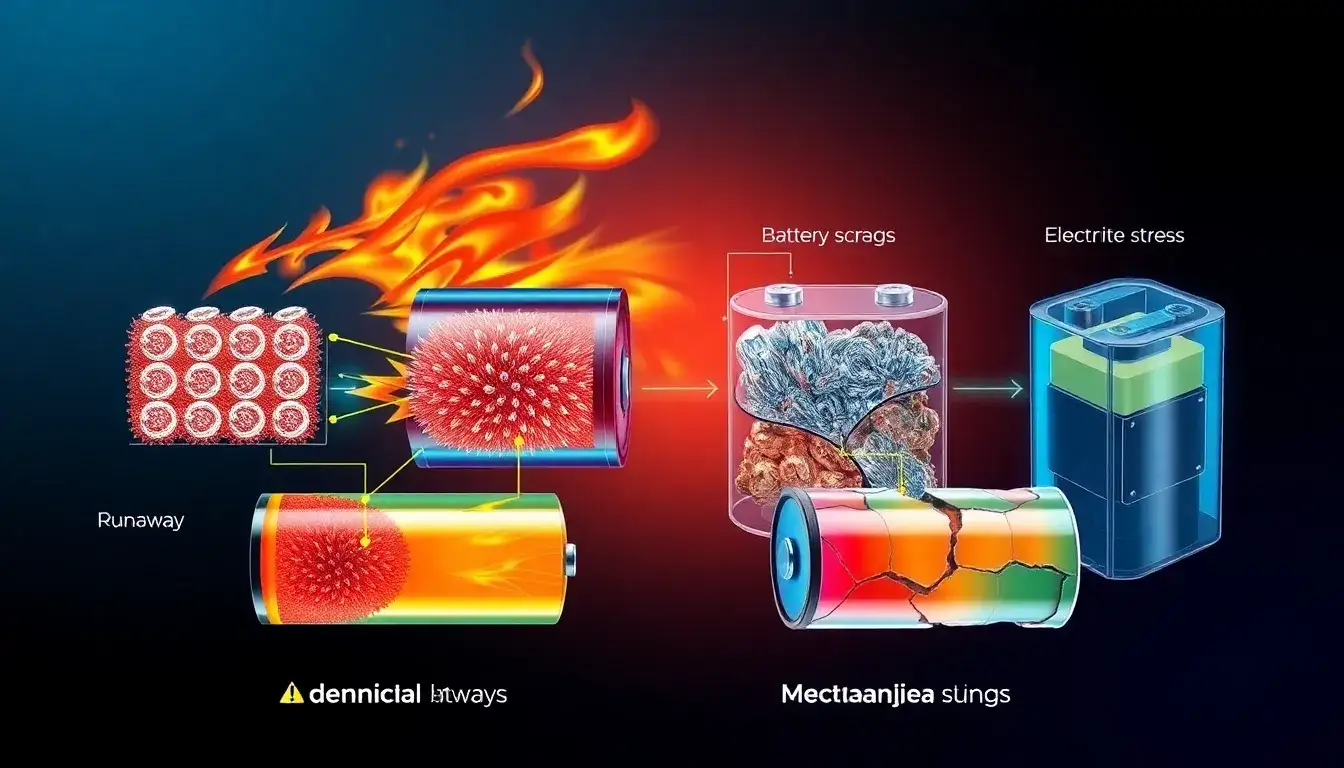
Lithium-ion battery failures in energy storage systems can be attributed to several factors, including both intrinsic and extrinsic causes. Here are the main reasons:
Causes of Lithium-Ion Battery Failures
- Aging and Degradation: Over time, lithium-ion batteries naturally degrade due to chemical reactions that reduce their capacity and effectiveness.
- Overcharging: Constant overcharging can damage the internal structure of the battery, leading to reduced lifespan and performance. This often results from using faulty chargers or not monitoring charging limits.
- High Temperatures: Exposure to high temperatures can accelerate degradation and cause overheating, which can lead to failures. Conversely, low temperatures also pose risks by decreasing performance and efficiency.
- Physical Damage: Dropping or mishandling batteries can cause internal components to break or create short circuits, leading to immediate failures.
- Voltage Stress: Overvoltage (above 4.2 V per cell) can lead to overheating and lithium plating, while undervoltage (below 2.0 V) can impact the anode and cathode, potentially causing damage.
- Manufacturing Defects: Flaws during production can lead to premature failures by affecting the battery’s internal integrity and safety.
- Deep Discharges: Frequently discharging batteries to very low levels can stress them, reducing their lifespan.
- Electrical Overstress and Thermal Overstress: Electrical overstress can cause thermal issues, potentially leading to fires, while excessive thermal stress compromises cell safety and functionality.
Understanding these causes is crucial for maintaining efficient and safe energy storage systems. Proper charging practices, careful handling, and environmental control can help mitigate these risks and extend the life of lithium-ion batteries.
Original article by NenPower, If reposted, please credit the source: https://nenpower.com/blog/what-are-the-main-causes-of-lithium-ion-battery-failures-in-energy-storage-systems/

