

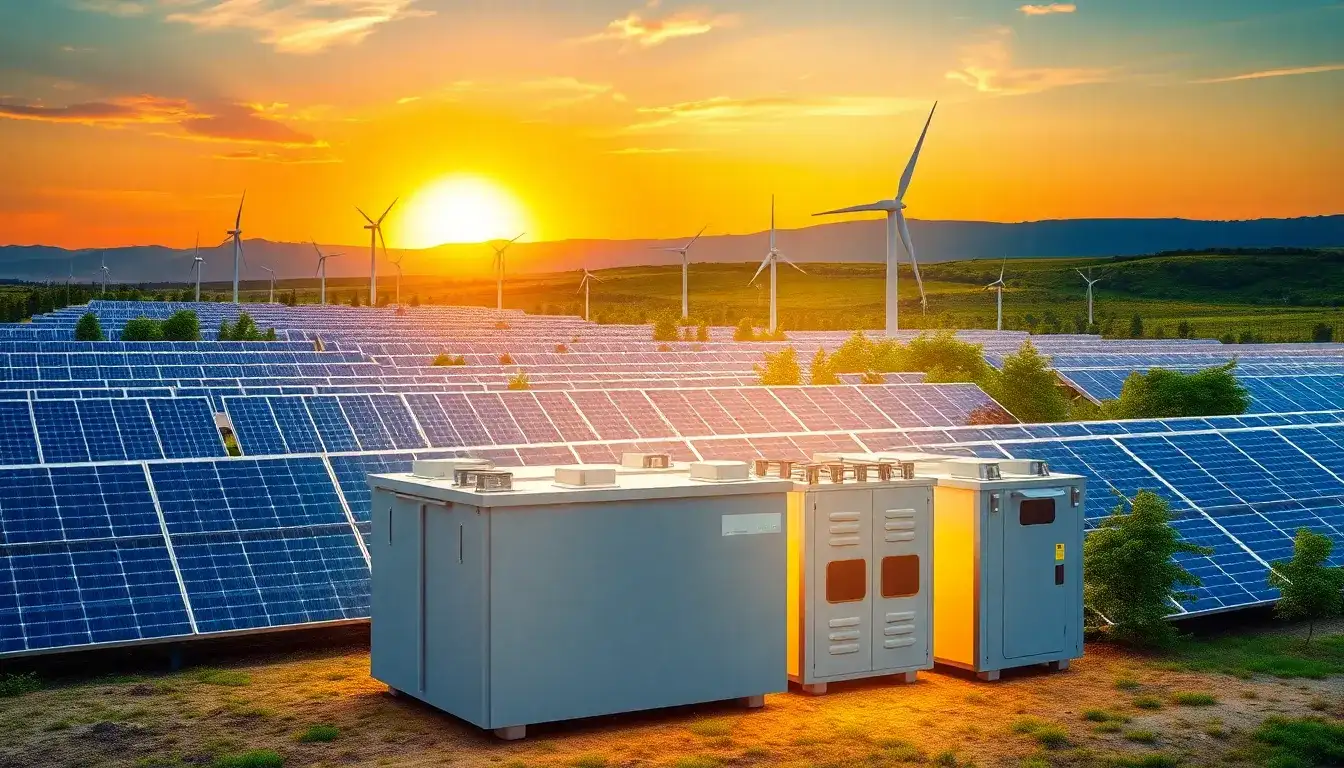
The main benefits of using utility-scale batteries with renewable energy sources include:
1. Grid Stability and Reliability
Utility-scale battery energy storage systems (BESS) help stabilize local electric grids by providing fast-response power. They can inject electricity onto the grid in milliseconds, offering unprecedented operational flexibility compared to traditional power plants that take minutes or hours to start up. This rapid response supports grid stability and resilience, especially as renewable energy sources like solar and wind have variable and intermittent output.
2. Increased Use and Integration of Renewable Energy
Batteries enable better integration of renewable energy by storing excess generation produced during periods of high solar or wind output and releasing it when demand is high or renewable generation is low. This capacity to “firm” renewable energy output reduces curtailment (wasted renewable energy) and increases the overall penetration of variable renewable energy on the grid, thereby decreasing reliance on fossil fuels.
3. Reduced Electricity Costs
By storing energy when electricity prices are low (often when renewable generation is abundant) and discharging it when prices peak, utility-scale batteries help lower costs for utilities, businesses, and consumers. This arbitrage reduces expensive peak generation needs and the risk of costly power outages. For example, Texas’ storage projects saved consumers $750 million in one summer alone. Additionally, batteries help limit the volatility of fuel prices.
4. Deferral of Grid Investments
Battery storage can defer or reduce the need for costly investments in new generation capacity, transmission, and distribution infrastructure by managing peak demand and congestion on the grid. This capability helps utilities optimize existing assets and delay expensive upgrades or new power plants.
5. Economic Benefits and Job Creation
Utility-scale battery projects contribute to local economies by creating jobs in development, construction, operation, and maintenance. The industry supports tens of thousands of jobs across the U.S. and generates significant tax revenue and land lease payments for local communities, strengthening economic vitality.
Summary Table of Benefits
| Benefit | Description |
|---|---|
| Grid Stability & Reliability | Fast response power, frequency regulation, and grid resilience support |
| Increased Renewable Integration | Store excess renewable generation, reduce curtailment, firm output |
| Reduced Electricity Costs | Time-shift electricity to reduce peak costs and outages |
| Deferral of Grid Investments | Manage peak demand and congestion, delay infrastructure upgrades |
| Economic Growth | Job creation, local revenue from battery projects |
In conclusion, utility-scale battery energy storage is essential for maximizing the value and reliability of renewable energy sources, reducing costs, enhancing grid performance, and supporting local economies as the energy transition advances.
Original article by NenPower, If reposted, please credit the source: https://nenpower.com/blog/what-are-the-main-benefits-of-using-utility-scale-batteries-with-renewable-energy-sources/

