

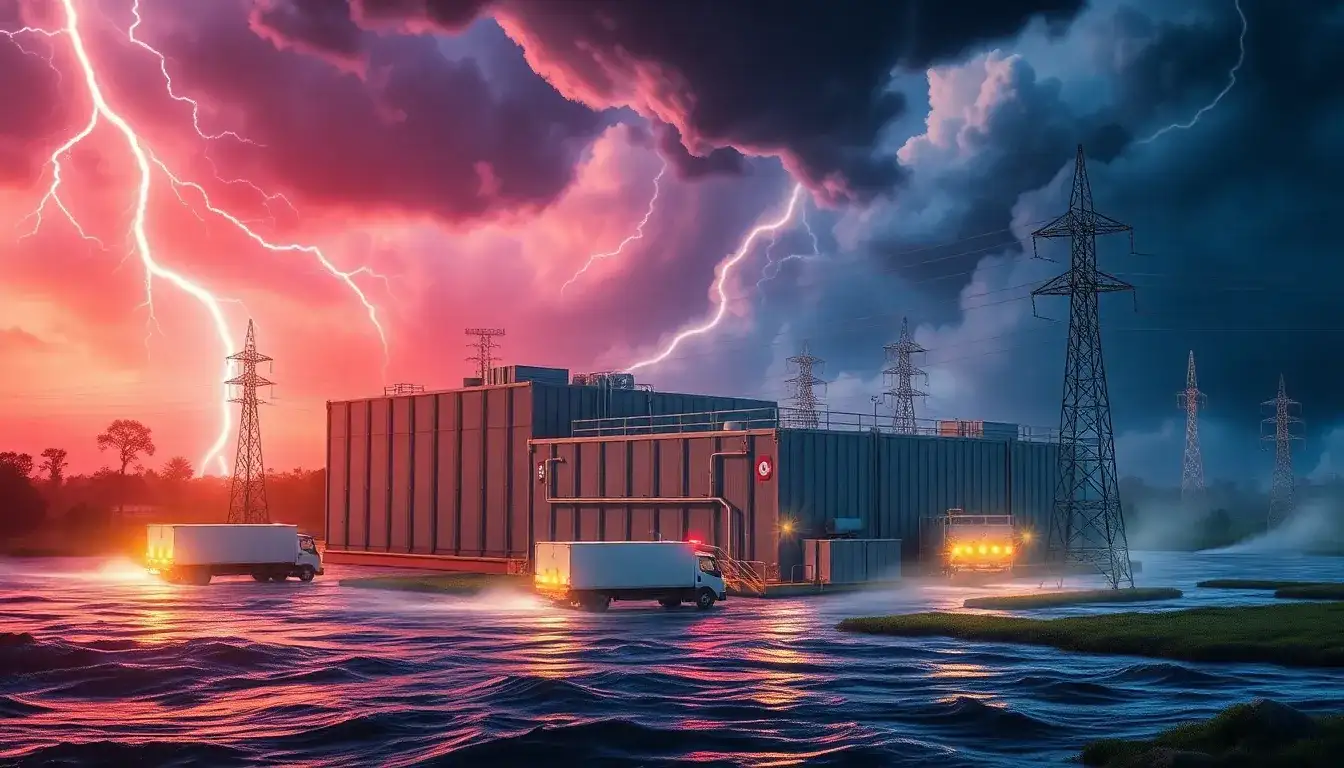
Utility-scale batteries provide critical support during natural disasters through multiple key benefits:
1. Enhanced Energy Resilience
Battery systems maintain power continuity by storing energy for use during outages, reducing reliance on vulnerable grid infrastructure. This prevents life-threatening disruptions to critical services like hospitals and emergency response systems.
2. Replacement of Polluting Peaker Plants
They often displace fossil fuel-based peaker plants, which are disproportionately located in marginalized communities and prone to failure during grid stress. This transition improves air quality while providing more reliable backup power.
3. Grid Stabilization
Batteries mitigate demand spikes by discharging stored energy during peak usage, reducing strain on transmission systems that might otherwise fail under disaster-related stress.
4. Reduced Fuel Dependence
In remote areas, battery storage paired with renewable generation decreases reliance on diesel generators, which face fuel supply challenges during prolonged disasters.
5. Rapid Response Capability
Modern lithium-ion systems (despite safety concerns that have improved significantly in recent years) can respond to outages faster than traditional generators, restoring power within milliseconds to prevent cascading grid failures.
Original article by NenPower, If reposted, please credit the source: https://nenpower.com/blog/what-are-the-main-benefits-of-using-utility-scale-batteries-during-natural-disasters/

