

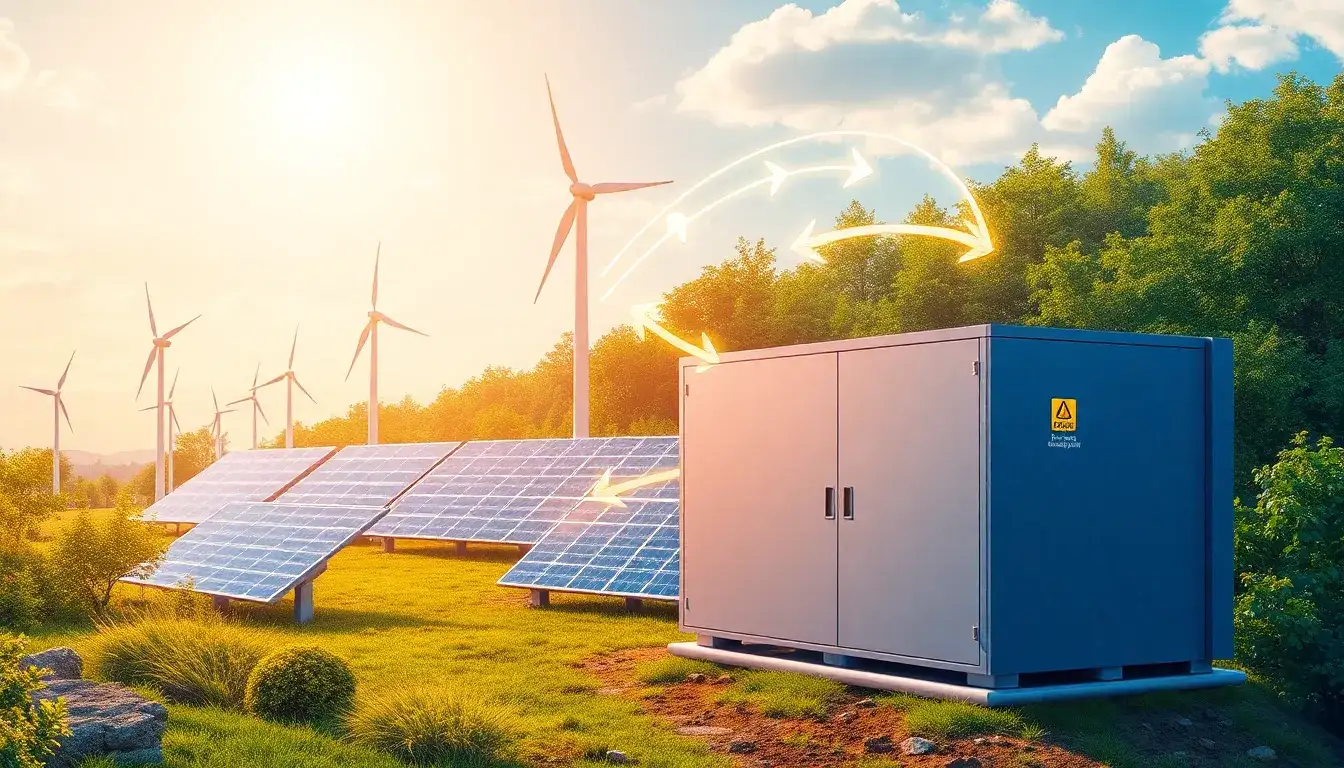
The integration of energy storage with renewable energy sources offers several key benefits:
Main Benefits
- Improved Reliability and Efficiency:
- Energy storage allows renewable energy to be used even when it’s not being generated, enhancing the reliability of the grid.
- It smooths out variations in energy production from intermittent sources like wind and solar, ensuring a consistent supply.
- Environmental Benefits:
- Storing renewable energy reduces dependence on fossil fuels, which helps in lowering greenhouse gas emissions.
- This supports efforts to achieve net-zero emissions and contributes to environmental sustainability.
- Cost Savings:
- Energy storage systems can store energy when it’s cheap and release it during peak demand periods, reducing electricity bills.
- Long-term cost savings and added property value are significant benefits for both residential and commercial installations.
- Backup Power and Grid Resilience:
- Battery energy storage systems serve as reliable backup power sources during emergencies or power outages.
- This enhances grid resilience and reduces the risk of disruptions to power supply.
- Reduced Energy Waste:
- Energy storage prevents the curtailment of renewable energy generation when supply exceeds demand, maximizing the use of clean energy.
- Less Dependence on the Grid:
- For locations with unreliable grid infrastructure, energy storage reduces reliance on external power sources.
Technologies Used
Various energy storage technologies are employed, including:
- Pumped Hydroelectricity: Storing energy by pumping water to a higher elevation.
- Thermal Energy Storage: Storing energy as heat, often for industrial processes.
- Battery Energy Storage Systems (BESS): Commonly used for smoothing out intermittency and providing backup power.
Original article by NenPower, If reposted, please credit the source: https://nenpower.com/blog/what-are-the-main-benefits-of-using-energy-storage-with-renewable-energy-sources/

