

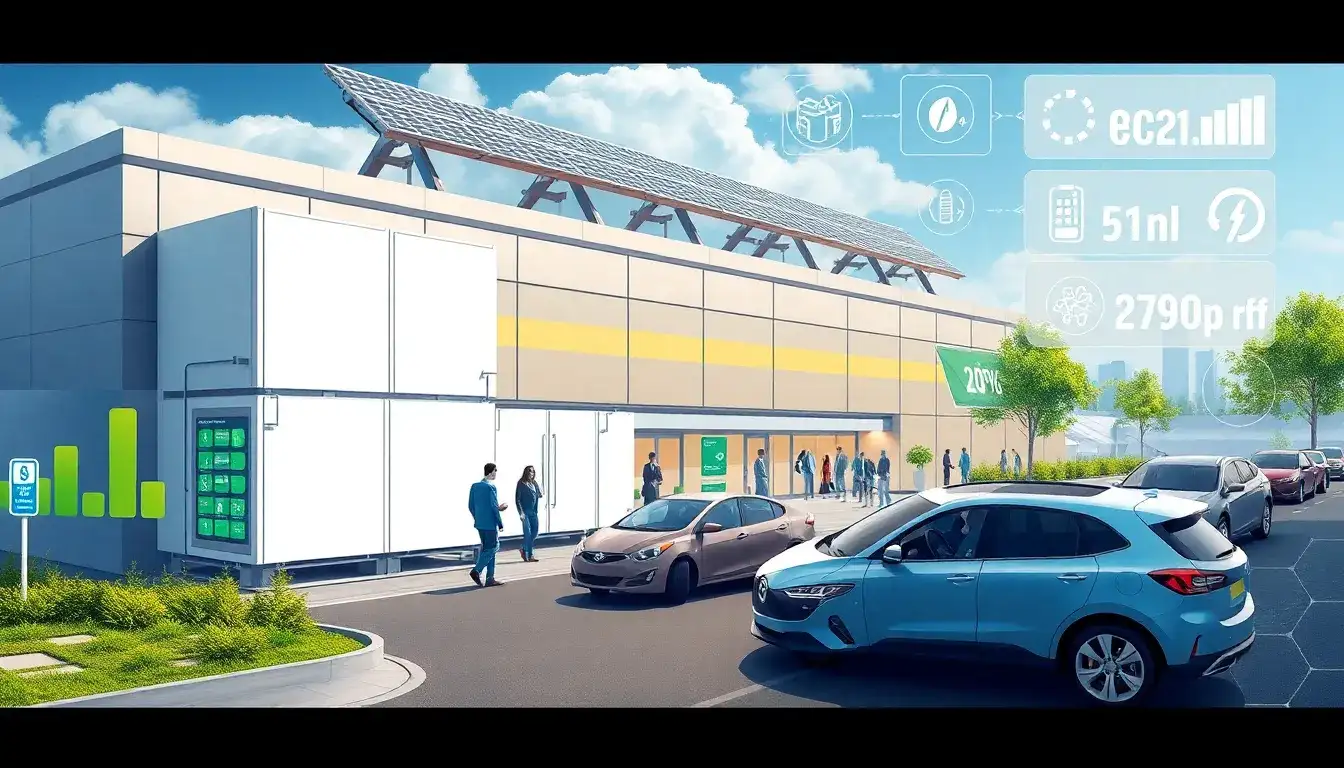
Battery energy storage systems (BESS) offer multiple significant benefits for commercial settings, enhancing energy management, reliability, cost efficiency, and sustainability:
Main Benefits of Battery Energy Storage Systems in Commercial Settings
1. Improved Energy Cost Management and Demand Charge Reduction
Commercial battery storage allows businesses to store electricity when rates are low and use it during peak demand periods, which reduces peak grid consumption and lowers demand charges on energy bills. This capability, often referred to as demand charge management or load shifting, can lead to substantial cost savings for businesses with high and variable energy use.
2. Backup Power and Enhanced Reliability
BESS provide critical backup power during grid outages, ensuring uninterrupted operations. This is vital for businesses relying on constant power, such as hospitals, refrigerated storage facilities, manufacturing plants, data centers, and telecom infrastructure. The resilience provided by battery storage safeguards against productivity losses, spoilage, and service interruptions.
3. Optimized Use of Renewable Energy
Battery storage enables more effective use of onsite renewable sources like solar and wind by storing excess energy generated during peak production times for use later, such as at night or during low generation periods. This reduces reliance on fossil fuels, helps meet sustainability goals, and enhances energy independence.
4. Reduced Carbon Footprint and Support for Sustainability
By maximizing renewable energy usage and decreasing dependence on grid electricity generated from fossil fuels, commercial BESS help businesses lower their greenhouse gas emissions. They also minimize energy waste by storing surplus power that would otherwise be lost.
5. Grid Services and Increased Grid Resilience
Commercial BESS can participate in demand response programs, provide grid services such as frequency regulation, and help alleviate grid congestion by strategically discharging energy during peak times. This supports overall grid stability and reliability, benefiting both businesses and the wider community.
6. EV Charging Load Management
With rising adoption of electric vehicles (EVs), commercial battery storage can buffer the load on charging stations by charging batteries during off-peak periods and supplying power during peak charging demand, preventing grid overloads and reducing infrastructure upgrade costs.
7. Long-term Financial Benefits and Local Economic Impact
Though initial investment costs can be high, BESS typically pay for themselves over time via reduced energy bills, demand charge savings, and potential revenue from grid services. Additionally, deployment of BESS supports local economies through job creation in installation, maintenance, and operation.
In summary, commercial battery energy storage systems provide businesses with cost savings, backup power reliability, better integration of renewables, carbon footprint reduction, and support grid stability, making them a powerful tool for modern energy management and sustainability initiatives.
Original article by NenPower, If reposted, please credit the source: https://nenpower.com/blog/what-are-the-main-benefits-of-using-battery-energy-storage-systems-in-commercial-settings/

