

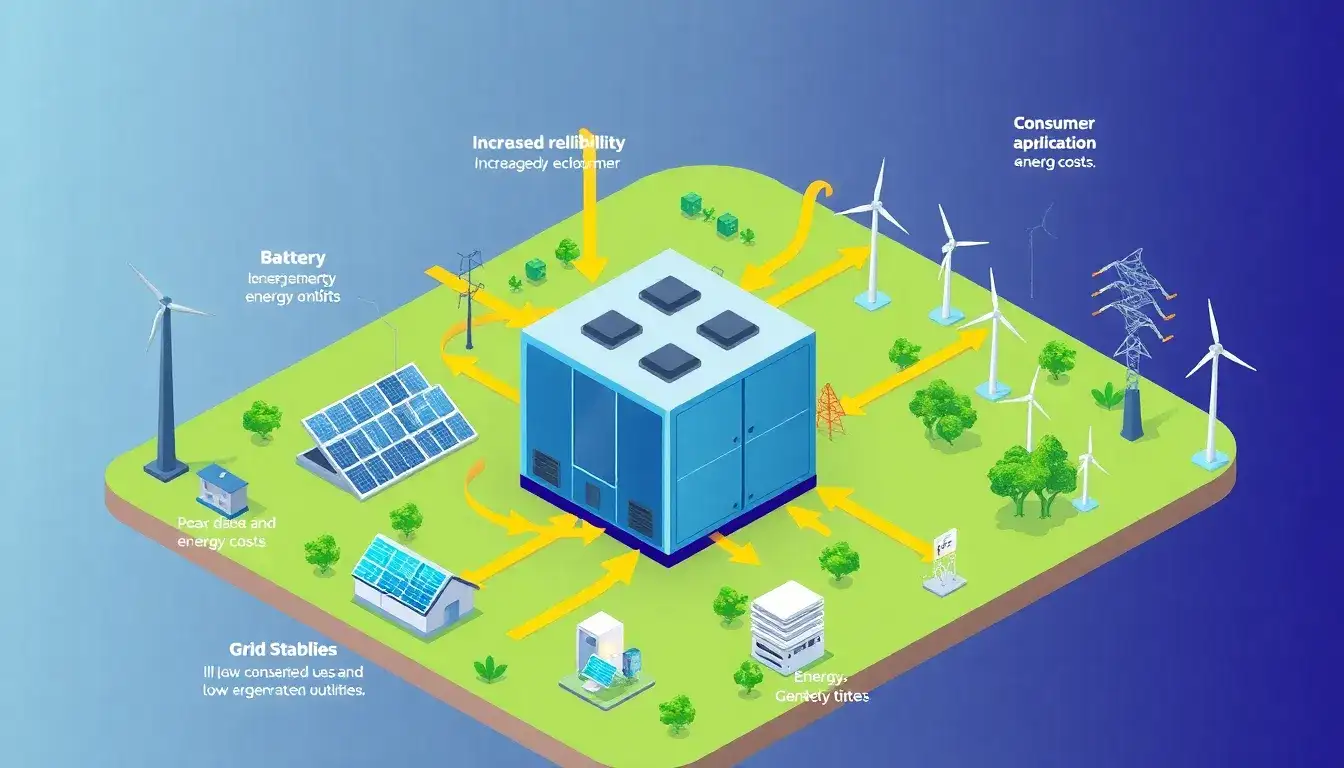
Battery energy storage systems (BESS) provide critical advantages for utilities, enhancing grid performance and economic efficiency. Here are the primary benefits:
1. Grid Stability and Outage Prevention
BESS minimizes costly power outages by providing backup energy during grid stress or extreme weather events. These systems rapidly respond to disruptions, ensuring uninterrupted power to critical infrastructure like hospitals and data centers.
2. Cost Reduction Through Peak Shaving
Utilities leverage BESS to store energy during low-price periods and discharge it during peak demand, lowering electricity costs. For instance, Texas storage deployments saved consumers $750 million in summer 2024 alone. Storage also reduces reliance on expensive “peaker” plants and mitigates outage-related financial losses.
3. Enhanced Renewable Integration
BESS enables higher utilization of solar and wind energy by storing surplus renewable generation. Solar-plus-storage systems ensure consistent energy availability even when sunlight or wind is insufficient, reducing reliance on fossil fuels.
4. Economic and Community Benefits
Utility-scale projects generate jobs and tax revenue. The sector supports over 75,000 U.S. jobs and delivers $580 million annually in tax and land lease payments to local communities. Residential programs, like Fort Collins’ incentive-driven model, further reduce household energy bills and carbon footprints.
5. Scalable Solutions for Diverse Needs
- Utility-scale systems (FTM) prioritize grid stabilization and bulk energy management, often exceeding 10 MWh in capacity.
- Residential/commercial systems (BTM) focus on energy independence, peak shaving, and backup power, with capacities under 30 kWh for homes.
By deploying BESS, utilities achieve a more resilient, cost-effective grid while accelerating the transition to renewable energy.
Original article by NenPower, If reposted, please credit the source: https://nenpower.com/blog/what-are-the-main-benefits-of-using-battery-energy-storage-systems-for-utilities/

