

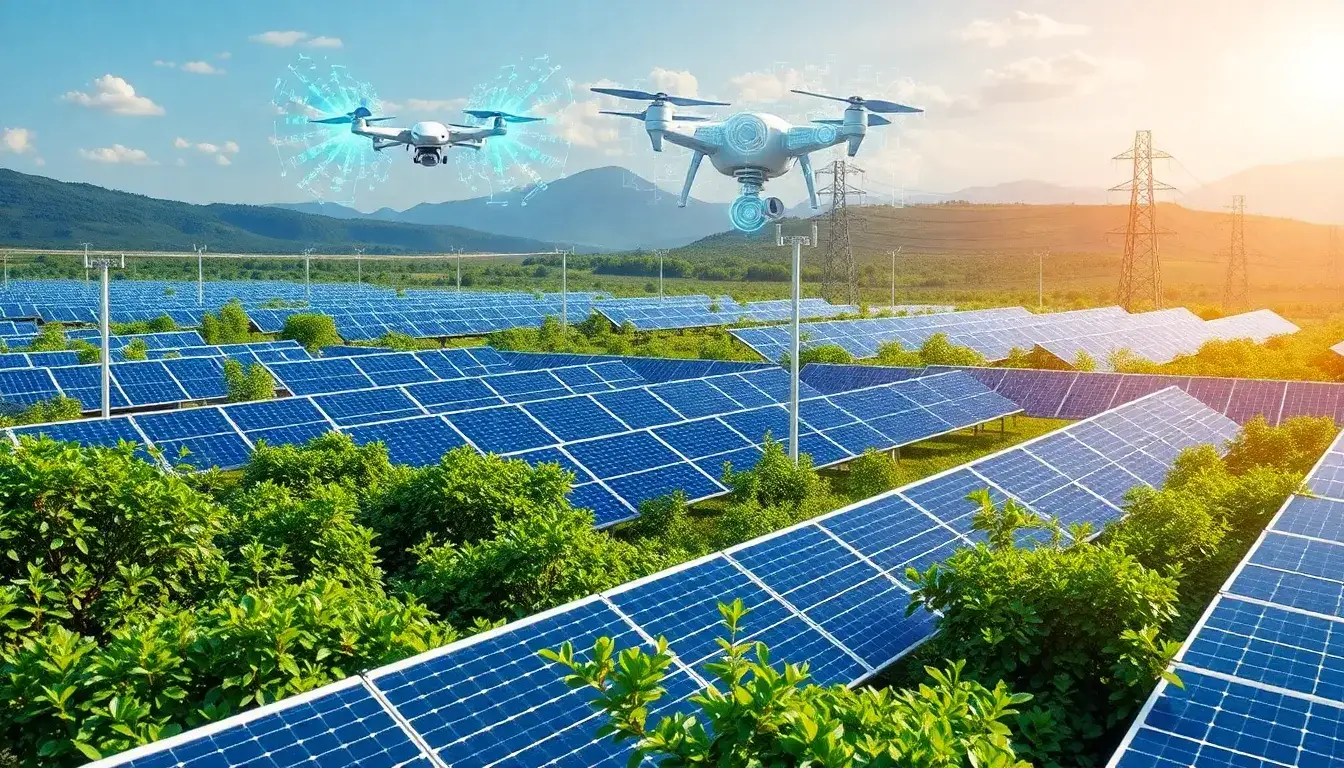
AI integration in solar energy systems delivers transformative benefits across efficiency, maintenance, and grid management:
Efficiency Optimization
AI adjusts solar panel angles in real-time and optimizes energy distribution based on weather forecasts and sunlight patterns. For example, algorithms analyze cloud movement and irradiance data to maximize energy capture, even during suboptimal conditions.
Predictive Maintenance
Machine learning detects anomalies like faulty panels or inverter inefficiencies, reducing downtime by up to 70% and cutting maintenance costs by 25%. AI alerts users to issues such as soiling or shading before they impact output.
Cost and Energy Savings
By predicting energy production and optimizing storage, AI minimizes reliance on grid power during peak pricing. A California solar farm using AI-driven adjustments reported higher output and lower operational costs.
Enhanced Grid Integration
AI forecasts solar generation with high accuracy, helping grid operators balance supply and demand. For instance, Amazon’s Baldy Mesa project uses AI to predict battery charging/discharging needs during grid stress.
Design and Site Selection
AI analyzes geographical data to identify optimal solar farm locations and create tailored designs for residential/commercial systems, improving ROI and reducing installation delays.
Sustainability Impact
By maximizing renewable energy use and reducing waste, AI lowers carbon footprints. Predictive algorithms also extend equipment lifespans, further decreasing resource consumption.
Original article by NenPower, If reposted, please credit the source: https://nenpower.com/blog/what-are-the-main-benefits-of-using-ai-in-solar-energy-systems/

