

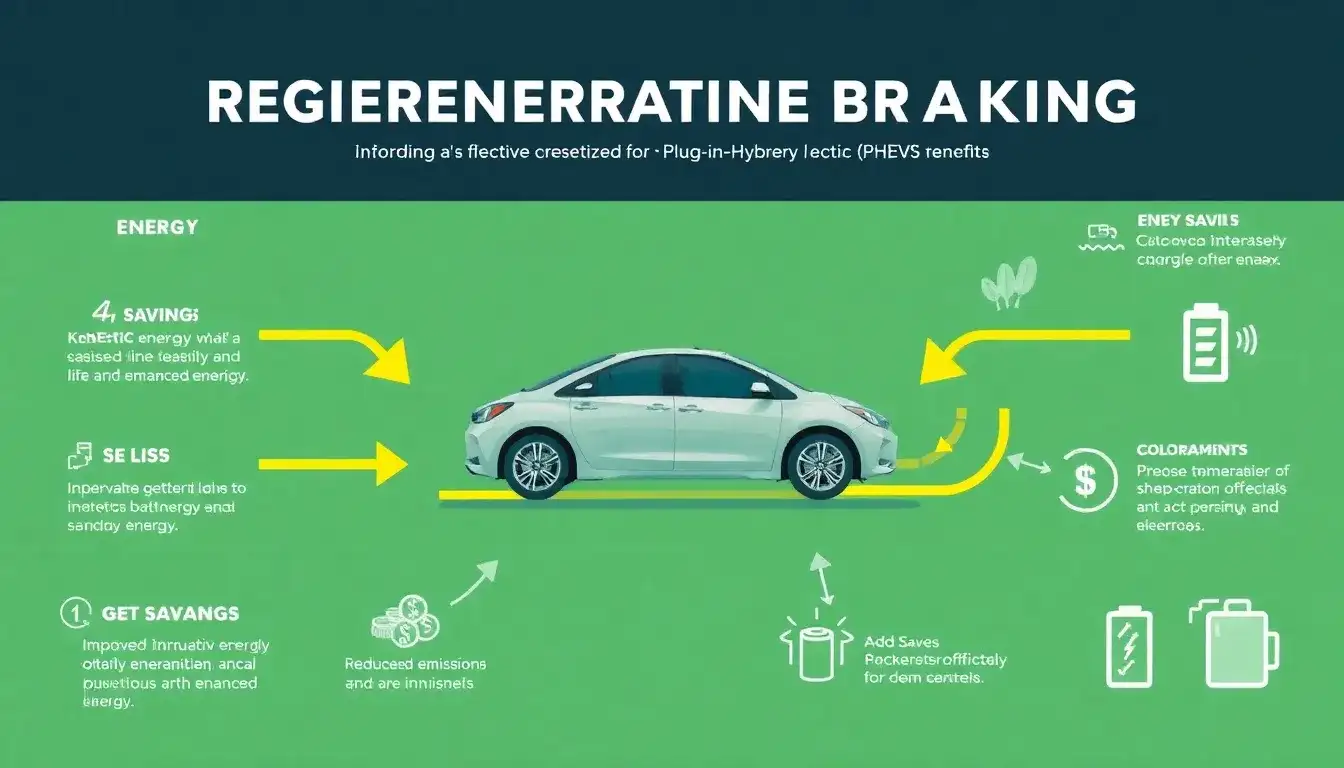
The main benefits of regenerative braking for plug-in hybrid electric vehicles (PHEVs) include:
1. Enhanced efficiency and reduced fuel consumption
Regenerative braking captures kinetic energy during deceleration, converting it into electricity to recharge the battery. This stored energy powers the electric motor, reducing reliance on the gasoline engine and lowering fuel consumption, especially in city driving.
2. Extended electric range
By recovering energy that would otherwise be lost as heat, regenerative braking replenishes the battery, allowing PHEVs to operate in electric mode for longer distances.
3. Reduced brake wear
The system minimizes reliance on traditional friction brakes, decreasing wear on components like pads and rotors. This leads to lower maintenance costs and longer brake lifespan.
4. Smoother driving experience
Regenerative braking provides controlled deceleration, improving driving comfort in stop-and-go traffic. Some systems allow adjustable regenerative braking levels for personalized control.
5. Environmental benefits
By optimizing energy use and reducing fuel dependency, regenerative braking lowers CO₂ emissions and enhances the eco-friendly profile of PHEVs.
Original article by NenPower, If reposted, please credit the source: https://nenpower.com/blog/what-are-the-main-benefits-of-regenerative-braking-for-phevs/

