

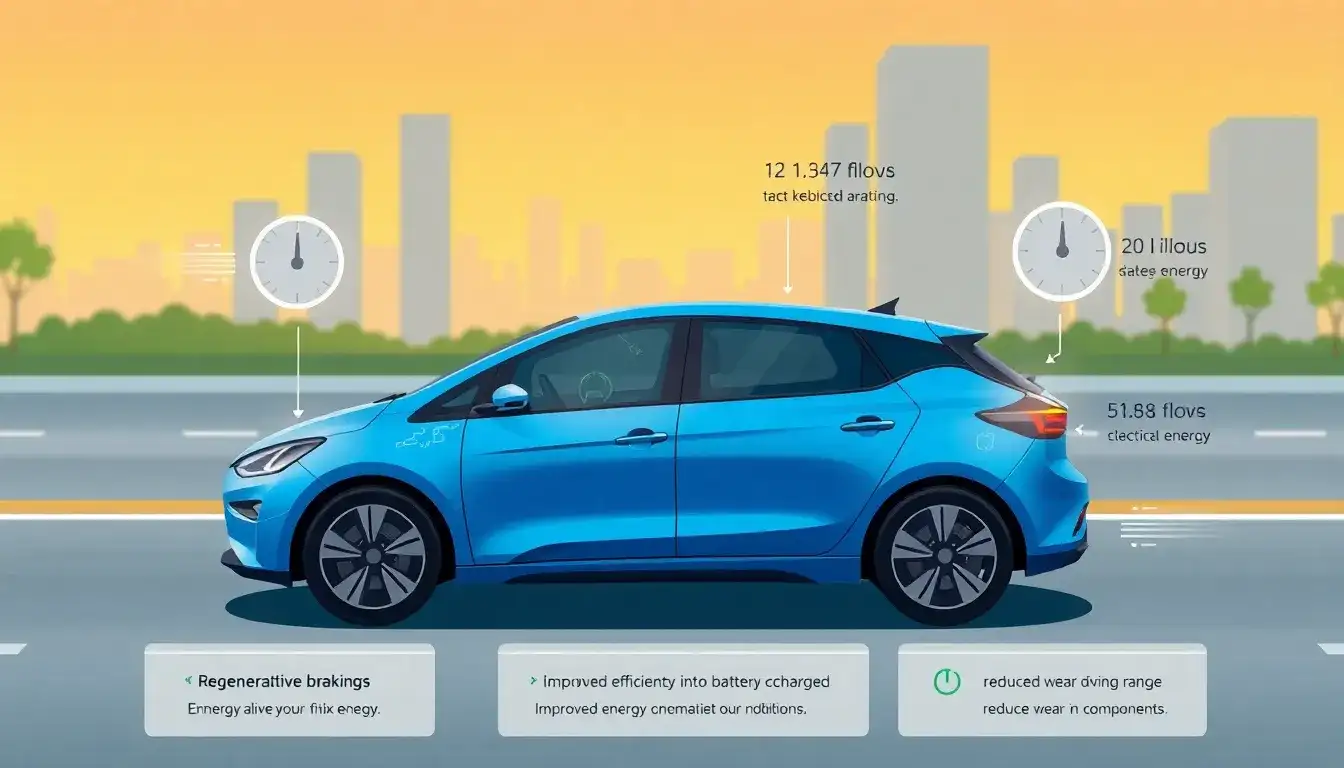
The main benefits of regenerative braking for drivers include:
- Improved Driving Comfort: Regenerative braking provides a smoother and more controlled deceleration, enhancing overall driving comfort by reducing sudden jolts during braking.
- Energy Recovery and Increased Efficiency: It captures kinetic energy that would normally be lost as heat during braking and converts it into electricity, which is stored in the battery. This recovered energy can be reused to power the vehicle, thereby improving overall energy efficiency and extending the driving range, especially in electric vehicles (EVs).
- Extended Battery Life and Range: By replenishing the battery during braking, regenerative braking helps maintain battery charge for longer periods, effectively extending the vehicle’s range on a single charge and reducing the frequency of charging stops.
- Reduced Brake Wear: Since regenerative braking lessens the reliance on traditional friction brakes by using the electric motor to slow the vehicle, it significantly reduces wear on brake pads and components. This leads to lower maintenance costs and fewer brake replacements over time.
- Fuel Economy Benefits: In hybrid and traditional vehicles equipped with regenerative braking, the recovered energy helps reduce fuel consumption by lessening the engine’s workload, particularly in stop-and-go city driving. This yields cost savings on fuel for drivers.
In summary, regenerative braking benefits drivers by making braking smoother and more efficient, enhancing vehicle range, reducing maintenance costs, and improving overall fuel economy and driving comfort.
Original article by NenPower, If reposted, please credit the source: https://nenpower.com/blog/what-are-the-main-benefits-of-regenerative-braking-for-drivers/

