

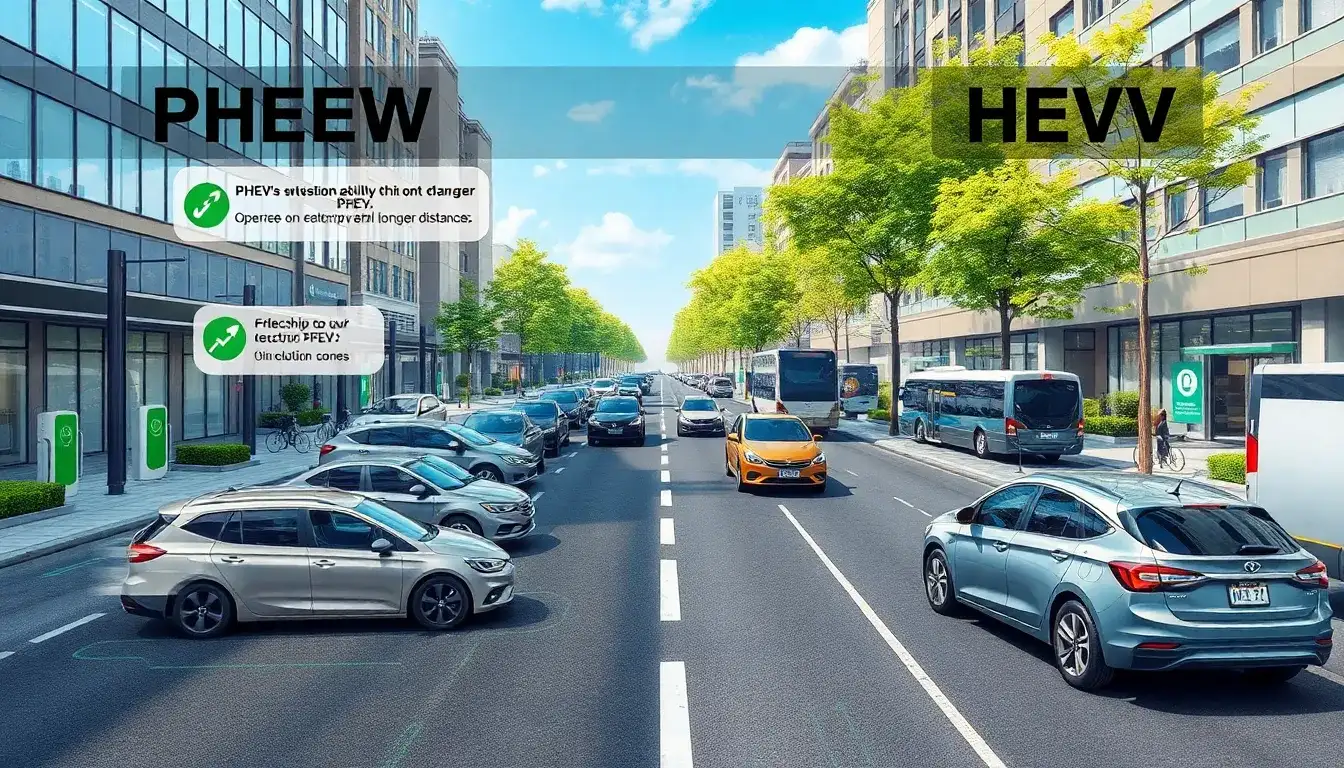
Plug-in Hybrid Electric Vehicles (PHEVs) offer distinct advantages over Hybrid Electric Vehicles (HEVs) for city driving:
Electric-Only Operation
PHEVs can drive on battery power alone for short distances (typically 20–50 miles), eliminating tailpipe emissions during urban commutes and stop-and-go traffic. This reduces fuel costs and local air pollution. HEVs cannot operate in pure electric mode, relying instead on intermittent electric assistance during low-speed driving.
Lower Urban Emissions
With zero emissions during electric-only use, PHEVs contribute to cleaner air in densely populated areas compared to HEVs, which always burn some gasoline. This makes PHEVs preferable for eco-conscious city drivers.
Cost Efficiency
PHEVs achieve greater fuel savings in city environments by maximizing electric-only miles for errands or short commutes, whereas HEVs provide more modest fuel economy improvements. Charging overnight (at home) further reduces energy costs compared to gasoline.
Enhanced Driving Experience
PHEVs offer the quiet, smooth acceleration of electric motors at low speeds, improving comfort in urban settings. HEVs also provide smooth driving but cannot sustain purely electric operation.
Key Requirement: To fully benefit from a PHEV in cities, regular access to charging infrastructure (home/work/public stations) is essential. Without charging, PHEVs lose their efficiency advantage and behave like HEVs.
Original article by NenPower, If reposted, please credit the source: https://nenpower.com/blog/what-are-the-main-benefits-of-phevs-over-hevs-for-city-driving/

