

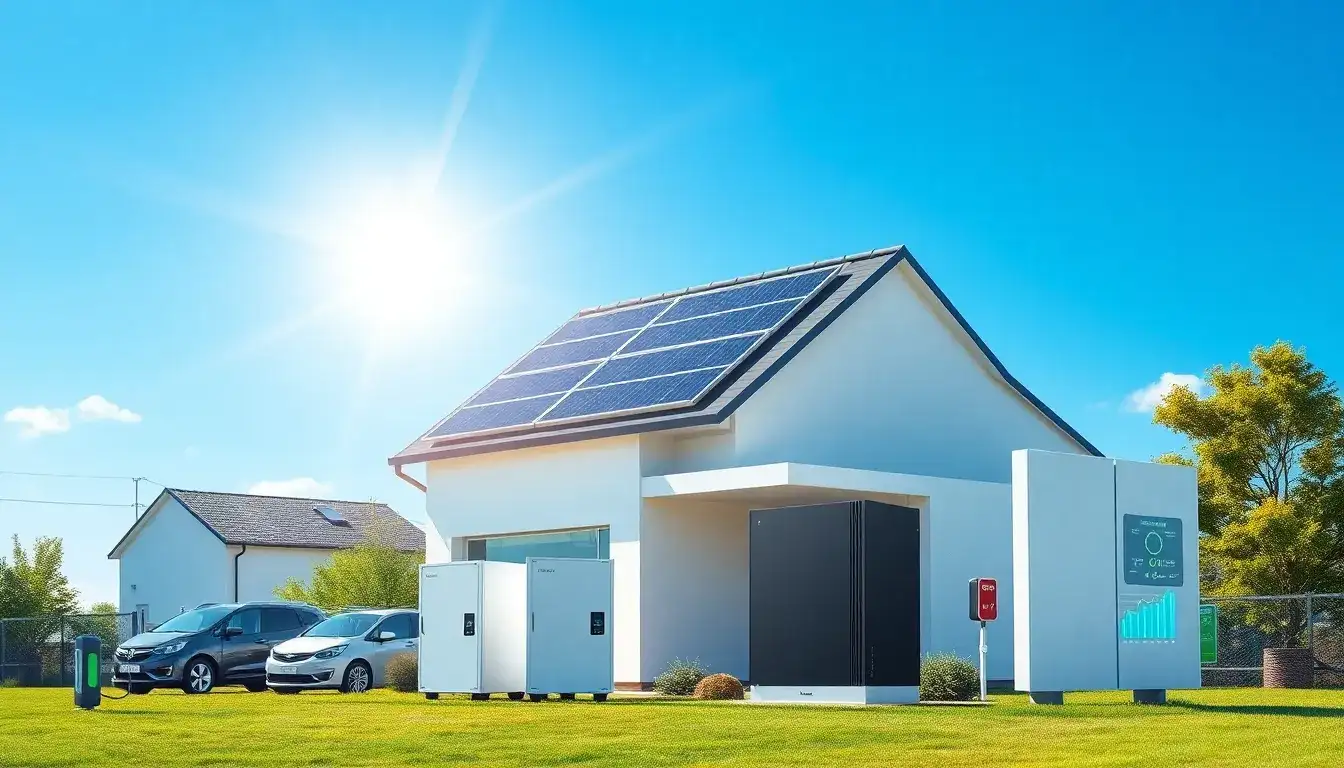
Integrating residential energy storage systems with photovoltaic (PV) systems offers several key benefits for homeowners:
-
Energy Independence and Reliability:
- Energy storage allows homeowners to store excess energy generated by solar panels during the day for use during nighttime or when the grid is down.
- Systems like virtual power plants and microgrids enhance energy independence by providing off-grid capabilities and ensuring a continuous energy supply during outages.
-
Cost Savings:
- Homeowners can significantly lower their electricity bills by using stored energy during peak demand periods, especially in regions with Time-of-Use (TOU) tariffs.
- Government incentives such as tax credits can further reduce upfront costs and improve the financial return on investment.
-
Grid Stability and Resilience:
- These systems help stabilize the grid by smoothing out variations in solar energy generation, which can be affected by weather conditions or time of day.
- Energy storage contributes to a more resilient power grid, enabling utilities to manage peak loads better and avoid over-generation issues.
-
Sustainability and Environmental Benefits:
- By maximizing self-consumption of solar energy, homeowners reduce their reliance on fossil fuels, contributing to a cleaner and more sustainable energy future.
-
Long-Term Financial Benefits:
- The payback period for solar-plus-storage systems typically ranges from 5 to 10 years, with long-term savings often amounting to thousands of dollars over the system’s lifespan.
Original article by NenPower, If reposted, please credit the source: https://nenpower.com/blog/what-are-the-main-benefits-of-integrating-residential-energy-storage-systems-with-photovoltaic-systems/

