

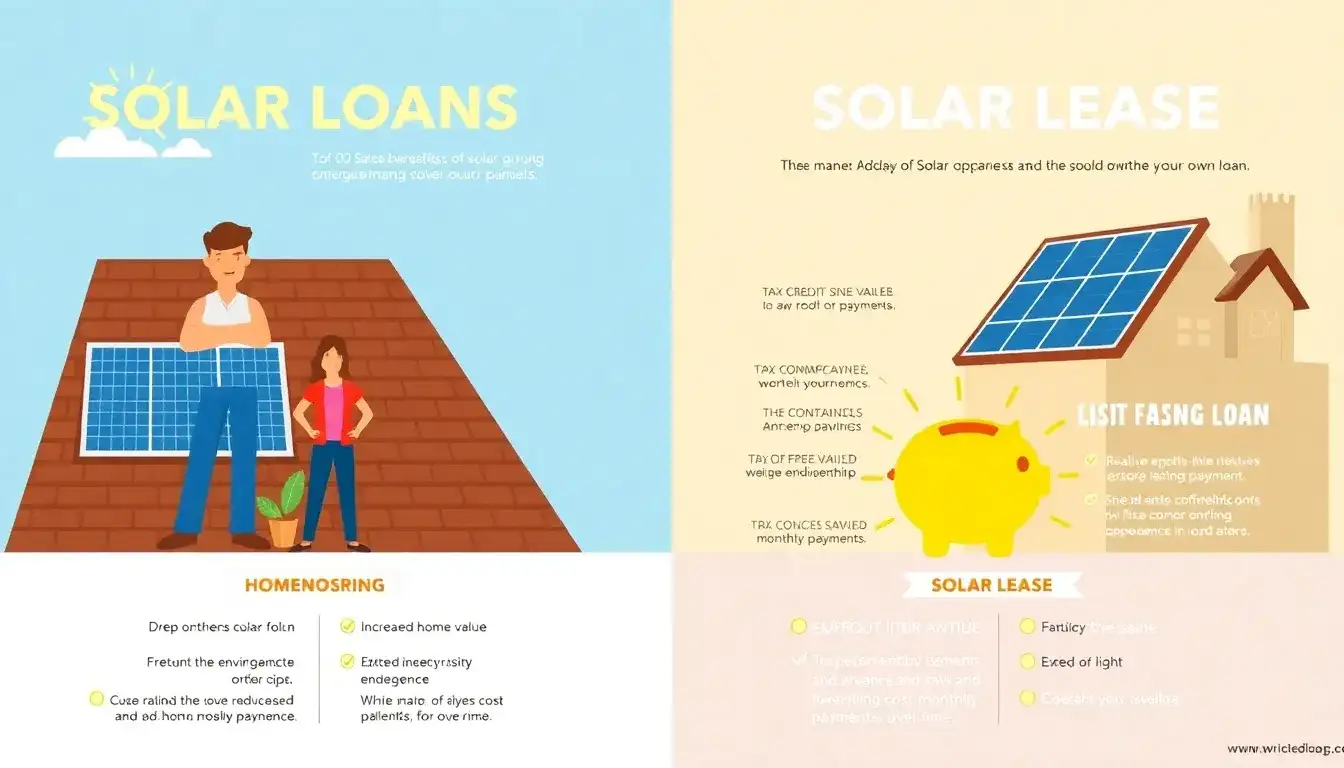
Main Benefits of Choosing a Solar Loan Over a Solar Lease
1. System Ownership and Control
– With a solar loan, you own the solar panel system outright once the loan is paid off. This ownership gives you full control over the system, including the ability to sell your home with the system installed and to benefit from any increases in energy savings over the system’s lifetime.
– Conversely, with a solar lease, the panels remain owned by the leasing company, and you are essentially renting the system without ownership rights.
2. Access to Financial Incentives
– Solar loan holders can claim the federal solar investment tax credit (ITC), typically 30% of the installation cost, along with any state or local rebates and incentives, directly reducing their net expenses.
– Lease customers do not receive these incentives; they go to the leasing company that owns the system, meaning you forgo potentially thousands of dollars in savings.
3. Increased Home Value
– Owning solar panels tends to increase property value. Studies show homes with owned solar systems sell for a premium (e.g., average increases of around $15,000 to 17% more in sale price), and they often sell faster.
– Leased solar systems typically do not add value to a home and can complicate the sale since the lease must be transferred to the new owner, which not all buyers are willing or able to do.
4. Greater Long-Term Savings
– Although solar loans require monthly payments, these payments are often fixed and can be offset by significant reductions in electricity bills. After the loan is paid off, the electricity generated is essentially free for the remainder of the panels’ 25-30 year lifespan.
– Solar leases usually have escalating monthly payments (typically increasing 2-3% annually), which can erode savings over time and can sometimes end up costing more than the utility bill they replace.
5. Stability and Predictability
– With a solar loan, your monthly payments are fixed for the loan term, creating predictable budgeting.
– Lease payments often include an escalator, meaning your payments rise annually regardless of actual electricity price changes, potentially reducing financial predictability.
6. Maintenance Responsibility
– Although owning panels means you are responsible for maintenance and repairs, solar panels generally require minimal upkeep.
– Solar leases typically include maintenance and repairs by the leasing company, which can be convenient but comes at the cost of ownership benefits.
Summary Comparison
| Feature | Solar Loan | Solar Lease |
|---|---|---|
| Ownership | Yes, you own the system | No, leasing company owns the system |
| Access to tax credits/incentives | Yes, owner claims all incentives | No, incentives go to leasing company |
| Impact on home value | Increases home value | No increase; may complicate home sale |
| Upfront cost | Usually no/low upfront with financing | Typically no upfront cost |
| Monthly payments | Fixed loan payments, possibly lower total cost | Lease payments with annual escalator |
| Long-term savings | Higher after loan payoff | Lower savings, lease payments continue long term |
| Maintenance | Owner responsible | Leasing company responsible |
Choosing a solar loan is generally better for homeowners seeking long-term financial benefits, property value increases, and ownership of their solar energy system. Leasing tends to be more attractive for those who prefer no upfront costs and hassle-free maintenance but comes with less financial benefit and no ownership.
Original article by NenPower, If reposted, please credit the source: https://nenpower.com/blog/what-are-the-main-benefits-of-choosing-a-solar-loan-over-a-solar-lease/

