

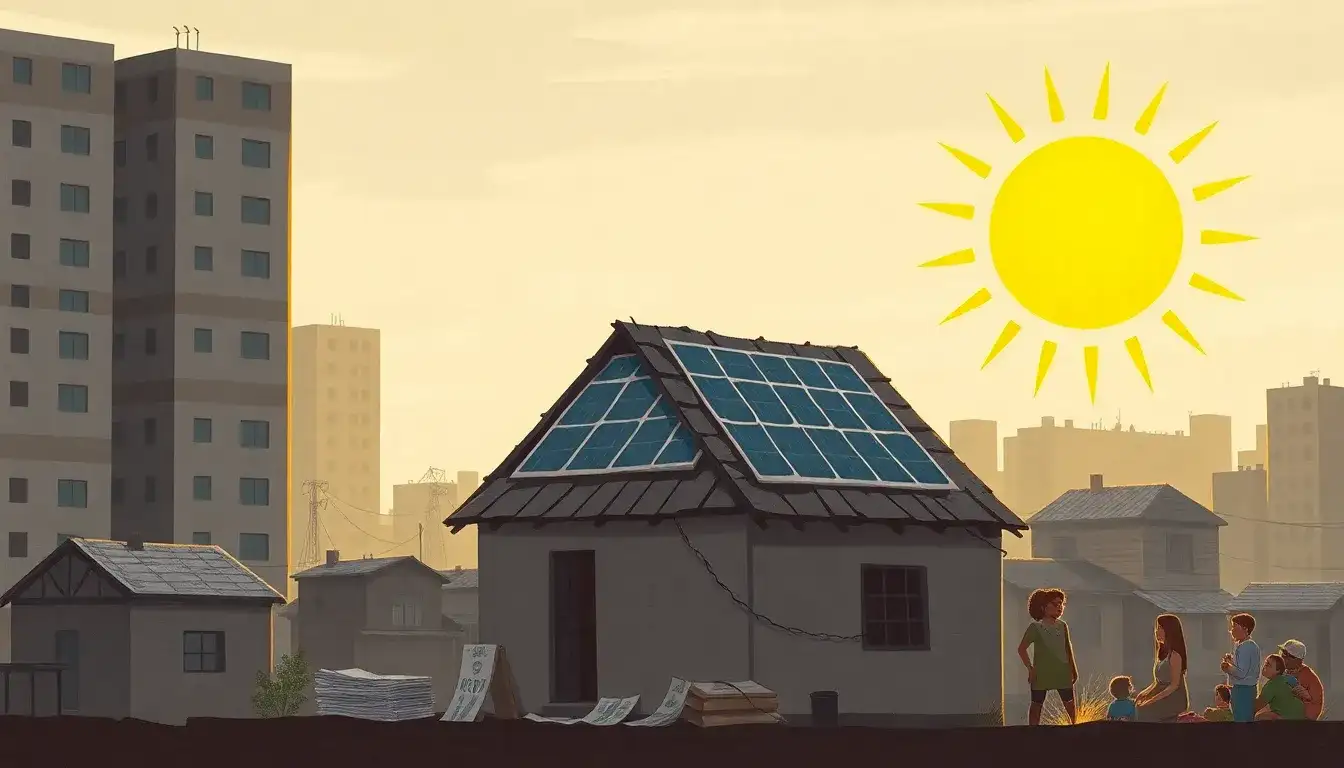
Low-income households face several significant barriers to accessing solar energy. These barriers include:
Financial Barriers
- Upfront Costs: The high initial cost of solar panel installation is often unaffordable for low-income households.
- Credit and Financing Issues: Many low-income individuals lack a credit history or have poor credit scores, making it difficult to secure loans or financing options such as Power Purchase Agreements (PPAs).
- Limited Access to Incentives: Low-income households may not benefit from tax credits since they typically have low income tax burdens.
Structural and Ownership Barriers
- Split Incentive Problem: Many low-income individuals rent their homes, creating a situation where the landlord, who would bear the cost of solar installation, does not directly benefit from reduced electricity bills.
- Physical Constraints: Multifamily buildings often lack sufficient roof space for solar installation, or the roofs may require repairs before panels can be installed.
Policy and Educational Barriers
- Policy Frameworks: The variability and lack of specific policies supporting low-income solar adoption can create confusion and inefficiency.
- Education and Outreach: Limited awareness and understanding of solar options and benefits can hinder adoption among low-income communities.
These barriers highlight the challenges low-income households face in transitioning to solar energy, emphasizing the need for targeted solutions and policies to address these disparities.
Original article by NenPower, If reposted, please credit the source: https://nenpower.com/blog/what-are-the-main-barriers-to-solar-access-for-low-income-households/

