

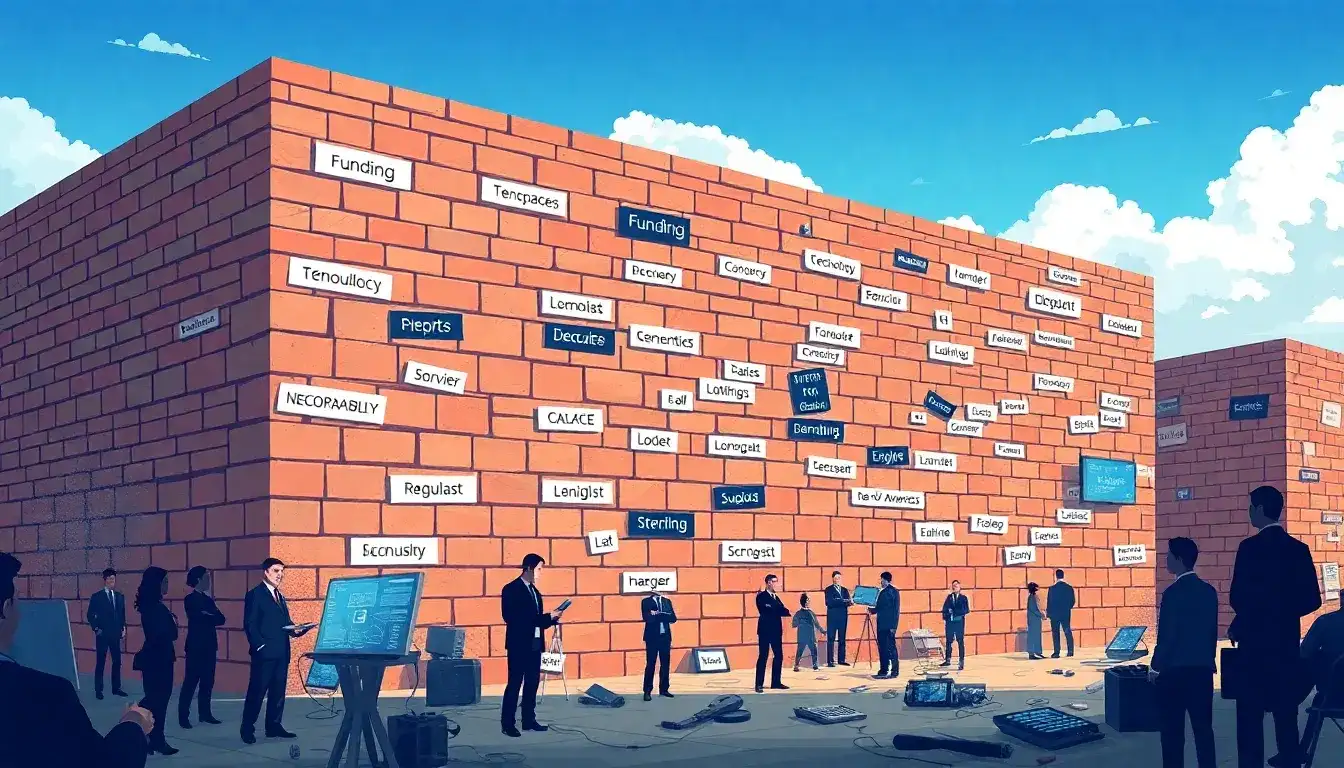
The main barriers to Long Duration Energy Storage (LDES) adoption at the state level include the following:
Policy and Regulatory Barriers
- Lack of Distinct LDES Targets: Although many states have energy storage mandates or goals, only a few (notably California and New York) have clear, distinct procurement targets specifically for LDES (defined as storage lasting 8-10 hours or more, often 10 hours or longer). This absence of tailored targets limits market certainty and investment for LDES technologies.
- Knowledge Gaps at Regulatory Commissions: State regulatory bodies often have limited understanding and expertise regarding LDES technologies and their integration, which hampers effective policy implementation and market development.
- Disconnect Between State and Federal Policies: Misalignment and lack of coordination between federal regulations (e.g., FERC orders) and state-level policies create confusion and impede progress in deploying LDES at scale.
- Patchwork of State Policies: The absence of uniform policies across states leads to fragmented markets. This inconsistency discourages market development and complicates planning and investment in LDES infrastructure.
Market and Economic Barriers
- Limited Market Incentives for LDES: Many state programs and incentives focus on shorter-duration storage, leaving LDES technologies at a disadvantage. Only a handful of states offer incentives or procurement programs explicitly encouraging technologies with long discharge durations.
- Uncertain Long-term Market Signals: Without clear mandates or targets, utilities and developers lack the market certainty needed to invest heavily in LDES solutions, which typically require larger upfront capital and longer project timelines.
Technical and Deployment Barriers
- Technology Readiness and Commercialization: LDES encompasses a variety of emerging technologies (electrochemical, mechanical, chemical, thermal) that are often still at pre-commercial stages. This limits the availability of mature, cost-effective LDES solutions for widespread deployment.
- Region-specific Needs and Technology Suitability: States have varied energy profiles and needs, requiring customized LDES solutions. Without policies that encourage diverse technology adoption and duration options, the fit-for-purpose deployment of LDES is constrained.
In summary, major barriers at the state level include insufficient and inconsistent policy support, regulatory knowledge gaps, fragmented markets, limited economic incentives specifically for LDES, and technological maturity challenges. Addressing these issues through clear, uniform state policies with explicit LDES targets aligned with federal efforts, increased regulatory expertise, and market incentives tailored to long-duration storage will be critical to unlocking LDES adoption.
Original article by NenPower, If reposted, please credit the source: https://nenpower.com/blog/what-are-the-main-barriers-to-ldes-adoption-at-the-state-level/

