

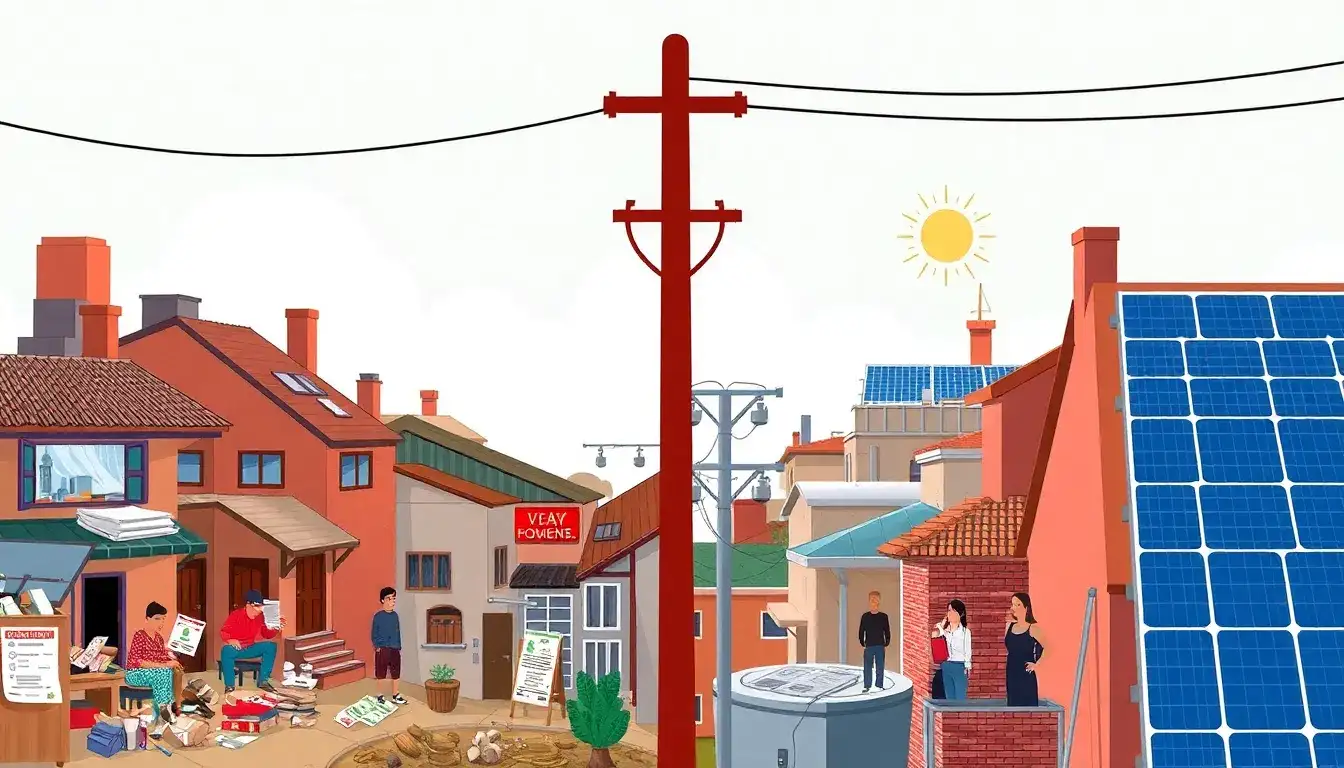
The main barriers faced by low-income households in adopting solar energy include the following:
Financial Barriers
- The high upfront cost of solar panel installation is often prohibitive for low-income families who have limited cash availability.
- Difficulty accessing affordable financing options due to low or no credit scores hampers their ability to invest in solar systems.
- There are limited solar incentives, credits, or financing mechanisms specifically targeted at low- and moderate-income (LMI) households to reduce initial costs and enable immediate savings.
- Inconsistent or insufficient long-term funding for low-income solar programs reduces their effectiveness and reach.
Homeownership and Property Barriers
- Low rates of homeownership among LMI families limit their ability to install rooftop solar, as renters typically cannot make structural changes or reap the direct benefits of solar panels.
- Property owners often lack financial motivation to invest in solar if the electricity bill savings primarily benefit tenants, not themselves.
Policy and Structural Barriers
- Lack of enabling and consistent policies across states, localities, and utilities creates confusion and inefficiency, hindering solar adoption for low-income households.
- Community solar programs, which can be an alternative for renters, may be unavailable or lack low-income-specific components in some states.
- Consumer protection measures like the ability to cancel or transfer solar subscriptions without penalty are important for low-income households who may move frequently but are often missing.
Other Barriers
- Language barriers and limited outreach or education about solar options further restrict adoption among diverse low-income populations.
- High “soft costs,” such as permitting and interconnection delays, disproportionately impact LMI households due to added complexity and expense.
- Utility bill payment structures that reduce bill autonomy for renters diminish the financial benefits and incentives for solar adoption.
- Peer influence may encourage consideration of solar but does not overcome these significant structural and financial obstacles.
In summary, the barriers low-income households face with solar energy adoption are multifaceted — primarily financial constraints, low homeownership rates, inconsistent policies, and lack of tailored incentives and protections. Overcoming these barriers requires targeted financing solutions, supportive and stable policy frameworks, and education and outreach that specifically address the needs of LMI communities.
Original article by NenPower, If reposted, please credit the source: https://nenpower.com/blog/what-are-the-main-barriers-faced-by-low-income-households-in-adopting-solar-energy/

