

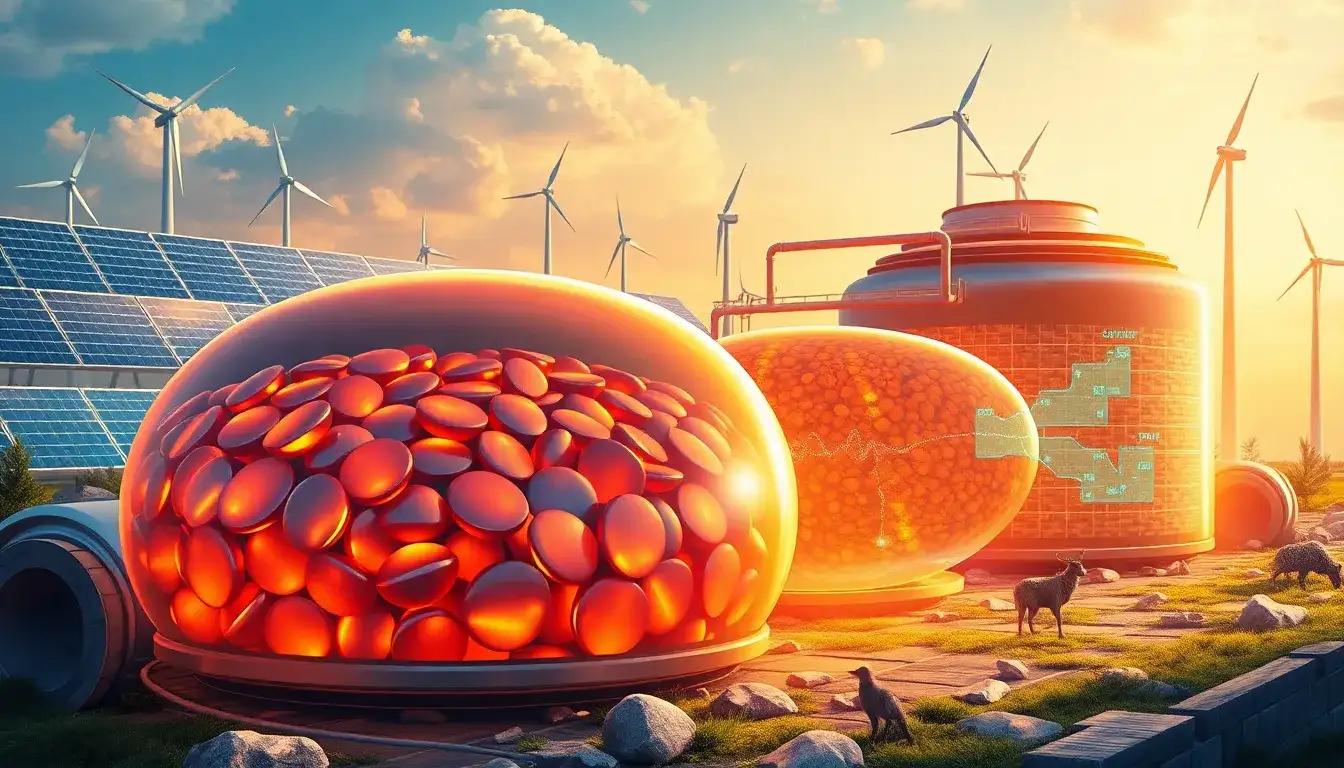
1. High Thermal Efficiency and Effective Heat Transfer
Research at KTH Sweden demonstrated that thermal energy storage systems combining solar-heated air with pebbles or copper slags can achieve over 90% thermal efficiency. The radial flow packed-bed design, which uses layers of pebbles of different sizes, enhances heat transfer while reducing pressure drops significantly—up to 70% less compared to uniform radial designs and 85% less than axial flow units. This design also maintains a very low reduction in useful discharge duration (less than 5%).
2. Reduced Pressure Drop and Improved Operational Performance
The configuration of pebble or slag beds, particularly in a radial packed bed system, leads to a much lower pressure drop during the charging and discharging phases. This reduction in pressure drop means the system can operate more efficiently and with lower pumping or fan power requirements, resulting in better overall performance and cost savings.
3. Robustness and Versatility of Materials
Pebbles and copper slags are solid materials that can withstand high operating temperatures (e.g., up to 800°C demonstrated in studies), providing stable and durable thermal storage. They are also less complex and safer compared to liquid heat storage systems.
4. Cost-effectiveness and Availability
Using natural or industrial byproducts such as copper slags or readily available pebbles reduces material costs. Pebble beds and slags are inexpensive compared to specialized phase-change materials or molten salts. Moreover, they can be sourced locally, which adds to the economic viability and feasibility of deploying thermal storage systems in diverse locations.
5. Flexibility in Installation
Thermal energy storage using rocks or pebbles can be built almost anywhere, offering flexibility in siting renewable energy storage systems to match local needs without major geographical limitations.
6. Enhanced Heat Transfer Characteristics
In pebble beds, heat conduction near the pebble surfaces dominates, providing a reliable heat transfer pathway. Although interfaces between pebbles scatter phonons and convection occurs in the porous air gaps, the overall near-wall thermal conductivity is high, supporting efficient heat storage and retrieval.
Summary Table of Advantages
| Advantage | Pebbles | Copper Slags |
|---|---|---|
| Thermal efficiency | Over 90% in radial packed bed designs | Comparable when combined with hot air |
| Pressure drop reduction | Up to 70-85% less than traditional beds | Similar performance when layered |
| Operating temperature | Up to 800°C demonstrated | High thermal stability |
| Cost-effectiveness | Low-cost, natural materials | Industrial byproduct, economical |
| Flexibility in deployment | Can be deployed almost anywhere | Limited only by slag availability |
| Heat transfer characteristics | Good conduction and convection pathways | Efficient heat exchange when layered |
| Safety and durability | Solid, less complex than liquids | Robust and resistant to thermal cycling |
These advantages make pebbles and copper slags ideal materials for sustainable, efficient, and economically viable thermal energy storage systems supporting renewable integration and grid stability.
Original article by NenPower, If reposted, please credit the source: https://nenpower.com/blog/what-are-the-main-advantages-of-using-pebbles-or-copper-slags-in-thermal-energy-storage/

