

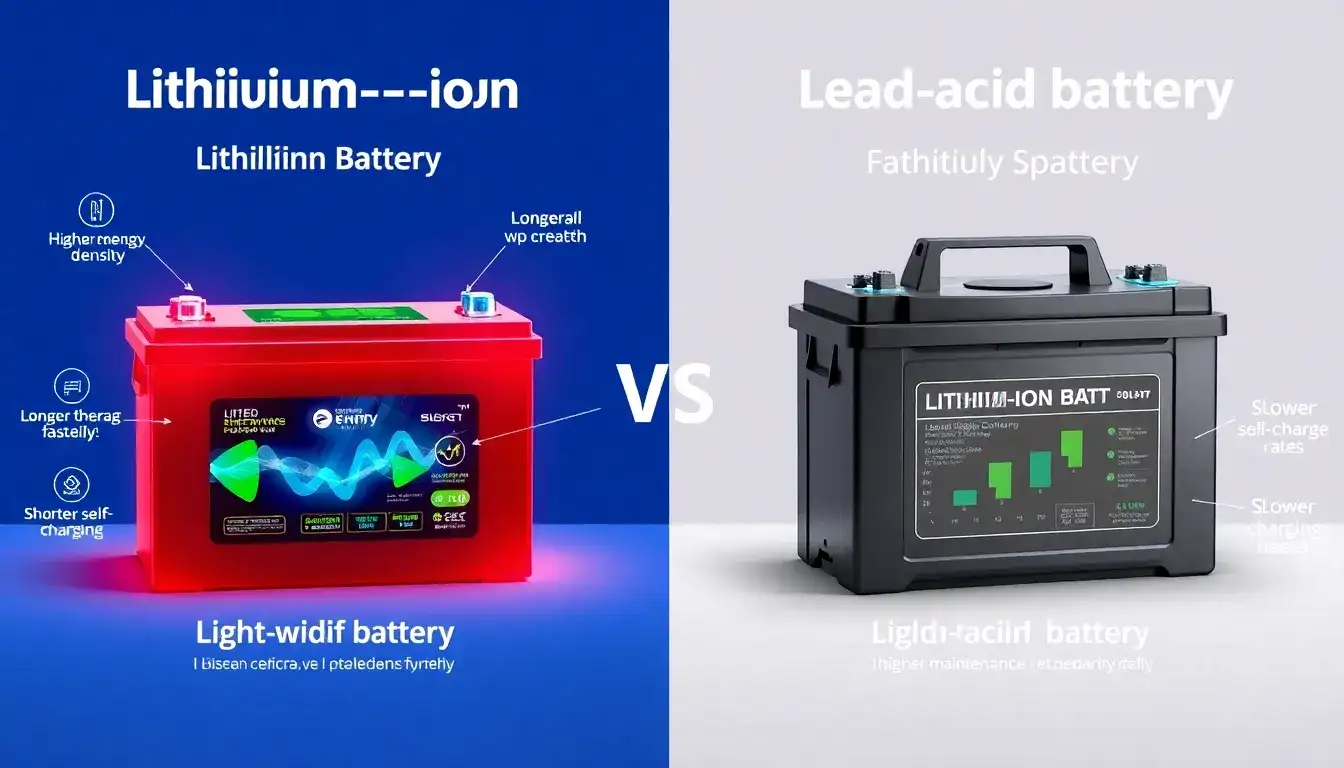
Advantages of Lithium-Ion Batteries
- Higher Energy Density and Power Density: Lithium-ion batteries have a higher energy density, meaning they can store more energy per unit of weight. This allows for smaller and lighter batteries compared to lead-acid batteries with the same energy storage capacity.
- Greater Efficiency: Lithium-ion batteries are more efficient, with most models achieving an efficiency rate of 95% or higher. In contrast, lead-acid batteries have an efficiency ranging from 80% to 85%.
- Faster Charging: Lithium-ion batteries charge much faster than lead-acid batteries. They can accept partial and rapid charging, while lead-acid batteries require longer charging times and may be harmed by fast charging.
- Deeper Depth of Discharge (DOD): Lithium-ion batteries can be safely discharged to about 85% of their capacity, whereas lead-acid batteries should not be discharged below 50% to extend their lifespan.
- Longer Lifespan: Lithium-ion batteries typically last for 10 to 15 years and can handle around 5,000 cycles without significant degradation. Lead-acid batteries may only last for 3 to 12 years with fewer cycles.
- Less Maintenance: Lithium-ion batteries are virtually maintenance-free since they do not produce gas and do not require topping up with distilled water. Lead-acid batteries, on the other hand, require regular maintenance to ensure longevity.
- Environmental and Safety Considerations: Lithium-ion batteries do not release hydrogen gas during charging, making them safer and more environmentally friendly compared to lead-acid batteries.
Original article by NenPower, If reposted, please credit the source: https://nenpower.com/blog/what-are-the-main-advantages-of-using-lithium-ion-batteries-over-lead-acid-batteries/

