

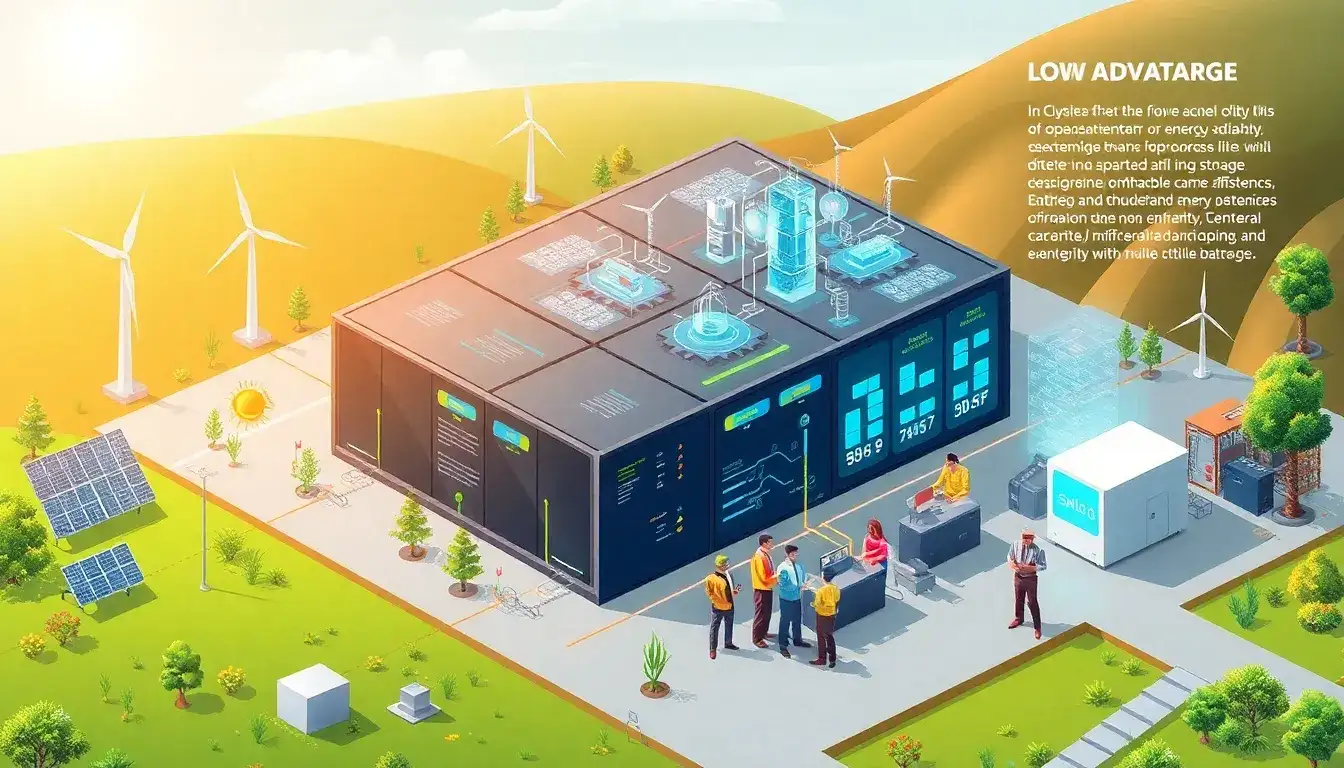
Main Advantages of Flow Batteries in Utility-Scale Applications
Flow batteries offer several key advantages that make them well-suited for utility-scale applications:
- Long Duration Energy Storage: Flow batteries can store energy for extended periods, often up to 10 hours and more, which is critical for stabilizing the grid during fluctuating renewable energy output.
- Longer Lifespan and Unlimited Cycle Life: Unlike lithium-ion batteries, which have a limited cycle life (around 7,000 cycles), flow batteries, particularly those using vanadium or iron, can last up to 30 years with virtually unlimited cycles.
- Increased Safety: Flow batteries contain liquids with high water content, making them non-flammable and safer than lithium-ion batteries, which pose fire risks.
- Scalability and Flexibility: The design allows for separate adjustments of energy storage capacity and power output, enabling customization for various applications by changing the tank size or reactor scale.
- Lower Levelized Cost of Storage (LCOS): Over their lifetime, flow batteries can provide a lower cost per kWh compared to lithium-ion systems due to their longer lifespan and lower maintenance needs.
- Environmental Benefits: Flow batteries often use environmentally friendly materials like iron or vanadium, reducing reliance on scarce minerals and minimizing environmental impact.
These advantages position flow batteries as a promising solution for utility-scale energy storage, particularly for integrating renewable energy sources and managing grid stability during prolonged periods of high demand.
Original article by NenPower, If reposted, please credit the source: https://nenpower.com/blog/what-are-the-main-advantages-of-using-flow-batteries-in-utility-scale-applications/

