

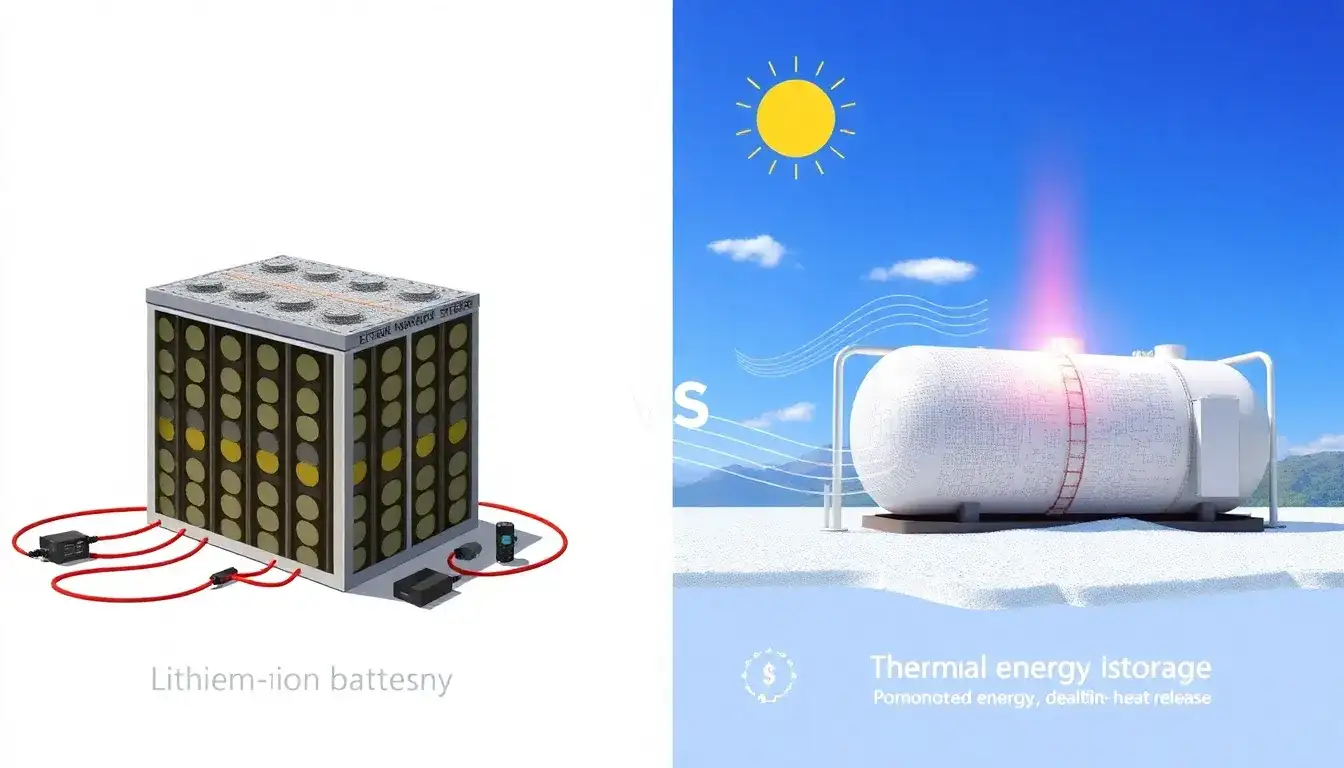
Thermal energy storage (TES) offers several advantages over lithium-ion batteries, particularly in specific applications such as heating and cooling systems, industrial processes, and integration with renewable energy sources. The main advantages of TES over lithium-ion batteries are:
- Space Efficiency: Thermal energy storage systems generally require less space compared to lithium-ion batteries, often needing only half or a third of the space for similar energy storage capacities.
- Cost-Effectiveness: TES is often more cost-effective than lithium-ion batteries for certain types of energy storage, particularly in heating and cooling applications. It allows for the efficient use of off-peak electricity and can be adapted to a variety of applications at a lower cost.
- Environmental and CO2 Reduction Benefits: TES can help reduce CO2 emissions by storing energy from renewable sources and using it when needed, making renewable energy more reliable and efficient.
- Application Flexibility: Thermal storage can be applied in a wide range of scenarios, including residential, commercial, and industrial settings, using different materials like water, phase change materials, and molten salts.
- Low Maintenance and Longevity: Some forms of TES, such as sensible heat storage, are relatively low maintenance compared to complex battery systems. They can also offer long lifespans depending on the implementation.
- Grid Stability and Resilience: TES can enhance grid stability by storing energy during off-peak times and releasing it during peak demand periods, thus reducing strain on the electrical grid.
However, lithium-ion batteries have advantages in terms of faster charging and discharging times, higher power densities, and better suitability for short-term energy storage applications.
Original article by NenPower, If reposted, please credit the source: https://nenpower.com/blog/what-are-the-main-advantages-of-thermal-energy-storage-over-lithium-ion-batteries-2/

