

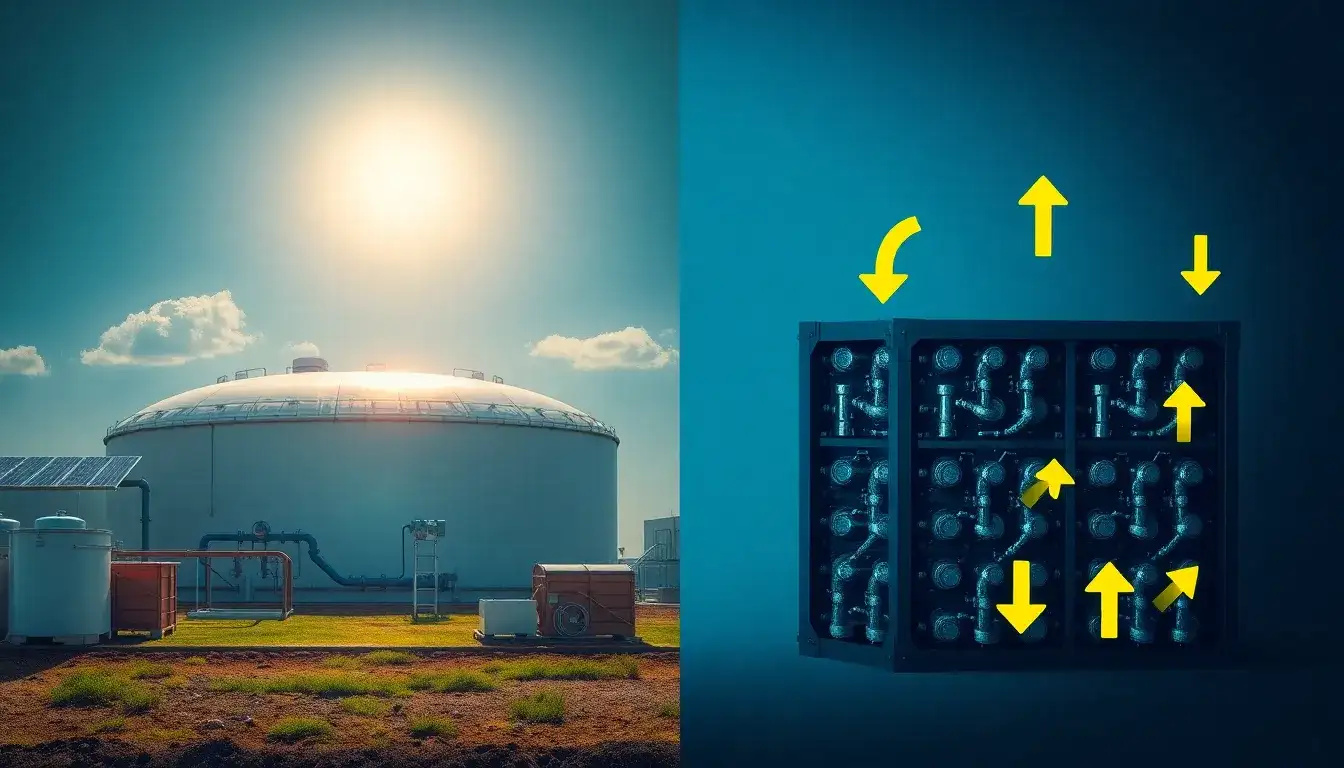
Advantages of Thermal Energy Storage
- Space Efficiency: Thermal storage systems require less space compared to lithium-ion batteries, needing only half to a third of the space.
- Cost Effectiveness: Thermal storage systems are generally cheaper than lithium-ion batteries. The cost of traditional thermal storage for air conditioning can range from $100 to $400 per kWh, whereas lithium-ion batteries cost between $760 and $1,800 per kWh.
- Longer Lifespan: Thermal energy storage systems typically have a longer lifespan, often exceeding 30 years, compared to lithium-ion batteries, which last around 10 to 15 years.
- Sustainability: Thermal storage systems are usually 100% recyclable, which is more environmentally friendly than many lithium-ion battery options.
- Operational Flexibility: Thermal energy storage can operate effectively at higher ambient temperatures compared to lithium-ion batteries.
- Higher Power Capacity: Thermal storage systems often provide higher power capacity in terms of kW, which is beneficial for large-scale heating and cooling applications.
- Backup and Resilience: These systems can provide backup when heating or cooling equipment fails, offering enhanced system resilience.
- Low Storage Loss: Certain thermal storage technologies, like thermochemical systems, offer low storage loss due to their chemical reaction-based storage mechanism.
- Integration with Renewable Energy: Thermal energy storage can effectively decouple the availability of renewable energy from its use, facilitating a higher share of renewable energy sources in the grid.
Original article by NenPower, If reposted, please credit the source: https://nenpower.com/blog/what-are-the-main-advantages-of-thermal-energy-storage-over-lithium-ion-batteries/

