

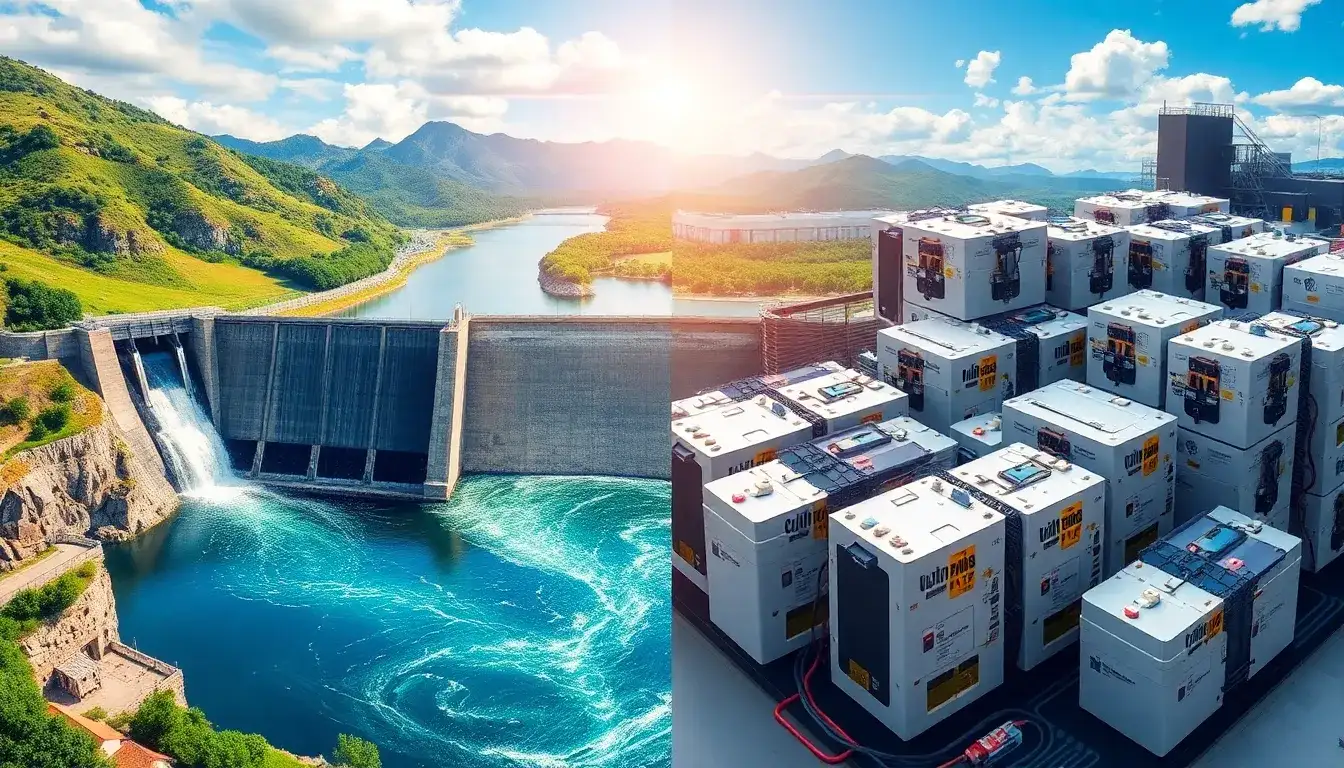
The main advantages of pumped hydroelectric storage (PHS) over lithium-ion batteries include the following:
1. Longer Discharge Duration
Pumped hydro storage can typically provide electricity for about 10 hours continuously, which is roughly 40% longer than the typical lithium-ion battery duration. This makes PHS especially suitable for long-duration energy storage needs.
2. Higher Efficiency
PHS systems have an energy efficiency of approximately 80-90%, meaning that only about 10-20% of energy is lost in the cycle. In comparison, lithium-ion batteries generally have a lower efficiency range, often between 50-80% depending on the application and system.
3. Larger Capacity and Power Output
Pumped hydro facilities can be built for very large-scale energy storage and high power capacity, which is crucial for grid stability during demand spikes and for integrating variable renewable energy sources like wind and solar.
4. Longevity and Durability
The infrastructure for pumped storage, such as reservoirs and turbines, can last for decades with proper maintenance, often outlasting lithium-ion batteries whose performance degrades over time and typically require replacement every 10-15 years.
5. Environmental and Clean Energy Benefits
Once constructed, pumped hydro storage produces no direct emissions or waste, relying on water and gravity rather than chemical reactants. It supports renewable energy integration without the environmental impact associated with mining and disposing of battery materials.
6. Energy Security and Independence
PHS does not depend on imported raw materials or chemical components, making it a more domestic and secure energy storage option that avoids supply chain disruptions common with lithium-ion battery materials.
| Feature | Pumped Hydro Storage | Lithium-Ion Batteries |
|---|---|---|
| Discharge Duration | Typically ~10 hours (long duration) | Typically less, around 6-7 hours |
| Efficiency | 80-90% | 50-80% |
| Scale & Power Capacity | Very large-scale, suitable for grid-level | Limited by battery size, modular |
| Lifespan | Decades with maintenance | 10-15 years, degrades over time |
| Environmental Impact | No direct emissions post-construction | Mining impact, chemical waste concerns |
| Energy Security | Domestic resource, less supply risk | Dependent on critical minerals, supply chains |
| Response Time | Quickly meets demand spikes | Also quick but limited by battery capacity |
In summary, pumped hydroelectric storage provides longer-duration, highly efficient, large-scale, and durable energy storage with low environmental impact and strong energy security advantages over lithium-ion batteries. These qualities make it particularly valuable as a grid-scale complement to variable renewable energy sources.
Original article by NenPower, If reposted, please credit the source: https://nenpower.com/blog/what-are-the-main-advantages-of-pumped-hydroelectric-storage-over-lithium-ion-batteries/

