

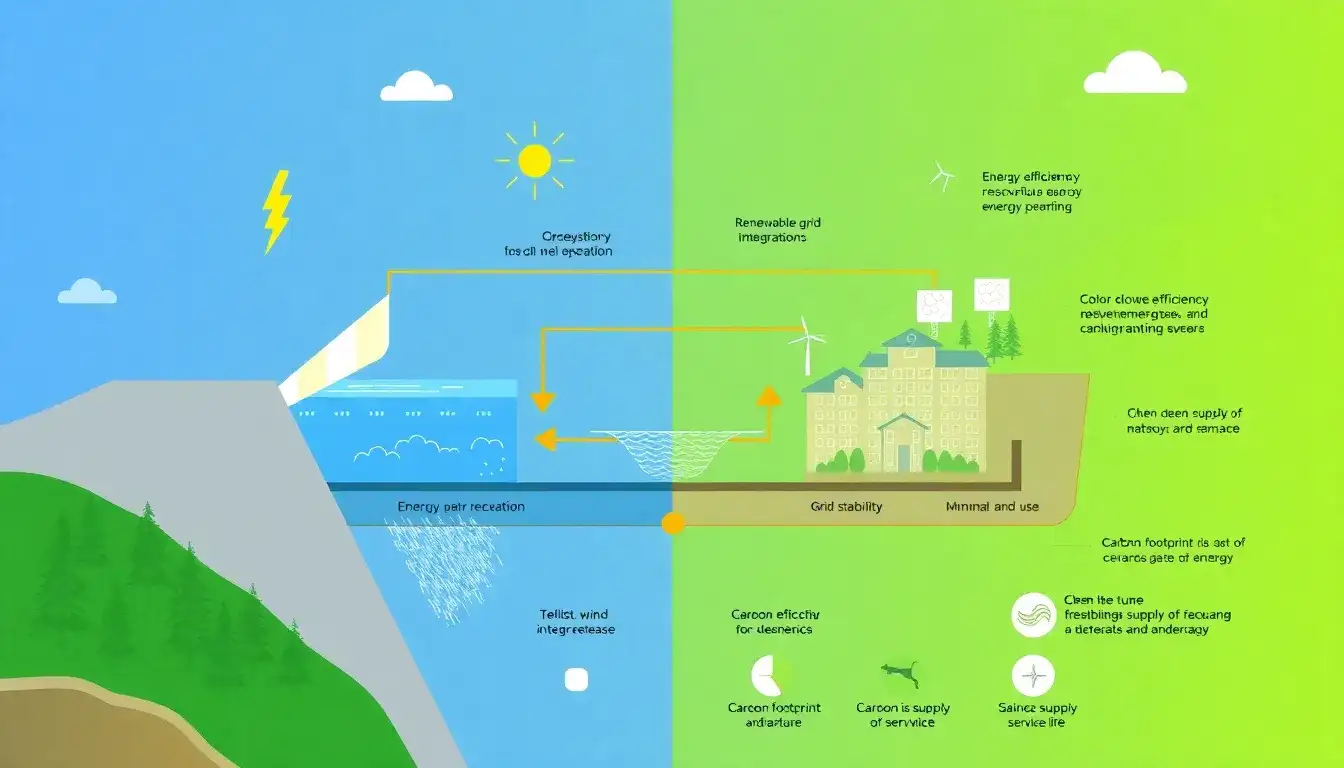
Pumped hydroelectric energy storage (PHES) systems offer several key advantages that contribute significantly to grid flexibility and stability:
- Peak Demand Management: PHES systems effectively manage peak demand by storing water during off-peak periods and releasing it to generate electricity during high-demand times. This capability ensures a reliable energy supply when it’s most needed.
- Long Asset Life and Cost Efficiency: PHES has a long asset life and low lifetime costs compared to other energy storage technologies. This makes it a cost-effective option for long-term energy management.
- Grid Stability and Ancillary Services: PHES provides immediate grid response capabilities, contributing to grid stability through services such as frequency control, reserves, and voltage stabilization. These systems can also act as synchronous condensers or spinning reserves when not in operation.
- Environmental Benefits: Closed-loop PHES systems have been identified as having a low global warming potential compared to other grid-scale storage technologies. This is beneficial for integrating renewable energy sources like solar and wind into the grid while minimizing environmental impact.
- Flexibility and Scalability: PHES plants can be designed to store energy for several hours (typically 6 to 20 hours), allowing them to be tailored for peak demand periods and scaled up by increasing plant capacity or adding units.
Overall, PHES plays a vital role in stabilizing the grid, supporting the integration of intermittent renewable energy sources, and providing various ancillary grid services.
Original article by NenPower, If reposted, please credit the source: https://nenpower.com/blog/what-are-the-main-advantages-of-pumped-hydroelectric-energy-storage-systems/

