

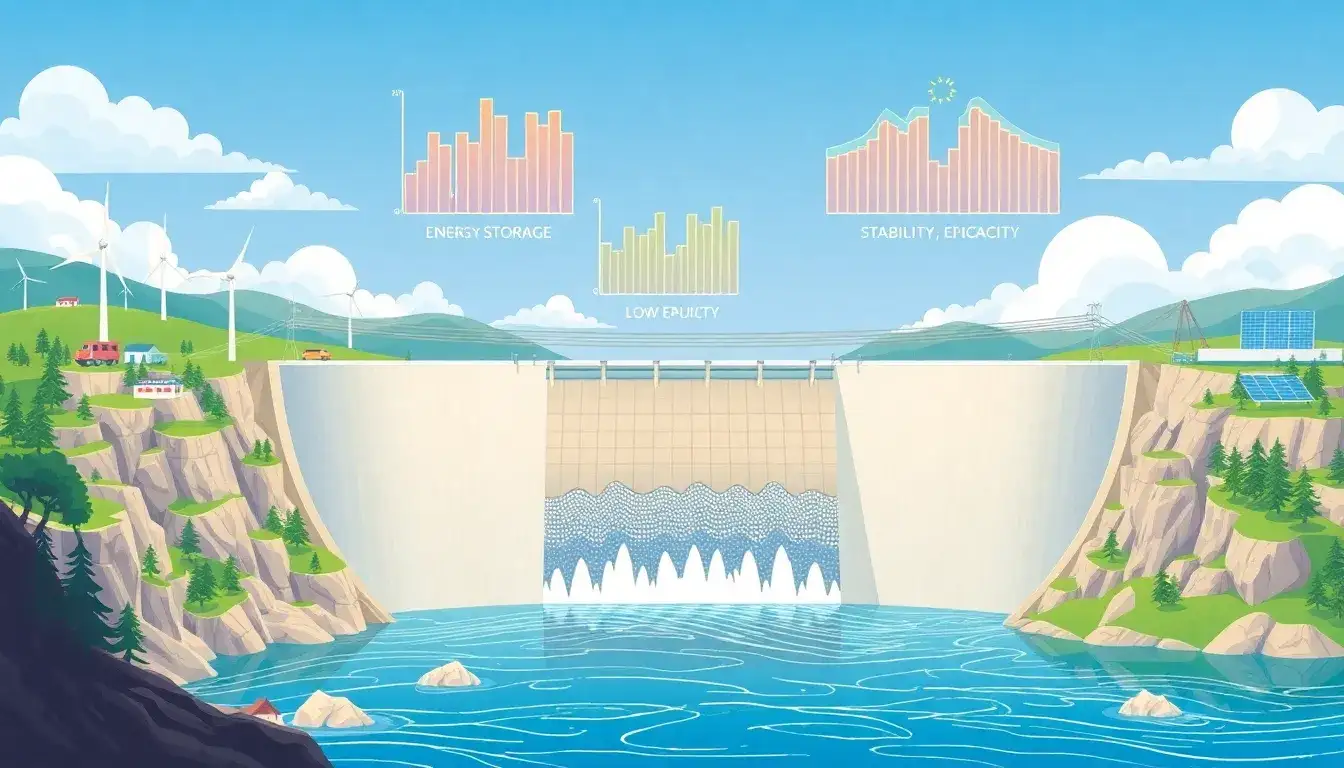
Main Advantages of Pumped Hydroelectric Energy Storage
1. Grid Flexibility and Rapid Response
PHES plants can respond very quickly to changes in electricity demand, reaching full output capacity within minutes. This rapid response is crucial for balancing supply and demand on the grid and managing fluctuations from intermittent renewable sources like wind and solar.
2. Long Asset Life and Cost-Effectiveness
Pumped storage facilities have long operational lifespans, often several decades, combined with relatively low maintenance costs. This longevity translates into a lower lifetime cost of storage compared to many battery technologies.
3. Large Storage Capacity and Duration
PHES systems typically provide storage capacities suitable for long-duration energy storage — from 6 up to 20 hours or more — which is significantly longer than typical battery storage systems designed for shorter durations. This makes pumped storage effective for meeting peak demand over extended periods.
4. High Efficiency
Technological advancements in turbines and generators allow PHES to convert a large portion of the potential energy from stored water back into electricity efficiently, often achieving round-trip efficiencies around 70–85%.
5. Ancillary Grid Services
Pumped storage not only stores and generates electricity but also provides essential grid services such as frequency regulation, reactive power support, spinning reserve, black start capability, and voltage stabilization. It can operate in multiple modes to stabilize the grid in real-time.
6. Sustainability and Environmental Impact
PHES uses water, a renewable and abundant resource, and when properly sited, has a relatively low environmental impact compared to fossil-fuel-based storage solutions. It supports the transition to greener energy systems by enabling higher penetration of renewables.
7. Low Greenhouse Gas Emissions
Compared to other long-duration storage options like compressed-air energy storage, pumped storage hydropower produces substantially fewer greenhouse gas emissions over its lifecycle.
Summary Table of Advantages
| Advantage | Description |
|---|---|
| Rapid response | Can reach full power output within minutes for grid balancing |
| Long lifespan & cost-effective | Operates efficiently for decades with low maintenance costs |
| Large capacity & long duration | Stores energy for 6–20+ hours, suitable for peak demand management |
| High efficiency | Efficient conversion of stored potential energy to electricity |
| Provides ancillary services | Frequency control, voltage support, spinning reserve, black start capability |
| Sustainable & low emissions | Utilizes renewable water resource with low environmental impact and GHG emissions |
These advantages make pumped hydroelectric energy storage a cornerstone technology for grid-scale energy storage, particularly as electric grids incorporate increasing amounts of variable renewable energy resources like wind and solar.
Original article by NenPower, If reposted, please credit the source: https://nenpower.com/blog/what-are-the-main-advantages-of-pumped-hydroelectric-energy-storage-over-other-energy-storage-technologies/

