

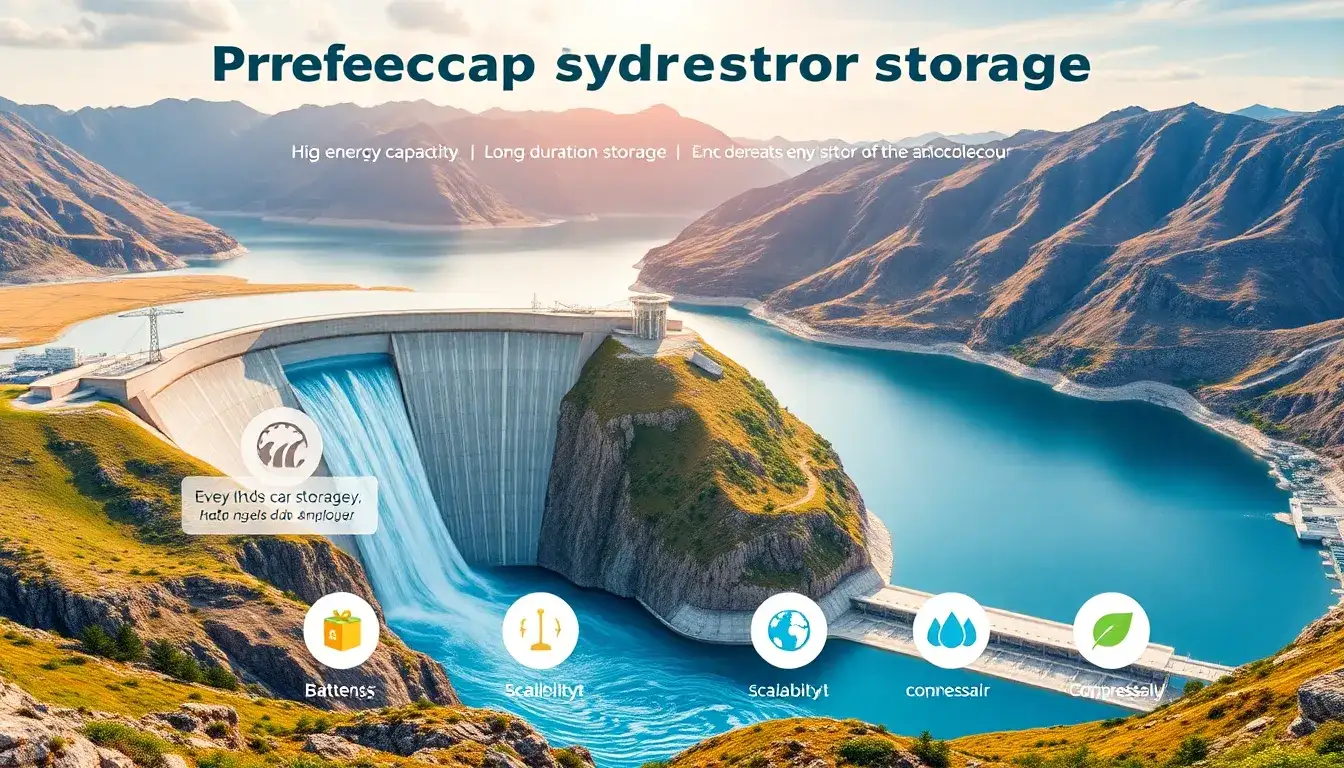
Pumped hydro storage (PHS) offers several key advantages over other energy storage technologies:
Advantages of Pumped Hydro Storage
- High Efficiency: PHS has a high efficiency level, typically around 80% to 90%, meaning it only loses 10% to 20% of the energy during the storage cycle. This is much higher than other forms like lithium-ion batteries (50-80%) or hydrogen storage (40-60%).
- Long Asset Life: PHS facilities have a long lifespan, often lasting several decades with proper maintenance. This longevity enhances their cost-effectiveness over time compared to other storage technologies.
- Low Lifetime Cost: The low lifetime cost, combined with the long asset life, makes PHS an economical choice for large-scale energy storage. It has the lowest levelized cost of electricity (LCOE) compared to other storage options.
- Grid Stability and Flexibility: PHS systems are excellent at providing grid stability services such as frequency regulation and rapid response to demand spikes. They can quickly generate power when needed, ensuring grid stability in systems with variable renewable energy sources like solar and wind.
- Environmental Sustainability: PHS uses water, a renewable resource, without directly emitting greenhouse gases during operation, aligning well with sustainable energy goals.
Overall, PHS serves as a robust “green battery” for balancing renewable energy sources and ensuring grid reliability.
Original article by NenPower, If reposted, please credit the source: https://nenpower.com/blog/what-are-the-main-advantages-of-pumped-hydro-storage-over-other-energy-storage-technologies-2/

