

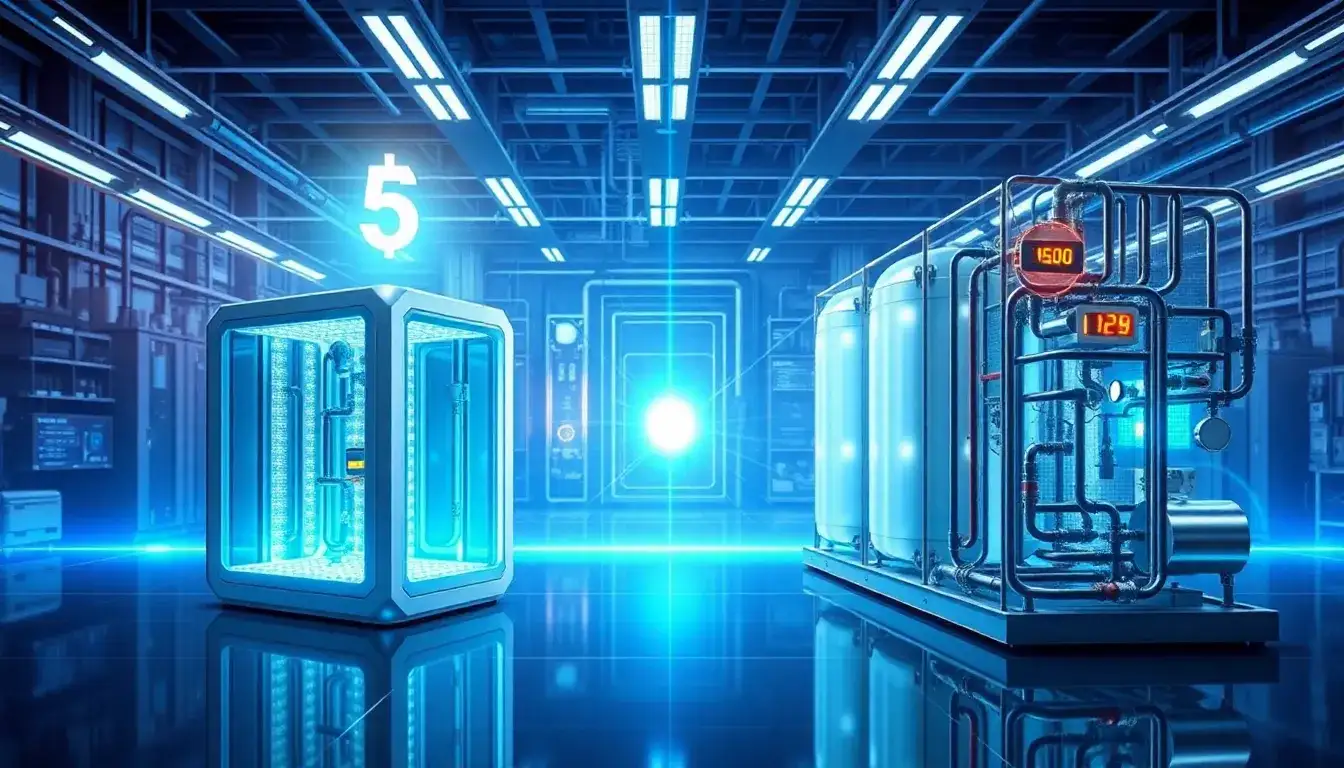
The main advantages of metal-air batteries over flow batteries largely stem from their higher energy density, simpler and lighter design, and the use of abundant, low-cost materials.
Key Advantages of Metal-Air Batteries:
- High Energy Density: Metal-air batteries can achieve energy densities significantly higher than many conventional battery technologies, including flow batteries. This is mainly because they utilize oxygen from the ambient air rather than storing it internally, allowing for much greater theoretical specific energy—often several times that of lithium-ion batteries and generally higher than flow batteries.
- Lightweight and Simplified Construction: Due to the use of atmospheric oxygen and abundant metals such as zinc, aluminum, or iron as the anode, metal-air batteries avoid the weight and volume of storing active oxidizer internally. This results in a lighter system with simpler overall design compared to the complex pumps, tanks, and membranes required in flow batteries.
- Cost-Effective Materials: Metal-air batteries primarily use earth-abundant and inexpensive materials like zinc, aluminum, magnesium, or iron. In contrast, flow batteries often rely on costly and rare electrolytes or redox-active metals. This abundance translates into potentially lower manufacturing and material costs for metal-air batteries.
- Safety and Environmental Benefits: Some types of metal-air batteries, such as iron-air, use non-toxic and non-flammable materials, providing better safety profiles than lithium-ion and potentially flow battery chemistries. They also align well with environmental sustainability goals due to their use of benign, plentiful materials.
- Intrinsic Simplicity for Large-Scale Storage: For long-duration energy storage, metal-air batteries like iron-air have chemical processes straightforward enough to enable efficient multi-day storage with stable cycling, offering a simpler alternative to the mechanical and fluid systems in flow batteries.
In summary, metal-air batteries offer a compelling combination of very high energy density, lighter and simpler design, lower cost materials, and safety advantages that make them attractive, especially for applications requiring compact, high-capacity energy storage. This contrasts with flow batteries, which, while flexible and scalable, tend to have lower energy density and more complex system components that add to cost and maintenance.
Thus, metal-air batteries are especially promising where maximizing energy density and reducing material cost and weight are priorities.
Original article by NenPower, If reposted, please credit the source: https://nenpower.com/blog/what-are-the-main-advantages-of-metal-air-batteries-over-flow-batteries/

