

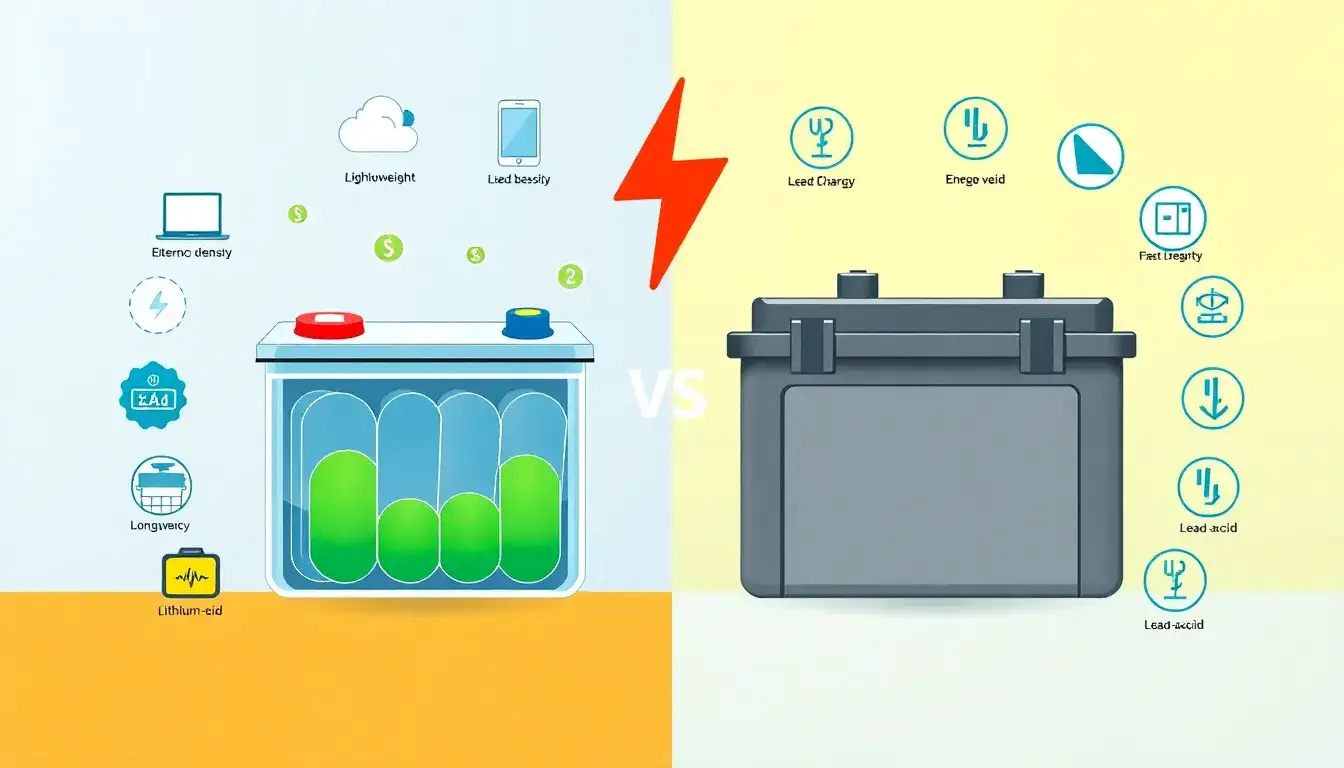
Main Advantages of Lithium-Ion Batteries Over Lead-Acid Batteries
1. Efficiency and Charging Speed
- Efficiency: Lithium-ion batteries are significantly more efficient, with efficiencies typically above 95%, compared to lead-acid batteries which range from 80-85%.
- Charging Speed: Lithium-ion batteries can charge much faster, often in under an hour, while lead-acid batteries may take over 10 hours for a full charge.
2. Energy Density and Capacity
- Energy Density: Lithium-ion batteries have a higher energy density, meaning they store more energy in the same space compared to lead-acid batteries, providing longer runtime for the same size.
- Capacity Utilization: Lithium-ion batteries can safely discharge 85-100% of their capacity without significant impact on lifespan, unlike lead-acid batteries which are typically limited to around 50%.
3. Lifespan and Durability
- Cycle Life: Lithium-ion batteries can handle thousands more charge cycles than lead-acid batteries, with typical cycles ranging from 5000 to over 6000, compared to 300-1500 for lead-acid.
- Longevity: Lithium-ion batteries generally last 8-10 times longer than lead-acid batteries in practical use.
4. Weight and Size
- Weight: Lithium-ion batteries weigh significantly less per kWh than lead-acid batteries, making them more versatile for various applications.
- Size: They are also more compact, offering greater space efficiency in installations.
5. Maintenance and Environmental Impact
- Maintenance: Lithium-ion batteries are virtually maintenance-free, requiring no water topping or similar upkeep, unlike lead-acid batteries which need regular maintenance.
- Environmental Impact: Lithium-ion batteries are generally more environmentally friendly due to their reduced use of toxic materials and lower emissions compared to lead-acid batteries.
Original article by NenPower, If reposted, please credit the source: https://nenpower.com/blog/what-are-the-main-advantages-of-lithium-ion-batteries-over-lead-acid-batteries/

