

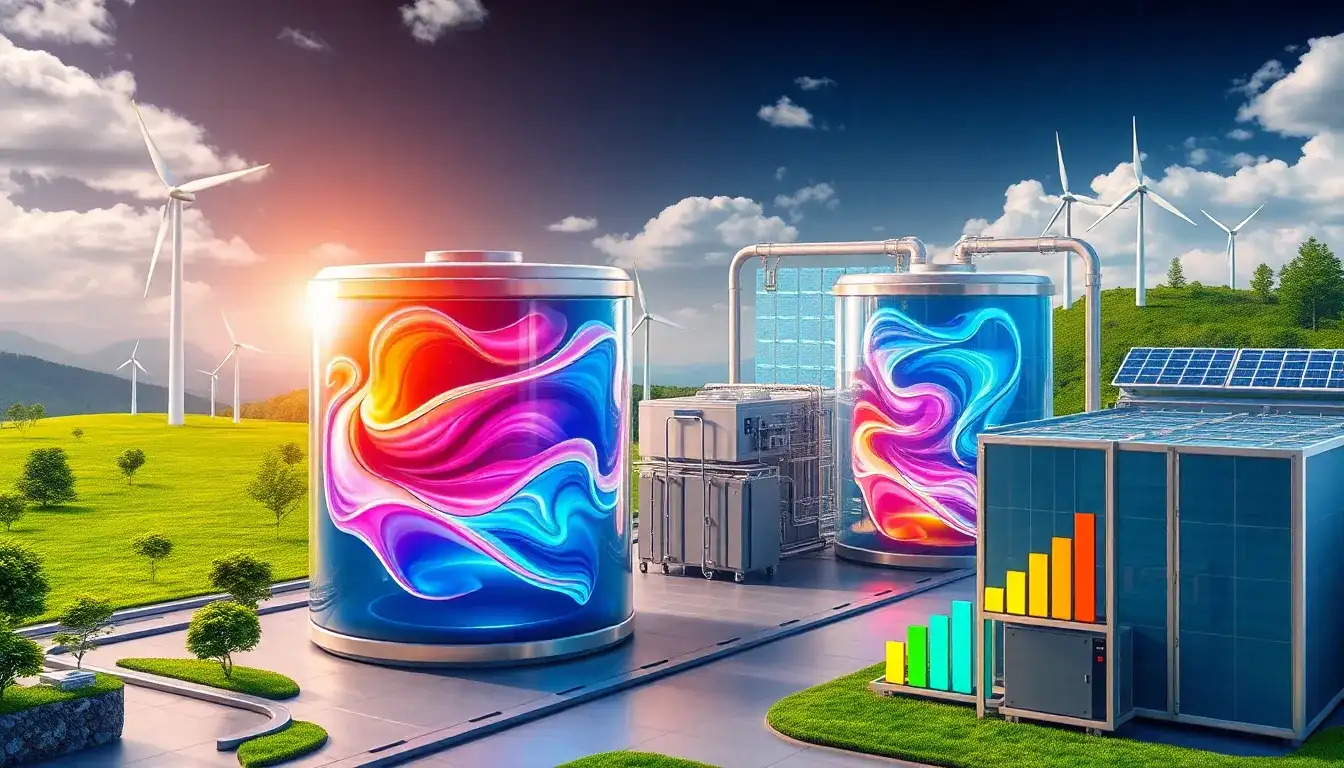
The main advantages of liquid air energy storage (LAES) over lithium-ion batteries are:
-
Lower Cost
LAES offers a significantly lower Levelized Cost of Storage (LCOS) compared to lithium-ion batteries. MIT research shows that LAES achieves an LCOS around $60 per megawatt-hour, which is roughly one-third of lithium-ion battery storage costs. -
Scalability
LAES systems can be easily scaled from small to very large grid-scale storage capacities, making them adaptable to a wide range of energy demands and grid requirements. -
Long-Duration Storage Capability
LAES excels at long-duration energy storage, capable of storing energy for several hours to days, which helps balance intermittent renewable energy sources much better than many batteries that struggle with sustained power delivery. -
Environmental Sustainability
LAES uses inexhaustible raw materials—mainly atmospheric air—with no reliance on hazardous or rare earth materials typical in lithium-ion batteries. This makes LAES a more environmentally friendly and sustainable energy storage option, producing zero carbon emissions during operation. -
Flexibility of Deployment
LAES systems have no geographical restrictions and can be deployed in urban areas, remote sites, and industrial facilities, offering greater flexibility compared to lithium-ion battery installations. -
Long-Term Storage Without Degradation
Unlike lithium-ion batteries, which degrade over time and cycles, LAES stores energy physically as liquid air without chemical degradation, potentially offering longer storage life and lower maintenance.
In summary, LAES advantages over lithium-ion batteries include significantly lower cost, superior scalability, long-duration storage capability, environmental friendliness, flexible deployment, and durability without degradation—making it a promising option for large-scale, long-term, and sustainable energy storage solutions.
Original article by NenPower, If reposted, please credit the source: https://nenpower.com/blog/what-are-the-main-advantages-of-liquid-air-energy-storage-over-lithium-ion-batteries-2/

